
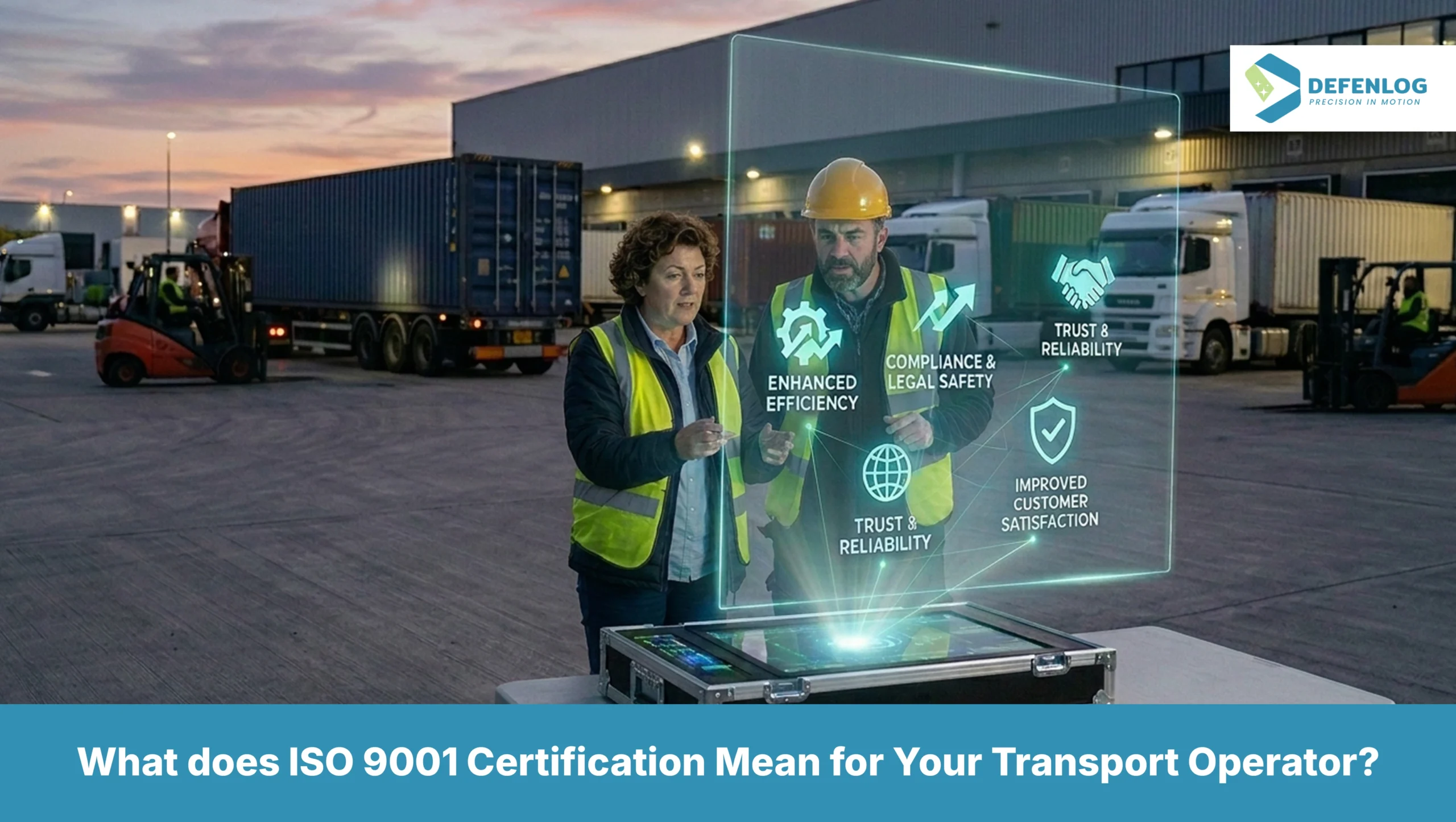
Choosing a transport operator is about more than trucks, routes, and rates. When cargo is time-sensitive, high-value, regulated, or critical to business operations, reliability becomes just as important as price.
This is where ISO 9001 certification often enters the conversation.
Many transport companies display ISO 9001 certification on their websites, proposals, and company profiles. But what does it actually mean? More importantly, how does it benefit the businesses trusting those operators with their cargo?
For companies moving freight across South Africa and Africa, understanding the value of ISO 9001 can help identify transport partners that operate with greater consistency, accountability, and operational control.
What is ISO 9001 Certification?
ISO 9001 is an internationally recognized quality management standard developed by the International Organization for Standardization (ISO).
Rather than focusing on a specific product or service, ISO 9001 focuses on how a business operates. It establishes a framework that helps organizations deliver consistent services, manage risks, improve processes, and meet customer requirements.
In simple terms, ISO 9001 is designed to ensure that a company follows structured systems instead of relying on informal or inconsistent practices.
For transport operators, this means having documented processes, measurable performance standards, and continuous improvement programs in place.
Why does ISO 9001 Matter in Road Freight and Logistics?
Road freight is often judged by one outcome, whether the cargo arrives on time.
However, successful transport involves far more than delivery. Every shipment relies on planning, communication, compliance, vehicle readiness, driver management, documentation, and risk control.
Without structured systems, small mistakes can quickly become major operational problems.
These can include:
- Missed collection schedules
- Incorrect documentation
- Delivery delays
- Communication breakdowns
- Cargo handling errors
- Customer service inconsistencies
ISO 9001 helps reduce these issues by creating repeatable and controlled processes across the organization.
What does an ISO 9001-Certified Transport Operator Actually Do Differently?
Many businesses assume ISO certification is simply a certificate displayed on a wall. In reality, certified companies must demonstrate that their operational processes are being followed consistently.
This often includes:
- Defined operational procedures
- Documented quality controls
- Regular internal audits
- Risk management processes
- Customer feedback monitoring
- Continuous improvement initiatives
For customers, this means the transport operator is not relying on guesswork or individual decisions. Operations are managed through structured systems.
Better Consistency Across Every Shipment
One of the biggest challenges in logistics is inconsistency.
A shipment may move perfectly one week and experience delays the next due to communication issues, process failures, or operational gaps.
ISO 9001 promotes standardization throughout the organization.
This helps ensure that:
- Customer requirements are clearly understood
- Operational procedures are followed consistently
- Issues are identified and corrected quickly
- Service quality remains stable across multiple shipments
For businesses managing ongoing freight movements, consistency is often more valuable than occasional exceptional performance.
Improved Risk Management
Modern supply chains face increasing levels of risk.
Road transport operators must deal with:
- Traffic disruptions
- Vehicle breakdowns
- Regulatory requirements
- Safety concerns
- Documentation errors
- Customer service expectations
ISO 9001 requires organizations to identify operational risks and implement controls to manage them proactively.
This reduces the likelihood of avoidable disruptions and helps create more predictable transport operations.
For customers, this translates into greater confidence and fewer surprises.
Stronger Documentation and Process Control
Documentation is one of the most overlooked aspects of logistics quality.
Incorrect paperwork can create delays, compliance issues, and operational confusion.
ISO 9001 emphasizes documented procedures and record management. This ensures that information is properly controlled throughout the transport process.
This is particularly valuable for:
- Dangerous goods transport
- Explosives logistics
- Defence cargo
- Project cargo
- Cross-border freight
In these sectors, documentation accuracy is not simply administrative, it is operationally critical.
Greater Focus on Customer Requirements
One of the key principles behind ISO 9001 is customer focus.
Certified companies must actively monitor customer expectations and continuously improve their services based on feedback and performance results.
For customers, this often means:
- Better communication
- Faster issue resolution
- Clearer accountability
- More responsive service delivery
Instead of reacting to problems after they occur, certified organizations work to identify and address issues before they impact the customer.
Why does ISO 9001 Matter for High-Risk and Regulated Cargo?
The value of ISO 9001 becomes even more significant when transporting regulated or sensitive cargo.
Industries such as:
- Mining
- Defence
- Explosives
- Chemicals
- Industrial manufacturing
- Energy
Often require transport providers to demonstrate operational maturity and process control.
For these sectors, a transport failure can affect:
- Production schedules
- Regulatory compliance
- Project deadlines
- Safety performance
Working with an ISO 9001-certified transport operator provides additional confidence that structured systems are in place to support consistent execution.
ISO 9001 is Not a Guarantee — But it is a Strong Indicator
It is important to understand that ISO 9001 certification does not automatically make a transport company perfect.
However, it does indicate that the organization has invested in:
- Quality management systems
- Process discipline
- Operational consistency
- Continuous improvement
- Customer satisfaction
These are qualities that businesses should look for when selecting a long-term transport partner.
What Questions should You Ask a Certified Transport Operator?
When evaluating a transport provider, consider asking:
- How are transport processes documented and controlled?
- How do you monitor service performance?
- How do you manage operational risks?
- How do you handle customer complaints and corrective actions?
- How often are quality systems reviewed?
The answers often reveal whether certification is genuinely embedded in the operation or simply treated as a compliance requirement.
Why Transport Quality Matters More than Ever?
Today’s logistics environment is more demanding than ever.
Customers expect:
- Greater visibility
- Faster communication
- Reliable delivery performance
- Strong compliance management
- Reduced operational risk
Transport operators that follow structured quality systems are often better positioned to meet these expectations consistently.
As supply chains become more complex, quality management is increasingly becoming a competitive advantage rather than an administrative requirement.
Conclusion: ISO 9001 Reflects a Commitment to Consistency and Accountability
ISO 9001 certification is not just about meeting an international standard. It reflects a commitment to operating through documented processes, controlled systems, and continuous improvement.
For businesses choosing a transport partner, this can provide greater confidence that shipments will be managed with consistency, accountability, and operational discipline.
When cargo is important, the quality of the operator behind the movement matters just as much as the movement itself.
If you are looking for a Specialized Road Transport Partner in South Africa that prioritizes compliance, operational control, and service quality, Defenlog is ready to support your transport requirements.
Contact us today to learn how structured transport operations can support your business.