
General freight and project cargo are not the same. When a heavy machine, industrial component, defense-related asset, or oversized load enters the road network, every kilometer must be planned before the truck begins moving.
For South African businesses, project cargo transport entails more than just finding the right vehicle. It is about managing cargo size, weight, permits, route limits, site access, insurance, compliance, and delivery risk in an already congested logistics environment.
What is Project Cargo in Road Transport?
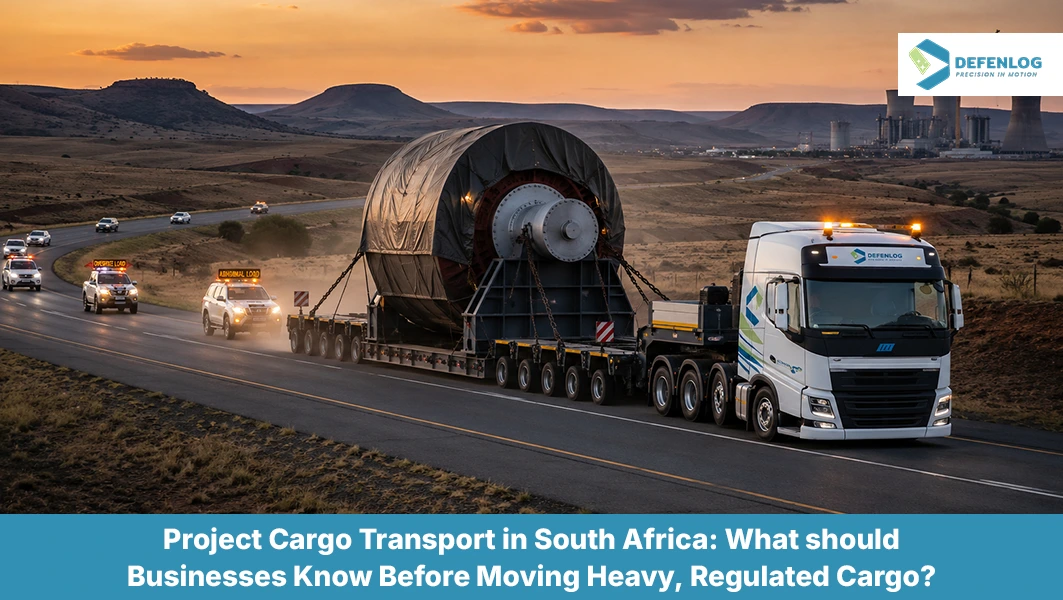
Project cargo refers to cargo that cannot be moved as regular freight due to its size, weight, value, handling requirements, route constraints, or regulatory requirements. It could be heavy machinery, industrial equipment, mining components, breakbulk cargo, abnormal loads, containerized project cargo, defense-related equipment, or sensitive high-value cargo.
In short, project cargo requires specialized planning. Standard truck reservations are insufficient. Route checks, permits, escorts, lifting equipment, cargo security plans, delivery coordination, and site readiness are all possible requirements for the movement. This type of cargo is frequently required to keep projects moving in sectors such as mining, energy, defense, construction, manufacturing, and infrastructure.
Why is Project Cargo Different from General Freight?
General freight transport usually adheres to standard routes, vehicle types, loading methods, and delivery schedules. Project cargo is more complex because the load may be heavy, oversized, difficult to handle, time-sensitive, or associated with a larger site operation.
A project cargo move may involve:
- Heavy or abnormal load requirements
- Route restrictions and bridge limits
- Special loading and offloading equipment
- Permit planning and approval timelines
- Escort vehicles were needed
- Site access checks
- Insurance confirmation
- Delivery timing linked to project milestones
This is why using a general transporter for project cargo can introduce unnecessary risk. A low-cost transportation option may appear appealing at first, but if the route, permits, equipment, or insurance are incorrect, the shipment may experience delays, damage, penalties, or failed delivery.
The Current Project Cargo Challenge in South Africa
South Africa’s and Africa’s logistics environments are becoming increasingly demanding. Mining, energy, construction, defense, and industrial projects all require reliable inland transportation, but port delays, road conditions, border congestion, infrastructure gaps, and cargo security risks can complicate each movement.
Even a minor planning lapse can result in high costs for project cargo. A heavy component stuck at port, a machine delayed in transit, or an oversized load obstructed by a permit issue can all have an impact on project timelines and costs.
Before moving heavy or regulated cargo, businesses should check:
- Is the route suitable for the load size and weight?
- Are permits or approvals required?
- Is the delivery site ready to receive the cargo?
- Is the vehicle suitable for the cargo type?
- Is lifting or offloading equipment available?
- Does insurance match the cargo value and risk?
- Can the transporter support urgent or 24/7 movement?
For freight forwarders, shipping lines, mining companies, and global project teams, the inland leg cannot be dismissed as a minor inconvenience. It is frequently the area where the greatest operational risk appears.
Route Planning Matters Before the Cargo Moves
When transporting project cargo, the best route isn’t always the shortest. It is the route that is safe, practical, compliant, and appropriate for the cargo.
Route planning includes considerations such as road width, bridge limits, overhead lines, turning points, road conditions, urban restrictions, stopping areas, escort requirements, and access to mines, ports, factories, defense sites, or construction zones. Border points, customs rules, route reliability, and country-specific requirements must all be considered when moving between SADC countries.
Strong route planning helps to avoid last-minute problems, protects cargo and public roads, and allows for better control over the project timeline.
Permits, Compliance, and Documentation
Project cargo needs more documentation than standard freight, especially when the load is oversized, overweight, dangerous, defense-related, or moving cross-border.
Businesses need to prepare key details early, such as cargo weight, dimensions, description, pickup and delivery points, site access instructions, permits, insurance, and compliance documents. If the cargo is dangerous goods or regulated, additional documentation such as dangerous goods declarations, emergency cards, or safety information may be required.
Poor documentation can cause the shipment to be delayed before it even leaves, resulting in missed delivery dates, additional costs, and increased pressure on the project team.
Heavy and Regulated Cargo Needs Stronger Risk Control
Not all project cargo is hazardous, but many movements are higher risk due to size, value, sensitivity, or project importance. Heavy machinery, defense equipment, industrial components, mining cargo, hazardous goods, and Class 1 loads require greater control than standard freight.
This is where a specialized road transportation partner like Defenlog is important. The carrier must manage the entire movement, not just the truck. This includes route planning, insurance checks, controlled dispatch, cargo handling, and open communication with all parties involved.
Loading, Securing, and Site Readiness
Project cargo transport starts before the truck moves. It begins with how the cargo is prepared, lifted, loaded, secured, and checked. If a heavy component is not handled properly, it can create safety risks, delays, or damage during the journey.
Before dispatch, businesses should confirm the loading plan, lifting equipment, securing method, site access route, delivery window, offloading team, and communication procedure. This is particularly important in mines, construction sites, industrial plants, ports, and remote project locations.
These checks may appear simple, but they can help you avoid costly problems later.
Insurance Should Match the Cargo Risk
Project cargo can be expensive, difficult to replace, and subject to tight project deadlines. If it is damaged, delayed, or exposed during transport, it may disrupt installation schedules, site teams, production plans, or customer commitments.
That is why insurance should cover the cargo rather than just the trip. Businesses should ensure that the coverage includes the cargo type, value, route, and risk level. This step is especially important when dealing with hazardous, explosive, defense-related, or high-value cargo.
Common Mistakes Businesses Make in Project Cargo Transport
The majority of project cargo issues arise before dispatch. Poor planning is often the root cause of the problem, rather than the cargo itself.
Businesses should avoid:
- Treating project cargo like normal freight
- Choosing a carrier only because the quote is cheaper
- Starting permit planning too late
- Ignoring route limitations
- Not checking site access conditions
- Using unsuitable vehicles
- Forgetting cargo insurance checks
- Underestimating loading and offloading needs
- Handing regulated cargo to a general transporter
The smarter approach is to pre-qualify the transportation partner.
Ask direct questions. Examine their experiences. Confirm the insurance. Examine the route planning capability. Make sure they understand the cargo category and project pressure.
How do You Choose the Ideal Project Cargo Transport Partner?
Choosing the right project cargo transport partner is not only about price or truck availability. Project cargo needs a company that understands planning, route risk, permits, cargo value, site access, and delivery pressure. The right partner should help you move the cargo safely, legally, and with proper control from pickup to final handover.
Before you confirm a transport partner, check whether they can provide:
- Experience in moving heavy, oversized, high-value, or regulated cargo
- Strong knowledge of South African road conditions and project routes
- Route planning support for bridges, road width, turning points, and site access
- Permit and abnormal load coordination where required
- Suitable vehicles and equipment for the cargo type
- Proper cargo securing, loading, and delivery control
- Goods-in-transit insurance that matches the cargo risk
- Support for port collections, mine deliveries, industrial sites, and remote locations
- 24/7 operational availability for urgent or time-sensitive movements
- Cross-border SADC transport capability where needed
- A safety-first and compliance-led operating approach
If they understand the cargo, route, documents, loading requirements, insurance, and delivery conditions from the start, the movement will be much easier to manage. For project cargo, that level of planning can mean the difference between a successful delivery and a costly delay.
Conclusion
Project cargo transport entails more than simply moving a large load. It entails planning the route, obtaining permits, securing the cargo, managing risk, protecting value, and delivering safely while remaining in control. If you need a specialized road transport partner in South Africa or Africa, Defenlog offers compliant, insured, and safety-focused transportation for project cargo, heavy equipment, regulated freight, dangerous goods, explosives, Class 1 cargo, and defense-related movements. Contact us today to discuss your project cargo transportation needs.