
Transporting an oversized transformer, mining machine or industrial structure across South Africa requires more than a heavy-duty truck and an experienced driver. Narrow roads, restricted bridges, busy intersections and unexpected traffic conditions can turn an abnormal load movement into a serious safety risk. This is where escort vehicles become essential.
For logistics managers, project cargo operators and freight forwarders, understanding abnormal load escort vehicle requirements is an important part of transport planning. But when is an escort legally required, what equipment must it carry, and who is responsible for managing the movement? This guide explains the key requirements, regulations and safety responsibilities involved in escorting abnormal loads across South Africa.
What is an Abnormal Load Escort Vehicle?
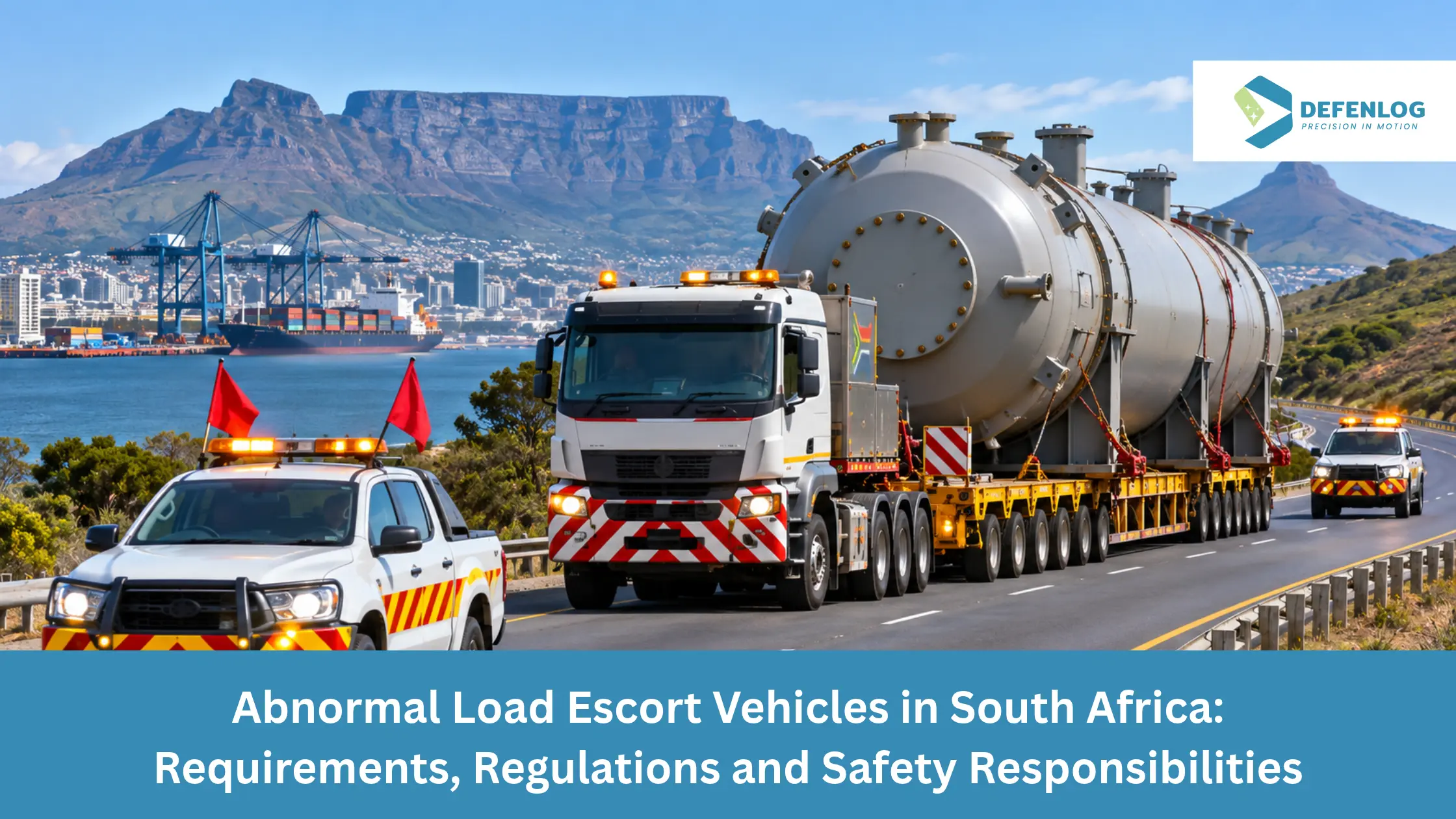
An abnormal load escort vehicle is a support vehicle that accompanies an oversized or unusually heavy transport combination to improve road safety and warn other motorists.
These vehicles, commonly called pilot vehicles, operate ahead of or behind abnormal load trucks depending on the cargo dimensions, route conditions, and permit requirements.
Their main purpose is to identify potential road hazards, communicate with the truck driver, and alert approaching traffic to the abnormal load movement.
Escort vehicles are commonly used when transporting mining equipment, industrial transformers, construction machinery, and other oversized cargo that cannot move safely under normal road transport conditions.
When does an Abnormal Load Require an Escort Vehicle?
Not every abnormal load requires an escort vehicle. The requirement depends on the overall dimensions, vehicle configuration, approved route, and conditions specified by the relevant road authority.
A wide load travelling along a national highway may present different risks from the same load moving through narrow urban roads or restricted intersections.
Authorities consider several factors when determining escort requirements:
- Overall load width, length and height.
- Total vehicle mass and axle loading.
- Road width, bridge clearances and overhead obstacles.
- Traffic volumes and intersection conditions.
- Permitted travelling hours and route restrictions.
- Specific abnormal load permit conditions.
A common question among transport operators is when a wide load needs an escort.
There is no single width rule that applies to every abnormal movement. TRH11 provides dimensional criteria for escort arrangements, while provincial authorities may impose additional conditions.
This is why project cargo planning and route engineering are important before transporting oversized equipment through restricted routes.
Types of Escort Vehicles Used in South Africa
Abnormal load transportation generally involves three escort arrangements, depending on the size and complexity of the movement.
1. Lead Escort Vehicle
A lead escort travels ahead of the abnormal load truck to warn approaching motorists and identify potential obstacles.
The operator monitors road conditions, narrow passages, intersections, and overhead clearances while maintaining communication with the truck driver.
2. Rear Escort Vehicle
A rear escort follows the abnormal transport combination and warns approaching vehicles about the oversized or slow-moving load.
It also monitors traffic approaching from behind, particularly where the cargo obstructs visibility or occupies additional road space.
3. Multiple Escort Vehicle Arrangements
Some abnormal loads require both front and rear escorts. Complex movements may also require additional support vehicles or authorised traffic officers.
The number and positioning of escort vehicles must follow the applicable permit conditions and transport requirements.
Abnormal Load Escort Vehicle Requirements and Regulations
Abnormal transport in South Africa operates under the National Road Traffic Act 93 of 1996, the National Road Traffic Regulations and applicable provincial permit conditions.
TRH11 provides technical guidance on abnormal vehicle dimensions, mass limitations, escort arrangements and movement requirements.
Abnormal Load Permits
An abnormal load permit authorises the movement of a vehicle or load exceeding normal legal limits, subject to specified conditions.
Before arranging escorts, operators must understand the requirements attached to an abnormal load permit, including approved routes, movement restrictions and required safety arrangements.
Escort Operator Requirements
Escort drivers must meet the applicable licensing, competency and authorisation requirements for their assigned duties.
Where provincial authorities require additional documentation or approval, operators must obtain it before the movement begins.
Travelling Hours and Route Restrictions
Abnormal load permits may restrict movement during peak traffic periods, poor visibility, weekends or public holidays.
Additional restrictions may apply during December holiday periods or on particular provincial routes.
For cross-border abnormal transport into Botswana, Zambia or other neighbouring countries, separate permits and escort arrangements may be necessary under each country’s regulations.
Escort Vehicle Equipment, Signage and Safety Requirements
Escort vehicles must be properly equipped to warn motorists and maintain communication throughout abnormal load movements.
Important equipment requirements include:
- Warning signage: Clearly visible abnormal load warning boards meeting the applicable specifications.
- Amber warning lights: Flashing warning lights positioned for visibility to other road users.
- Communication systems: Reliable two-way communication between escort operators and the abnormal truck driver.
- Suitable escort vehicle: A vehicle meeting the applicable requirements for escort operations.
- Safety equipment: Required visibility and emergency equipment appropriate to the movement.
TRH11 specifies warning board dimensions, lettering and lighting arrangements for applicable escort categories. For example, an own escort warning board is specified as at least 1,200 mm × 400 mm, with the wording “ABNORMAL LOAD AHEAD”.
The abnormal transport combination must also display the prescribed warning boards, flags and markings where required.
Before departure, operators should inspect all equipment and confirm compliance with the approved permit conditions.
Responsibilities of Escort Vehicle Operators
Escort drivers play an active role in maintaining safety throughout abnormal load transportation.
Their responsibilities extend beyond simply driving ahead of or behind an oversized truck.
Key responsibilities include:
- Checking the approved route for potential hazards.
- Maintaining communication with the abnormal load driver.
- Warning approaching motorists about the movement.
- Monitoring road conditions and restricted sections.
- Identifying obstacles that could affect safe passage.
- Reporting unexpected hazards or unsafe conditions.
- Supporting safe movement through difficult road sections.
Escort positioning must follow the applicable requirements. Under TRH11, a single own escort generally travels behind the abnormal vehicle, while two own escorts normally operate at the front and rear, subject to relevant exceptions.
Private escort drivers must not undertake traffic-control duties reserved for authorised traffic officers.
How to Arrange Escort Vehicles for Abnormal Load Transportation
Arranging escort vehicles requires coordination between the transport operator, escort provider and relevant road authorities.
For abnormal transport in Pretoria, Gauteng, Mpumalanga or other parts of South Africa, the process generally involves five steps.
- Confirm cargo details: Record the load dimensions, mass, vehicle configuration, collection location and delivery destination.
- Assess the transport route: Identify bridges, restricted intersections, overhead obstacles and provincial boundaries.
- Determine escort requirements: Establish the number and type of escorts required under applicable guidance and permit conditions.
- Obtain the necessary approvals: Arrange abnormal load permits, escort resources and authorised traffic support where required.
- Prepare for movement: Confirm travelling times, communication procedures, emergency arrangements and delivery coordination.
For large industrial consignments, project cargo transportation requires careful coordination between specialised trailers, route assessments, permits and escort arrangements.
Planning these activities together helps reduce avoidable delays and improves operational control.
How Defenlog Coordinates Escort Vehicles for Safe Abnormal Load Movements?
Managing abnormal loads involves more than arranging escort vehicles. Each movement requires careful coordination between cargo dimensions, road conditions, suitable transport equipment, regulatory approvals and delivery requirements.
Defenlog provides specialist road transport services across South Africa, supported by route assessments, transport planning and compliance-focused movement coordination.
For oversized mining machinery, industrial equipment and complex project cargo, Defenlog assesses the transport requirements and coordinates suitable escort arrangements in line with applicable permit conditions.
This coordinated approach helps minimise avoidable disruptions, manage transport risks and support the safe movement of abnormal loads across South Africa.
Conclusion
Understanding abnormal load escort vehicle requirements is essential for planning safe and compliant oversized cargo movements in South Africa. From determining escort arrangements to obtaining permits and managing route restrictions, every requirement must be addressed before transportation begins.
Working with an experienced specialist road transport provider can simplify this process and reduce operational risks.
Planning to transport oversized machinery or abnormal cargo? Book a free consultation call with Defenlog to discuss your transport requirements, escort arrangements, and route planning needs.