
Now think about this for a second, moving explosives isn’t just another logistics job. It’s one of the most controlled, high-risk operations in the transport world. In South Africa, where mining, energy, and industrial sectors rely heavily on explosives, road transport plays a critical role in keeping operations running smoothly.
But here’s the reality: transporting explosive goods isn’t just about getting from point A to point B. It’s about doing it safely, compliantly, and without compromise. One small mistake can have serious consequences. That’s why companies today are turning to specialists in high-risk road transport who understand the responsibility behind every shipment.
What are Explosive Goods and Why do they Need Special Handling?
Explosive goods fall under Class 1 dangerous goods, meaning they can detonate, ignite, or cause severe damage if not handled properly. These include materials like blasting explosives used in mining, detonators, ammunition, and industrial explosive compounds.
Unlike general freight, explosives are sensitive to heat, friction, shock, and even improper storage. That’s why they require strict controls at every stage, from packaging and loading to transport and delivery.
In South Africa, explosives are essential to key sectors like mining, where precision and timing are critical. But with that importance comes responsibility. Every shipment must follow strict safety and regulatory standards to prevent accidents and protect both people and the environment.
How are Explosive Goods Transported by Road in South Africa?
Transporting explosives by road is a highly controlled process. It’s not something that can be handled casually or without planning. Every movement is structured, monitored, and executed with precision.
The process begins with proper classification and packaging, ensuring explosives are stored in approved containers that reduce risk. Once prepared, they are loaded onto licensed vehicles specifically designed for Class 1 cargo.
From there, several steps ensure safe movement:
- Routes are carefully selected to avoid high-risk or densely populated areas
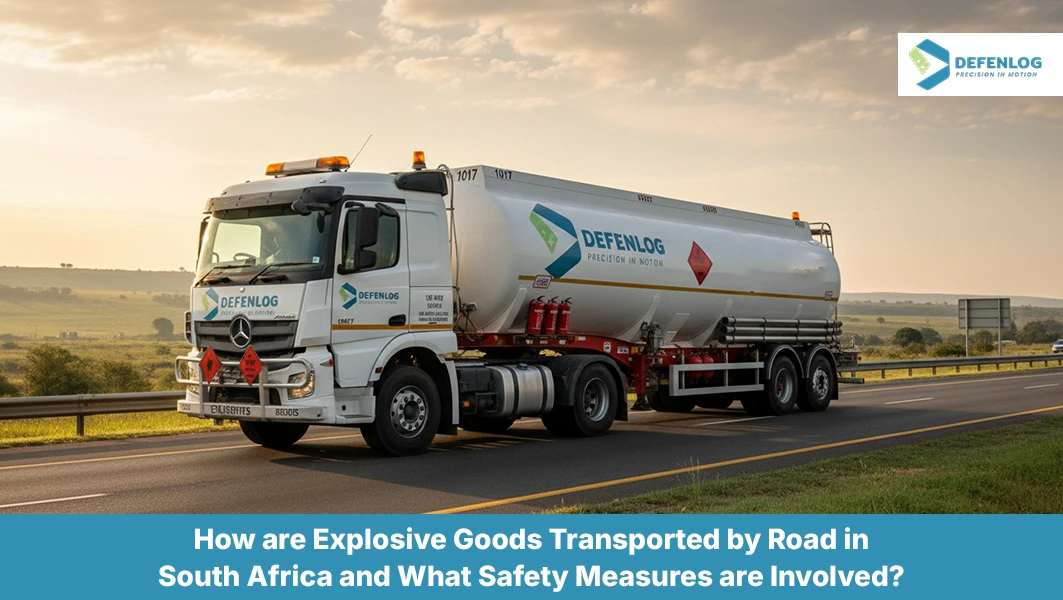
- Vehicles are fitted with hazard signage and safety systems
- Drivers are trained in dangerous goods handling
- Transport is monitored continuously from start to finish
Here’s something worth noting: studies show that a significant portion of hazardous transport incidents are linked to non-compliance or human error, which highlights why strict procedures are essential in explosive logistics.
Road transport connects ports, storage facilities, and mining sites across South Africa, making it the backbone of explosive goods movement. But the real difference lies in how safely and professionally the journey is managed.
What Safety Measures Keep Explosive Transport Under Control?
When it comes to explosives, safety isn’t just a requirement, it’s a system built into every step of the operation. Transport providers must follow strict protocols to minimize risk.
Key safety measures include:
- Licensed and compliant vehicles approved for explosives transport
- Certified drivers trained specifically for hazardous goods
- Proper labeling and placarding for clear hazard identification
- Transport Emergency Cards (TRECs) for quick emergency response
- Route risk assessments to avoid sensitive areas
- 24/7 monitoring and communication for real-time control
In addition, goods-in-transit insurance ensures that high-risk cargo is financially protected, reducing exposure for logistics partners and clients.
These measures work together to create a controlled environment where explosives can be transported safely, even across long distances.
Why Compliance and Licensing Matter More than Ever in South Africa?
South Africa has strict regulations governing the transport of dangerous goods, especially explosives. These rules are enforced through frameworks like the National Road Traffic Act and SANS standards, which define how hazardous cargo must be handled.
Compliance goes beyond paperwork, it’s about execution. Transport operators must ensure that vehicles are licensed, drivers are certified, and all documentation is accurate and up to date.
Failure to comply can lead to serious consequences:
- Legal penalties and fines
- Operational shutdowns
- Increased safety risks
- Damage to reputation
In a high-risk environment like explosives transport, compliance is what separates safe operations from dangerous ones.
Why Defenlog, a Specialist in Explosives Transport, Makes the Real Difference?
Let’s be honest, not every transport provider is built to handle explosives. This isn’t regular freight you can move with a standard setup. It demands precision, discipline, and a mindset where safety comes first, every single time. That’s exactly where Defenlog steps in.
Positioned as South Africa’s Specialist in Explosives & High-Risk Road Transport, Defenlog doesn’t treat hazardous cargo as just another service, it’s the core of everything they do. The company is built around one clear principle:
High-Risk Cargo. Zero Compromise.
What makes Defenlog stand out is its strong operational foundation:
- Entire fleet licensed for explosives and Class 1 cargo
- Full compliance with hazardous goods legislation
- Comprehensive goods-in-transit insurance covering high-risk cargo
- 24/7/365 operations for time-critical and emergency movements
- Specialist expertise in project cargo and abnormal loads
- Safety-driven culture with experienced hazardous goods drivers
Defenlog supports a wide range of industries, including shipping lines, freight forwarders, mining companies, and defense contractors. For these sectors, safety isn’t just important, it’s critical.
By focusing on high-risk logistics, Defenlog ensures that every shipment is handled with precision, professionalism, and complete control.
From Planning to Delivery: What Safe Execution Really Looks Like?
Safe explosives transport isn’t just about following rules, it’s about how those rules are executed consistently in real-world operations. What looks compliant on paper must translate into controlled, reliable action on the road.
From preparation to final delivery, every step is carefully managed to reduce risk and maintain safety:
- Pre-transport checks to ensure vehicles, documentation, and compliance are fully in place
- Strict loading procedures to prevent any mishandling or exposure to risk
- Route planning and risk assessment to avoid sensitive or high-traffic areas
- Real-time monitoring for continuous visibility and quick response
- Clear communication between drivers, operators, and stakeholders
- Coordinated delivery to ensure safe unloading and handover
Whether moving explosives from ports to mining sites or across long regional routes, consistency in execution is what keeps operations safe. Every stage matters, and every decision plays a role in minimizing risk. Because in high-risk logistics, safety isn’t just one step in the process, it’s the process itself.
Conclusion: When Safety is Non-Negotiable
Explosive goods transport by road in South Africa is one of the most demanding areas of logistics, requiring strict compliance, specialized equipment, and experienced professionals. Choosing the right transport partner plays a critical role in ensuring safety, reducing risk, and maintaining smooth operations.
Defenlog stands as a trusted specialist in high-risk road transport, licensed, insured, compliant, and safety-driven.
Are you prepared to transport explosives without compromising? Contact us today and work with a team built on safety and compliance.