
Your goods are ready for delivery, but delayed transport is putting your customer commitments at risk.
For manufacturers, distributors, and freight forwarders across South Africa, missed delivery windows, rising transport costs, vehicle shortages, and poor route coordination are common challenges. When deliveries are delayed, businesses face customer complaints, additional expenses, and pressure on their internal operations.
Managing these challenges with an in-house fleet requires constant attention to vehicles, drivers, routes, and delivery schedules. Outsourcing last-mile delivery to an experienced road transport company helps businesses reduce these responsibilities, coordinate deliveries more effectively, and maintain better control over the final movement of goods.
Why Businesses Outsource Last-Mile Delivery in South Africa?
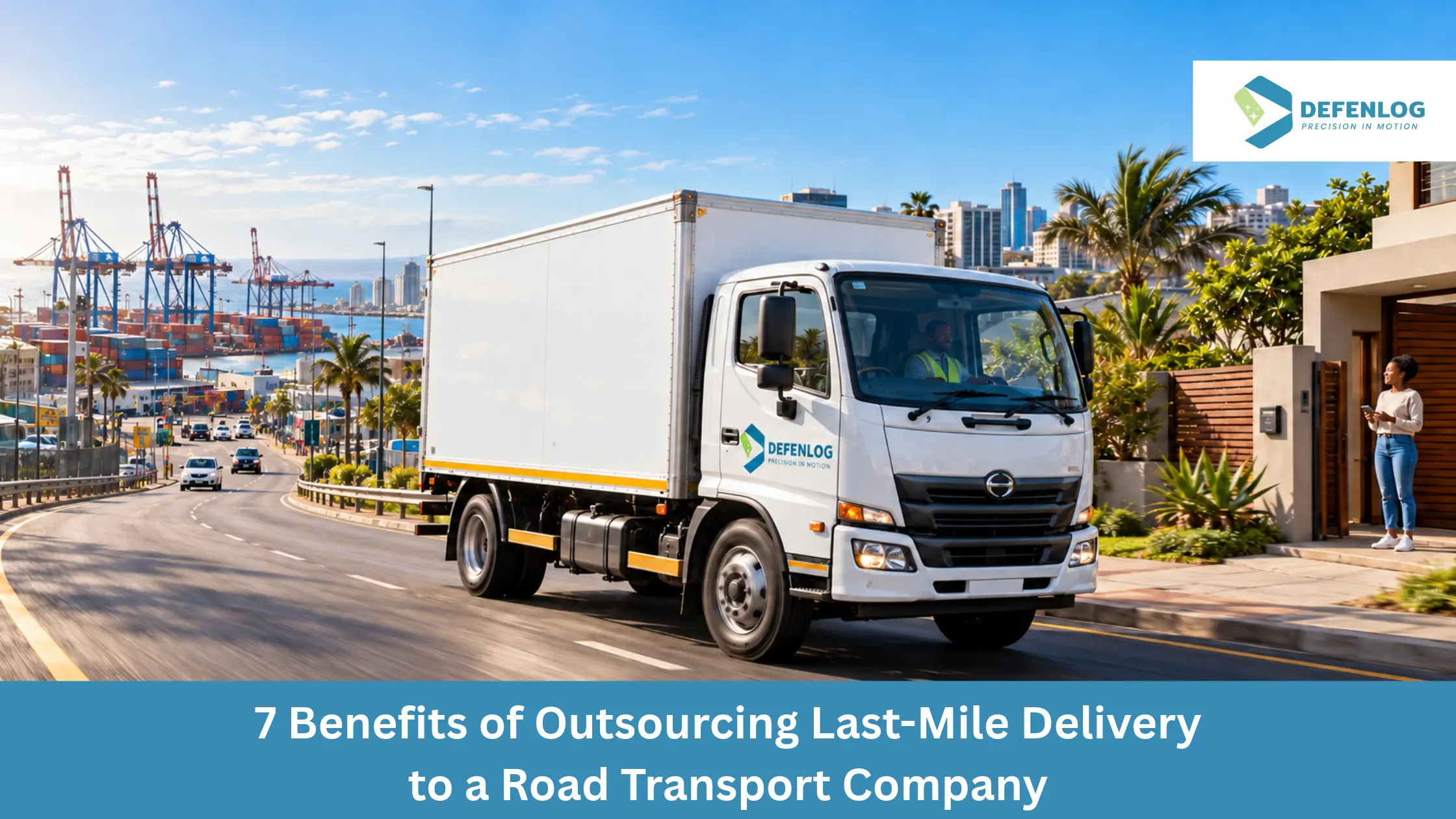
Last-mile delivery is the final movement of goods from a warehouse, distribution centre, or collection point to the receiving customer.
For South African businesses, this may involve delivering industrial supplies to factories, distributing stock to retail branches, or transporting equipment components to construction sites.
Managing these movements internally requires vehicles, drivers, route planning, delivery coordination, and documentation. Outsourcing allows businesses to use an established transport operator instead of managing every requirement independently.
However, the benefits depend on selecting a company with the right operational capabilities.
7 Benefits of Outsourcing Last-Mile Delivery to a Road Transport Company
1. Reduced Fleet Management Responsibilities
Operating an internal delivery fleet involves more than purchasing vehicles. Businesses must manage vehicle maintenance, driver availability, licensing, insurance, fuel, and daily dispatch.
Outsourcing last-mile delivery can reduce these operational responsibilities by transferring the agreed transport activities to a third-party provider.
For example, a manufacturer delivering finished products to several commercial customers may not need to maintain vehicles for every delivery route.
This allows internal teams to spend less time managing transport resources and more time handling production, sales, and customer requirements.
2. Better Route Planning and Delivery Scheduling
Delivering to several locations requires more than arranging the shortest route.
Traffic conditions, road restrictions, vehicle dimensions, receiving hours, and unloading time can affect delivery schedules.
An experienced road transport company considers these requirements when planning the movement.
For businesses with recurring distribution needs, general road freight transport can support structured collections, vehicle allocation, and scheduled deliveries.
This helps businesses establish more practical delivery plans and reduce unnecessary travel or waiting time.
3. Access to Suitable Vehicles and Transport Expertise
Different consignments require different vehicles.
Palletised goods, industrial components, machinery parts, and packaged commercial products may vary in weight, dimensions, and handling requirements.
A vehicle suitable for a warehouse delivery may not be appropriate for a construction site with restricted access.
Outsourcing gives businesses access to a transport provider that can assess cargo requirements and allocate suitable resources.
Some industrial businesses may also require project cargo transport or abnormal load transport for oversized machinery and heavy equipment. These movements need additional route assessments, specialised vehicles, and permit planning.
This is especially valuable for companies handling different product types without maintaining a dedicated vehicle for every movement.
4. Improved Coordination With Receiving Customers
A delivery can reach the correct address and still fail because the receiving team is unavailable.
Factories, warehouses, retail stores, and industrial facilities often operate within fixed receiving windows. Some locations also require appointments or specific unloading arrangements.
A road transport partner can coordinate these requirements before dispatch.
Proper coordination can help businesses reduce last-mile delivery delays and avoid unnecessary disruptions at customer premises.
5. Greater Delivery Visibility and Accountability
Businesses need to know whether their goods have been collected, are progressing towards delivery, or have reached the customer.
Without clear communication, operations teams may spend time contacting drivers and confirming delivery status.
A transport provider with defined reporting procedures can provide movement updates and communicate delivery issues when they arise.
Proof-of-delivery documentation also helps confirm that the goods reached the receiving party.
This gives businesses a clearer record of completed movements and helps resolve delivery queries.
6. More Flexibility for Changing Delivery Volumes
Delivery requirements do not always remain consistent.
A distributor may experience increased orders during certain periods. A manufacturer may need additional deliveries when production increases or new customers are added.
Maintaining enough internal vehicles for occasional demand can create unnecessary operating expenses.
Outsourcing allows businesses to discuss changing transport requirements with their provider and assess additional capacity when needed.
Vehicle availability and scheduling must still be confirmed, but early planning helps businesses respond to changes without immediately expanding their own fleet.
7. Better Control Over Delivery Costs
The cost of last-mile delivery includes more than fuel and driver wages.
Vehicle maintenance, insurance, waiting time, unsuccessful delivery attempts, and underused fleet capacity can all affect transport expenditure.
Outsourcing may help businesses move some fixed fleet responsibilities into agreed transport charges.
A structured transport arrangement also makes it easier to review delivery frequency, vehicle requirements, routes, and avoidable operating costs.
The lowest quotation is not always the most economical choice. Reliable execution and clear transport responsibilities matter when evaluating the overall cost.
Businesses that Benefit From Outsourced Last-Mile Delivery
Last-mile road transport can support several business sectors across South Africa.
- Manufacturing: Delivering finished products, spare parts, and industrial supplies to customers.
- Retail and Distribution: Coordinating stock movements from distribution centres to retail branches.
- Wholesale Businesses: Delivering palletised and packaged goods to commercial customers.
- Construction and Infrastructure: Transporting equipment components and materials to project sites.
- Freight Forwarders: Arranging the final South African road transport leg for customer consignments.
The appropriate transport arrangement depends on cargo requirements, destination access, delivery frequency, and the receiving site’s operating conditions.
Choosing the Right Last-Mile Road Transport Partner
Before outsourcing, businesses should evaluate whether the transport provider can meet their operational needs.
Important considerations include vehicle suitability, service coverage, delivery coordination, communication procedures, and proof-of-delivery arrangements.
For regular movements, businesses should also confirm how changes in delivery schedules, cargo volumes, and receiving requirements will be handled.
Selecting a partner based on operational capability rather than price alone can help establish a more dependable distribution arrangement.
Why Choose Defenlog for Last-Mile Delivery?
Defenlog brings its experience in specialist road transport services across South Africa to commercial and industrial cargo movements. Its core strengths include structured transport planning, cargo-specific vehicle allocation, regulatory awareness, and controlled execution.
For last-mile delivery requirements, Defenlog focuses on coordinating collection, route planning, delivery schedules, movement oversight, and verified handover. This approach helps businesses maintain accountability from dispatch to the final delivery point.
Whether transporting palletised goods, industrial supplies, or equipment components, Defenlog prioritises careful planning and reliable road transport coordination.
Conclusion
Outsourcing last-mile delivery helps businesses address common transport challenges, from rising fleet costs and missed delivery windows to poor coordination and additional operational pressure.
Working with an experienced road transport partner allows businesses to focus on their core operations while maintaining planned, controlled, and accountable deliveries.
Defenlog supports businesses across South Africa with structured road transport planning, suitable vehicle allocation, movement coordination, and verified delivery.
Looking for a reliable partner to manage your last-mile delivery requirements? Book a Free Consultation Call with Defenlog to discuss your cargo, delivery locations, and transport schedule.