
Every day, thousands of shipments travel on highways carrying materials that require far more care than ordinary cargo. These include flammable liquids, compressed gases, corrosive chemicals, and toxic substances. While essential for industries like mining, healthcare, energy, and manufacturing, transporting them safely requires strict regulations, specialized handling, and experienced logistics teams.
In South Africa, road freight is the primary way dangerous goods move from ports to mines, factories, and industrial zones. With strict regulations, long transport routes, and growing industrial demand, companies must follow clear rules and safety standards. When it comes to dangerous cargo, compliance and expertise aren’t optional, they’re essential for protecting people, property, and the environment.
Understanding Dangerous Goods in Road Transport
Dangerous goods, often called dangerous materials or hazmat, are substances that can pose risks to people, property, or the environment during transport. Because of these risks, they are classified into internationally recognized categories that define how they must be handled, packaged, and transported.
South Africa follows global classification standards through the National Road Traffic Act and the SANS (South African National Standards) codes, which regulate how dangerous goods move by road.
The Nine Classes of Dangerous Goods
Class 1: Explosives such as ammunition, blasting caps, and fireworks
Class 2: Gases, including propane, oxygen cylinders, and compressed gases
Class 3: Flammable liquids like fuel, ethanol, and solvents
Class 4: Flammable solids such as magnesium or matches
Class 5: Oxidizing substances and organic peroxides like hydrogen peroxide
Class 6: Toxic or infectious substances, including pesticides and medical waste
Class 7: Radioactive materials used in medical or industrial applications
Class 8: Corrosive materials such as acids and industrial chemicals
Class 9: Miscellaneous dangerous goods like lithium batteries or dry ice
Each category has specific packaging, labeling, and transport requirements. Mishandling even one type of dangerous material can result in severe safety incidents, making proper classification and compliance essential.
Why South Africa’s Logistics Environment Raises the Stakes?
Transporting dangerous goods by road in South Africa presents unique challenges that logistics providers must carefully manage. The country’s economy relies heavily on industries that use dangerous materials, particularly mining and heavy manufacturing.
Large quantities of explosives, chemicals, fuels, and industrial substances move across road networks every day. Many shipments travel long distances from major ports to inland operations or cross borders into neighboring countries.
Several factors make dangerous goods logistics particularly important in South Africa:
- Mining and energy industries depend heavily on explosives and chemicals
- Major ports act as gateways for dangerous imports and exports
- Long road corridors connect landlocked neighboring countries
- Environmental and safety regulations are becoming stricter
These realities make safe and compliant road transport essential for businesses operating in the region.
Understanding the Risks Behind Dangerous Cargo Transport
Transporting dangerous goods without proper precautions can create serious consequences for both businesses and communities. Road accidents involving dangerous materials can quickly escalate into emergencies.
Some of the most common risks include:
- Explosions or fires during transport
- Toxic leaks that contaminate the environment
- Serious injuries or loss of life
- Heavy fines and regulatory penalties
- Operational shutdowns and reputational damage
Because of these risks, companies cannot afford to treat Dangerous cargo like regular freight. Specialized equipment, trained drivers, and strict operational procedures are necessary to keep these shipments safe.
The Rules that Govern Dangerous Goods Road Freight
South Africa has established a strong regulatory framework to manage dangerous goods transport. These regulations ensure that Dangerous cargo moves safely through the country’s road networks.
Key regulatory bodies and standards include:
- Department of Transport (DoT), which oversees national transport safety policies
- The South African Bureau of Standards (SABS) is responsible for SANS codes governing dangerous goods
- National Road Traffic Act, which regulates vehicles, driver training, and safety compliance
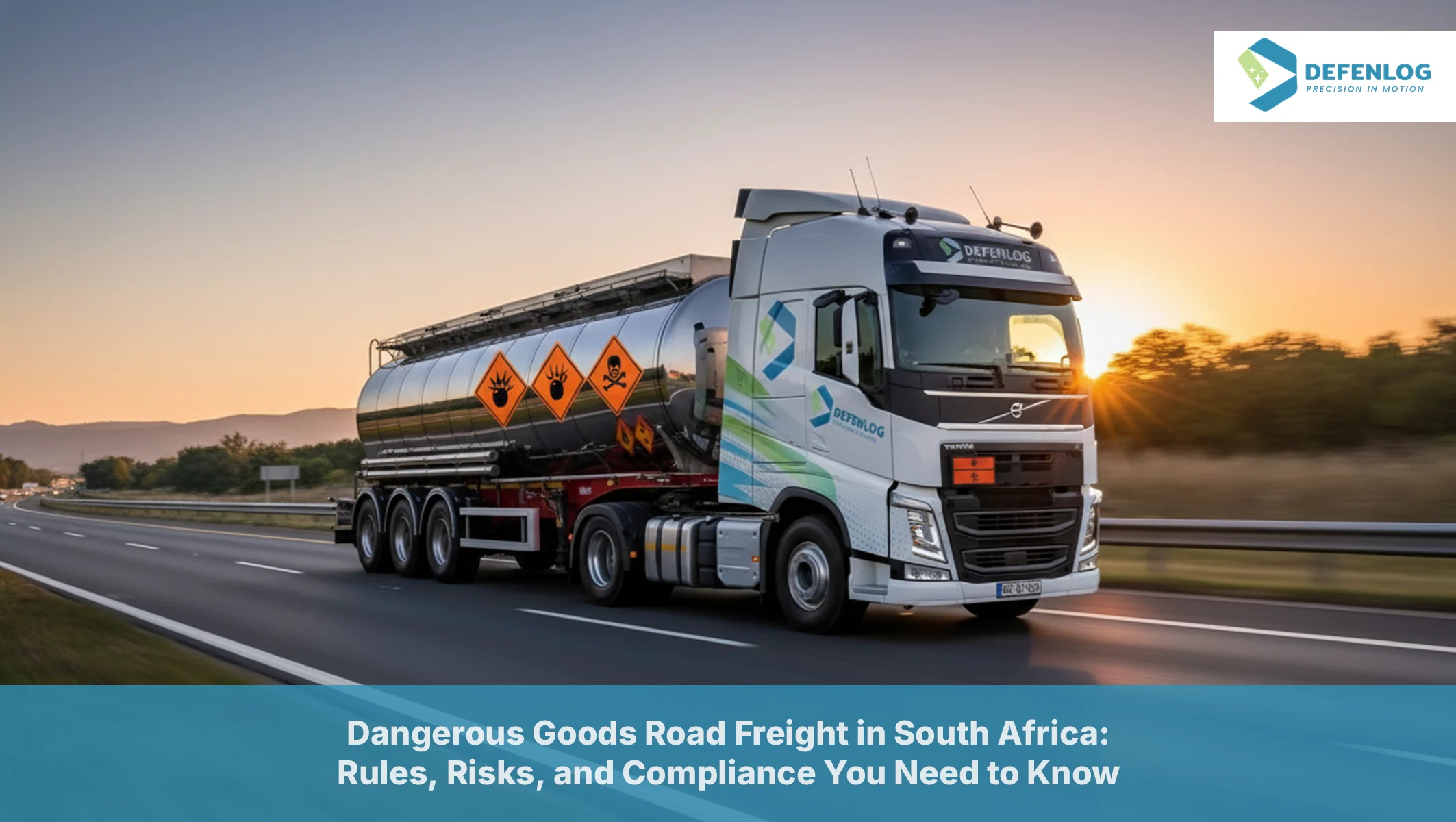
Companies transporting dangerous materials must ensure that vehicles display the correct placards, drivers hold proper certifications, and emergency documentation, such as Transport Emergency Cards (TRECs), is available during transport.
These requirements are designed to protect both transport operators and the public in the event of an incident.
How Defenlog Improves Safety in Dangerous Goods Road Transport?
Handling dangerous goods safely requires more than just trucks and drivers, it requires specialized expertise, strict compliance systems, and a strong safety culture. This is where Defenlog plays a critical role in South Africa’s Dangerous logistics sector.
Defenlog focuses specifically on high-risk and regulated road transport, supporting industries such as mining, energy, manufacturing, and defense that depend on the safe movement of dangerous goods. As the best road transport partner in South Africa, Defenlog operates with systems and procedures designed specifically for hazardous cargo instead of treating it like standard freight.
One of the company’s biggest advantages is that its entire fleet is licensed for explosives and Class 1 cargo, ensuring full compliance with South African dangerous goods legislation. This makes Defenlog a reliable road transport partner for businesses moving high-risk materials that require strict regulatory adherence.
Defenlog also strengthens safety through several key operational capabilities:
- Comprehensive goods-in-transit insurance, covering dangerous goods, explosives, and other high-risk cargo
- 24/7/365 operations, enabling round-the-clock dispatch and emergency transport capability
- Project cargo and heavy transport expertise, including abnormal loads, mining equipment, and containerized dangerous goods
- Safety- and compliance-driven operations, supported by experienced dangerous goods drivers and risk-controlled procedures
- National and cross-border road coverage, connecting ports, industrial zones, and mining regions across Southern Africa
By combining regulatory compliance, specialized fleets, and experienced operations, Defenlog helps ensure that dangerous goods move safely, efficiently, and responsibly across South Africa’s road networks. This level of expertise gives logistics partners the confidence that dangerous cargo is handled by professionals who understand both the risks and the rules.
Conclusion: Safe Dangerous Goods Transport Starts with the Right Partner
Dangerous goods transport by road plays a critical role in South Africa’s industrial supply chains. From explosives used in mining to chemicals used in manufacturing, these materials must move safely and in full compliance with national regulations.
Defenlog helps make that possible by providing specialized road transport solutions for dangerous cargo. With licensed vehicles, experienced personnel, and safety-driven operations, the company supports industries that rely on reliable dangerous goods logistics.
Ready to move dangerous goods safely across South Africa? Contact us and partner with a road transport specialist for dangerous logistics.