
A mining machine may be designed to withstand rock, dust, heat, and extreme operating conditions. However, transporting that same machine from a port, workshop, depot, or mine site can be one of the most challenging aspects of the project.
For you, the challenge is more than just finding a truck that can transport the equipment. You’ll need accurate cargo information, the right trailer, legal permits, a suitable route, safe loading, adequate insurance, specialist transport, and a ready delivery site. If a single step is missed, a valuable asset may be delayed before it even reaches the road.
Why is Heavy Mining Equipment Transport So Complex?
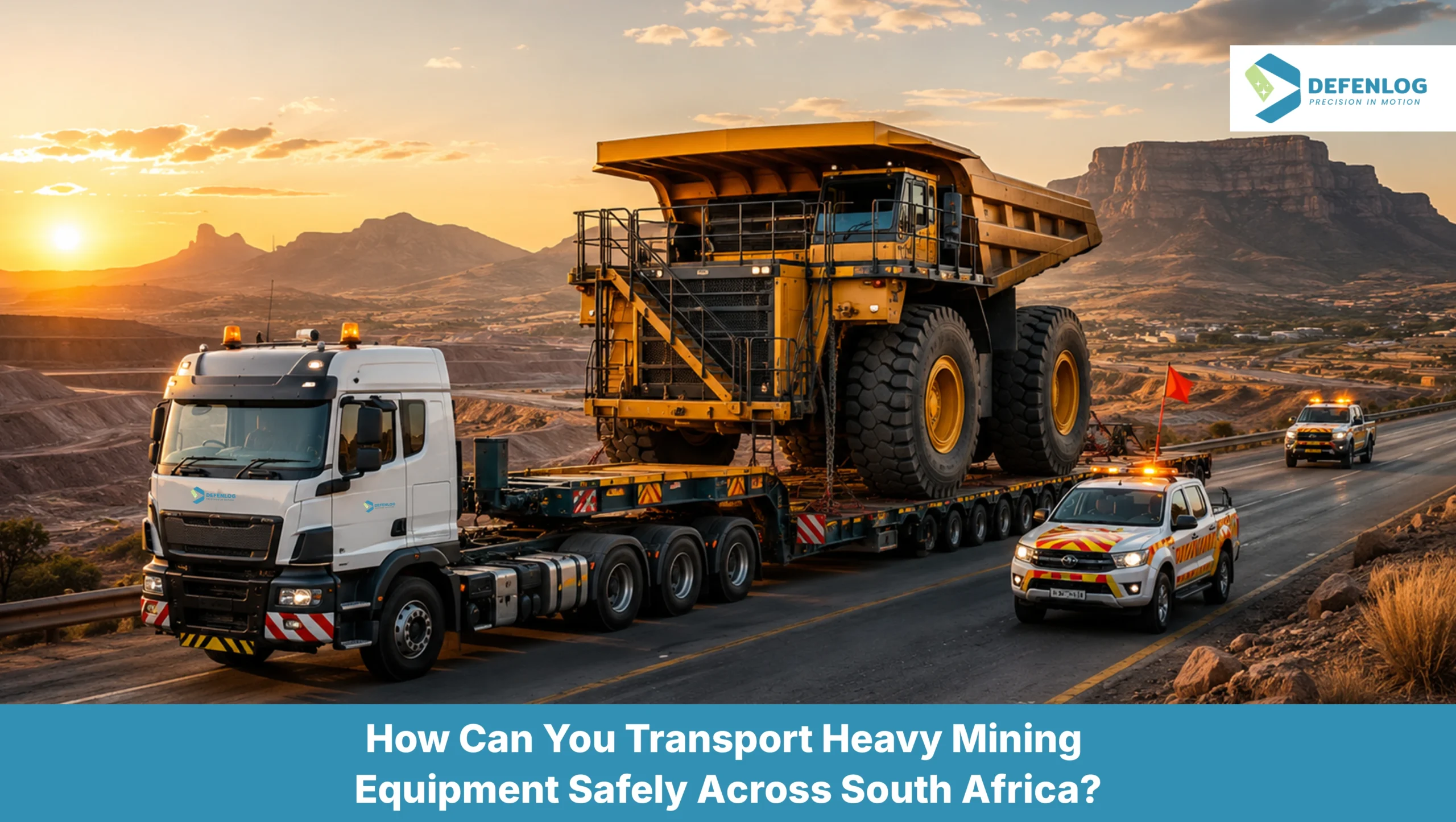
Heavy mining equipment often exceeds standard road limits for size, weight, or axle load. Moving it may require specialized trailers, abnormal-load permits, route clearance, escorts, and additional planning.
Because the equipment is high-value and tied to accurate cargo schedules, delays can affect installation, production, and site operations. That is why heavy equipment transport should be planned early rather than booked at the last minute.
Start with Accurate Equipment Information
Safe transport begins with verified information. A transporter cannot choose the correct trailer, assess the route, or prepare permits without knowing exactly what is being moved.
Before requesting a transport plan, confirm:
- Equipment type, make, and model
- Verified length, width, and height
- Total transport weight
- Centre of gravity and ground clearance
- Lifting and securing points
- Removable attachments
- Collection and delivery locations
- Site access conditions
- Required delivery date
Don’t rely solely on estimates or outdated specifications. Buckets, booms, tires, counterweights, and modifications can all impact the final transport profile.
Select the Right Trailer for the Equipment
Trailer selection depends on more than cargo weight. Height, axle distribution, loading method, ground clearance, and route conditions all influence the right vehicle combination because it ties to the project cargo.
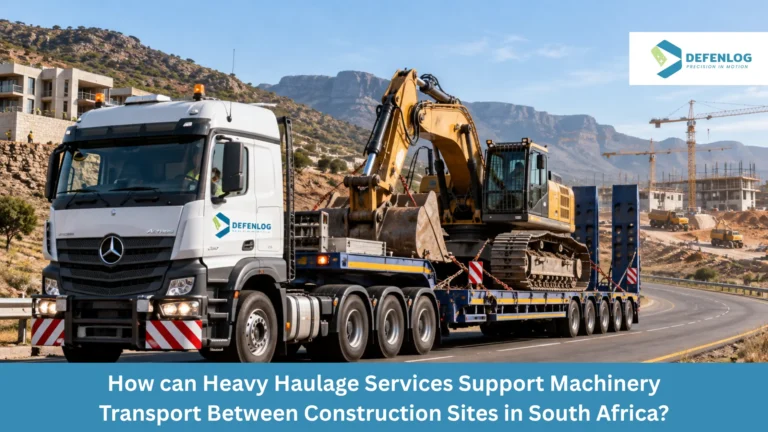
A lowbed trailer may help reduce the total height of tall machinery, while a flatbed may suit equipment that falls within manageable height and weight limits. Larger or unusually configured machines may require a different specialist heavy-haul solution.
Before assigning a vehicle, the transport partner should assess:
- Trailer payload capacity
- Deck height and length
- Axle configuration
- Weight distribution
- Loading angle
- Turning requirements
- Equipment restraint points
- Overall loaded dimensions
Choosing a trailer solely based on availability can result in safety hazards, permit issues, or loading delays.
Determine Whether an Abnormal-Load Permit is Required
An abnormal-load permit may be required if the loaded vehicle exceeds legal road limits in terms of dimensions, axle mass, or total vehicle mass.
Permit requirements vary depending on the equipment, trailer configuration, route, and provinces involved. Permits may specify:
- Approved route
- Travel dates and times
- Maximum speed
- Escort requirements
- Warning signs and lighting
- Axle-load conditions
- Road or bridge restrictions
Permit planning should start early. Waiting until the equipment is ready for collection can result in missed delivery deadlines, additional costs, and project delays.
Plan the Entire Route Before Dispatch
The shortest route is not always the safest or most practical route for heavy mining equipment.
A route assessment should take into account the loaded vehicle’s total height, width, weight, length, and turning requirements. It might need to identify:
- Bridge capacities
- Overhead cables and structures
- Narrow roads and sharp turns
- Steep gradients
- Roadworks and construction zones
- Weak road surfaces
- Toll plazas and weighbridges
- Secure stopping locations
- Mine or industrial-site access
- Local traffic restrictions
For cross-border movements into SADC countries, the plan must also include customs requirements, border conditions, transit permissions, and country-specific regulations.
Strong route planning reduces the risk of last-minute diversions, access failures, permit problems, and equipment exposure.
Prepare the Equipment for Safe Loading
Heavy equipment transportation begins before the truck departs. The machine must be prepared, lifted or driven onto the trailer, properly positioned, and securely fastened for the journey.
Before loading, confirm:
- Who is responsible for lifting or driving the machine?
- Whether cranes, ramps, or support equipment is available?
- Which attachments should be removed?
- How will the weight be distributed?
- Where will the center of gravity sit?
- Which approved securing points will be used?
- Who will inspect the final load?
Poor weight distribution can impair steering, braking, stability, and axle compliance. Weak restraints can cause the machinery to shift while braking, turning, or driving over uneven terrain.
A final inspection should ensure that the equipment, trailer, restraints, warning signs, and documents adhere to the approved transport plan.
Make Sure the Delivery Site is Ready
A successful road journey can still face delays if the mine or project site is not ready to receive the equipment.
Before dispatch, confirm the delivery window, gate procedures, access-road condition, turning space, ground stability, lifting equipment, offloading team, and authorized contacts.
Remote or active mining sites may also have specific safety procedures, induction requirements, blasting schedules, shift changes, or controlled access periods.
Clear communication between the transporter, freight forwarder, miner, project manager, and lifting team helps prevent waiting time, unsafe offloading, and extra staking costs.
Make Sure the Insurance Matches the Risk
Heavy mining equipment can be expensive, difficult to replace, and essential to production. Damage during loading, transit, or offloading may affect far more than the equipment value.
Before movement, confirm whether the insurance covers:
- The declared machinery value
- The specific equipment type
- Loading and offloading
- The complete route
- Temporary or authorized stops
- Cross-border movement, where applicable
- Final delivery at the project site
Do not assume that standard goods-in-transit insurance is sufficient. The cover should correspond to the cargo, route, value, and operational risk.
Common Mistakes You Should Avoid
Many heavy-equipment transport problems begin during planning rather than on the road.
Common mistakes include:
- Providing estimated dimensions or weight
- Choosing a carrier mainly on price
- Applying for permits too late
- Using an unsuitable trailer
- Ignoring axle-load distribution
- Failing to assess the route
- Overlooking site-access restrictions
- Assuming lifting equipment will be available
- Not confirming insurance
- Leaving coordination until dispatch day
Choosing the specialized project cargo transport partner early gives you more time to identify and solve these issues.
How Should You Choose a Heavy Equipment Transport Partner?
The right partner should bring more than vehicle capacity. They should understand load profiling, trailer selection, permits, route planning, securing, site coordination, insurance, and final delivery.
Before appointing a carrier, look for:
- Mining and industrial equipment experience
- Suitable specialist trailer options
- Route and clearance assessment
- ISO 9001 certification
- Permit-planning capability
- Load distribution and securing knowledge
- Experienced heavy-vehicle operators
- Appropriate insurance
- Nationwide operating capability
- Cross-border SADC support
- Clear communication and 24/7 operations
Why Choose Defenlog for Your Heavy Mining Equipment Transport?
Defenlog is not a general trucking company. We specialize in heavy equipment transport and complex, regulated, and high-value cargo that requires careful planning, safety, insurance, and operational control.
We support heavy mining equipment, project cargo, containerized freight, dangerous goods, explosives, Class 1 cargo, and military and defence logistics across South Africa and SADC routes.
Our transport planning considers trailer suitability, load distribution, securing requirements, road conditions, documentation, and delivery-site readiness before dispatch. With 24/7 operations and comprehensive goods-in-transit insurance, we help freight forwarders, mining companies, project teams, and industrial businesses manage specialist movements with greater confidence.
Conclusion
Transporting heavy mining equipment safely requires verified cargo information, the right trailer, legal permits, route planning, secure loading, suitable insurance, and a site that is ready to receive the machine.
Looking for a specialized road transport partner in South Africa? Defenlog provides safety-led and carefully planned transport solutions for heavy mining equipment, industrial machinery, project cargo, and other specialist freight.
Contact us today to discuss your equipment and plan the movement.