
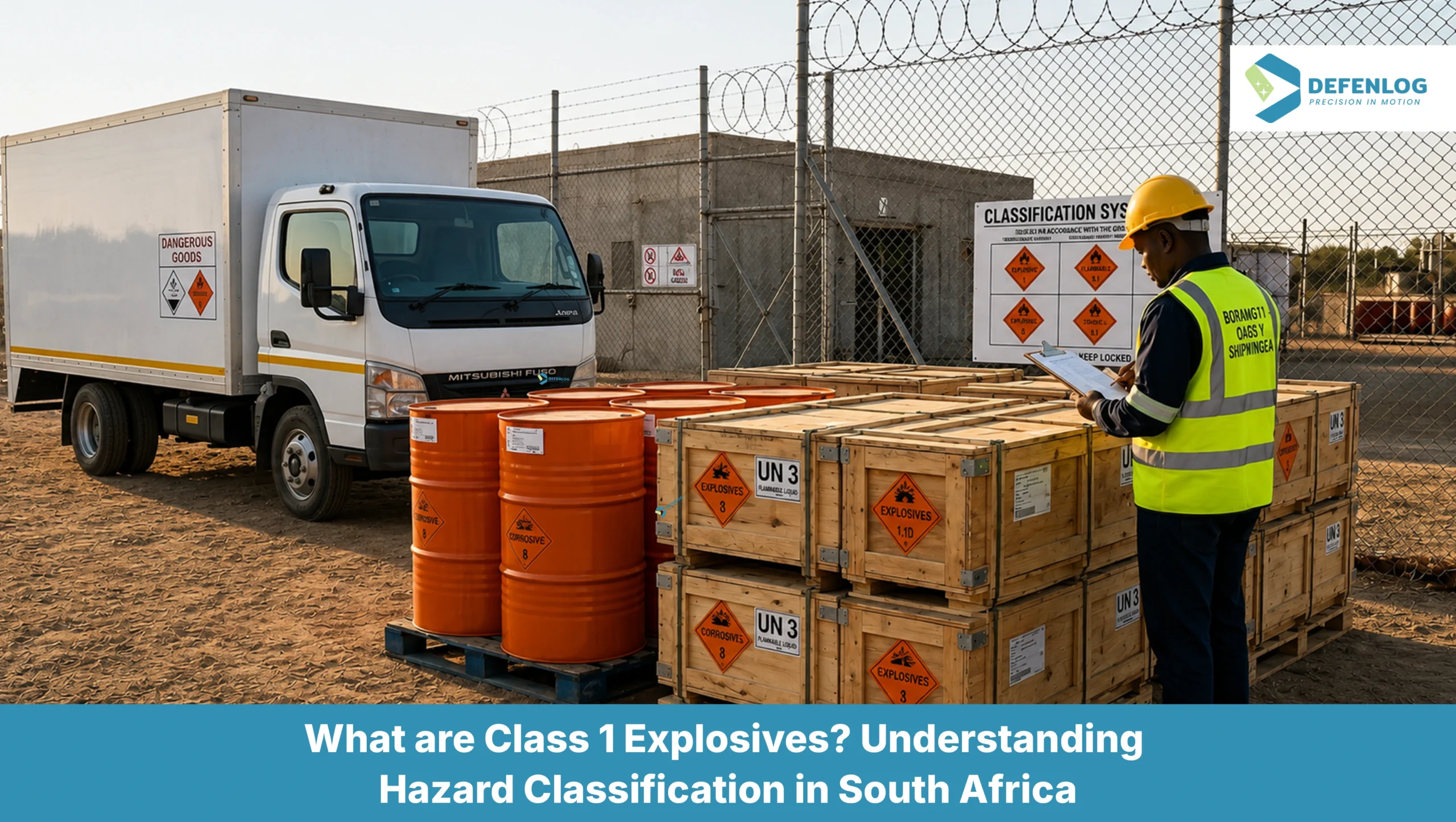
A single shipment of explosives can support a mining operation, a construction project, a defence contract, or a major infrastructure development. Yet before that cargo can move on South African roads, it falls under one of the most heavily regulated categories in the dangerous goods transport industry: Class 1 Explosives.
For freight forwarders, mining companies, defence contractors, explosives manufacturers, and logistics professionals, understanding Class 1 hazard classification is not simply a compliance requirement. It is essential for safety, legal transport, operational planning, and risk management.
In South Africa, Class 1 explosives transport is governed by strict regulations designed to protect people, infrastructure, and the environment. Understanding how these materials are classified and transported helps businesses make informed decisions when selecting transport partners and planning shipments.
What are Class 1 Explosives?
Class 1 explosives are substances or articles that are capable of producing an explosion, pyrotechnic effect, or rapid release of gas and heat through a chemical reaction.
Unlike other dangerous goods classes, explosives present unique risks because a single incident can have significant consequences. This is why Class 1 cargo receives a higher level of regulatory oversight than most other hazardous materials.
Examples of Class 1 explosives include:
- Industrial explosives used in mining
- Commercial blasting agents
- Detonators
- Ammunition
- Military explosives
- Pyrotechnic materials
- Explosive devices used in construction and engineering projects
Because of their potential hazards, these materials require specialized handling, licensed transport, and strict compliance controls.
Why is Hazard Classification Important?
Hazard classification determines how dangerous goods must be packaged, labelled, documented, stored, and transported.
For explosives, classification helps authorities and transport operators understand:
- The level of explosion risk
- The type of safety controls required
- Vehicle suitability requirements
- Segregation rules
- Emergency response procedures
- Transport restrictions
Without proper classification, the risks associated with transporting explosives increase significantly.
Classification is therefore the foundation of safe and compliant explosives transport.
How are Class 1 Explosives Categorised?
Class 1 explosives are divided into several divisions based on the type and severity of hazard they present.
Division 1.1 – Mass Explosion Hazard
These explosives present a mass explosion risk, meaning the entire load can explode almost instantaneously if initiated.
Examples may include:
- Certain military explosives
- High explosives used in industrial blasting
This division carries the highest level of transport control due to the potential scale of impact.
Division 1.2 – Projection Hazard
These materials do not create a mass explosion but can produce dangerous fragments and projectiles during an incident.
The primary risk comes from flying debris rather than total detonation.
Division 1.3 – Fire and Minor Blast Hazard
These explosives primarily create fire hazards and limited blast effects.
Although less severe than Division 1.1, they still require controlled handling and transport procedures.
Division 1.4 – Minor Explosion Hazard
Division 1.4 explosives present a relatively low risk during transport.
The effects of an incident are generally confined to the package itself and do not typically result in large-scale consequences.
Many commercial ammunition products fall into this category.
Division 1.5 – Very Insensitive Explosives
These explosives have a mass explosion hazard but are highly resistant to accidental initiation.
They are designed to remain stable under normal transport conditions.
Division 1.6 – Extremely Insensitive Articles
These are articles containing explosive substances that present an extremely low probability of accidental detonation.
They represent the lowest accidental initiation risk within the Class 1 category.
Why does South Africa Regulates Explosives Transport So Strictly?
South Africa has significant mining, industrial, defence, and infrastructure sectors that rely on explosives for daily operations.
As a result, large quantities of Class 1 cargo move across the country each year.
Strict regulation helps:
- Protect public safety
- Reduce transport risks
- Protect road infrastructure
- Prevent unauthorized access
- Ensure safe handling and delivery
Transport operators handling explosives must comply with national legislation, licensing requirements, and hazardous goods transport regulations.
What is Required to Transport Class 1 Explosives?
Moving explosives involves much more than loading cargo onto a truck.
Every shipment typically requires:
- Correct hazard classification
- Approved transport documentation
- Licensed vehicles
- Trained personnel
- Route planning and validation
- Regulatory approvals
- Security controls
Depending on the cargo type, additional requirements may apply.
These controls help ensure that explosives move safely from origin to destination.
The Importance of Licensed Explosives Transport Operators
One of the most common misconceptions in logistics is that any dangerous goods transporter can handle explosives.
This is not the case.
Many transport companies can move hazardous materials but are not licensed or equipped for Class 1 explosives transport.
Specialist explosives transport operators typically provide:
- Licensed fleet capability
- Trained drivers
- Hazard-specific procedures
- Regulatory compliance management
- Controlled operational planning
- Security-focused execution
For businesses shipping explosives, selecting a qualified transport partner is essential.
Industries that Depend on Class 1 Explosives Transport
Several sectors rely heavily on compliant explosives logistics.
Mining Industry
Mining operations use explosives daily for drilling and blasting activities. Reliable transport is critical to maintaining production schedules.
Defence Sector
Military organizations and defence contractors require secure movement of ammunition and regulated explosive materials.
Construction and Infrastructure
Large-scale engineering and construction projects often depend on controlled blasting activities supported by explosives transport.
Industrial Operations
Specialized industrial applications may require explosive materials for controlled processes and technical operations.
For these industries, transport delays or compliance failures can create significant operational disruption.
What Businesses should Look for in an Explosives Transport Partner?
When evaluating a transport provider for Class 1 cargo, businesses should consider:
- Explosives transport licensing
- Dangerous goods compliance experience
- Fleet suitability
- Driver training standards
- Security procedures
- Insurance coverage
- Route planning capabilities
The right transport partner should be able to demonstrate both compliance expertise and operational discipline.
Why Compliance is a Business Advantage?
Many companies view compliance as a regulatory obligation. In reality, compliance also protects operations.
Proper explosives transport reduces:
- Safety risks
- Shipment delays
- Regulatory penalties
- Operational disruption
- Insurance exposure
It also provides greater confidence for customers, regulators, and project stakeholders.
In industries where reliability is critical, compliance becomes a competitive advantage.
Defenlog’s Approach to Class 1 Explosives Transport
Defenlog specializes in the movement of explosives and regulated cargo across South Africa.
Operations are structured around:
- Licensed explosives transport capability
- Compliance-focused planning
- Hazard classification validation
- Controlled route management
- Trained personnel
- Security-driven execution
Every movement is managed with safety, accountability, and regulatory alignment from collection to delivery.
Conclusion: Understanding Class 1 Explosives is Essential for Safe Transport
Class 1 explosives represent one of the most highly regulated categories within dangerous goods transport. Their classification helps determine how they are handled, transported, and protected throughout the supply chain.
For mining companies, defence contractors, industrial operators, and freight forwarders, understanding Class 1 hazard classification is essential for ensuring safe, compliant, and efficient cargo movement.
If you are looking for a Specialized Road Transport Partner in South Africafor Class 1 explosives, hazardous goods, or regulated cargo, Defenlog is ready to support your operations with licensed, compliant, and controlled transport solutions.
Contact us today to discuss your explosives transport requirements.