
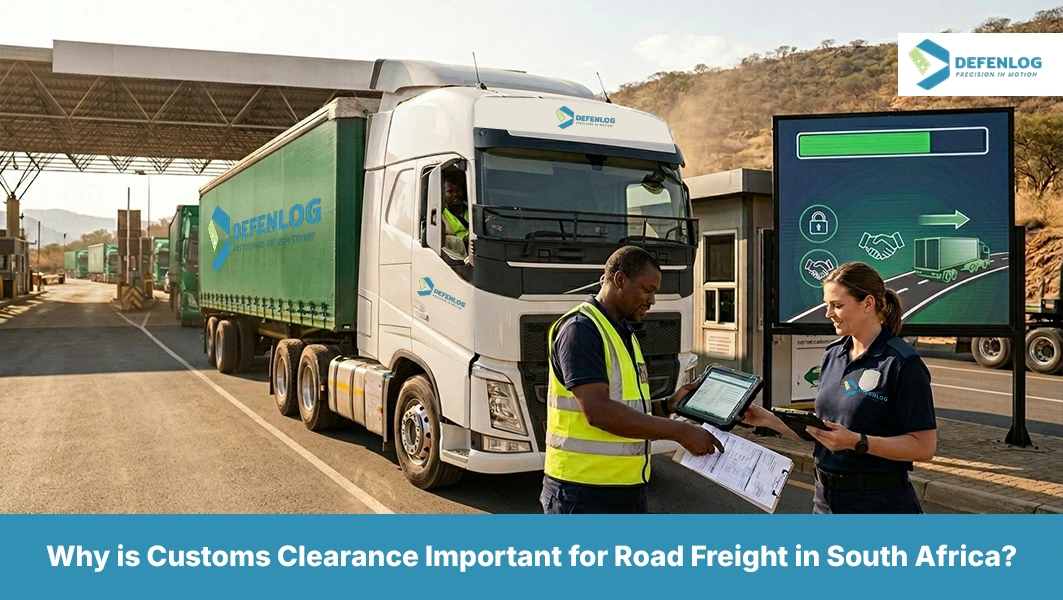
A truck arriving at the border means nothing if the paperwork is not ready. Across South Africa’s logistics sector, one of the biggest causes of cargo delays is not transport failure, it is customs clearance misalignment.
Many businesses still treat road freight and customs clearance as separate processes. In reality, they are deeply connected. A perfectly scheduled transport movement can still fail if declarations, permits, or supporting documents are incomplete. On the other hand, customs-cleared cargo can still face disruption if transport coordination is poor.
That is why road freight and customs clearance must operate together as one controlled logistics process.
Why South Africa Depends Heavily on Road Freight?
Road freight plays a critical role in South Africa’s supply chain network. Cargo moves daily between ports, industrial zones, warehouses, border posts, and inland destinations through national road corridors.
Road transport supports:
- Port-to-warehouse cargo movement
- Inland distribution across provinces
- Cross-border trade into the SADC regions
- Mining and industrial supply chains
- Dangerous goods and regulated cargo transport
For many businesses, road freight is the final operational link that keeps supply chains moving.
But movement alone is not enough. Customs compliance determines whether cargo can legally proceed.
Customs Clearance is More than Documentation
Many businesses assume customs clearance is simply paperwork processing. In reality, it is a compliance-driven procedure that validates whether cargo meets South African import and export regulations.
Customs clearance involves:
- Cargo declarations
- Tariff classification
- Permit validation
- Duty and tax assessments
- Supporting documentation checks
- Regulatory approvals
Without proper customs clearance, cargo may be delayed, inspected, detained, or rejected.
This directly impacts road freight scheduling and operational timelines.
Why Road Freight and Customs Clearance Must be Aligned?
Transport and customs clearance cannot operate independently. Timing between the two functions is critical.
For example:
- A truck arriving before customs release creates waiting time and storage costs
- Incomplete declarations can delay border movement
- Missing permits can stop regulated cargo from moving entirely
- Incorrect cargo classification can trigger inspections or penalties
When customs and transport teams are not aligned, operational disruption becomes inevitable.
Integrated coordination helps reduce delays, avoid unnecessary costs, and improve delivery reliability.
Border Delays Remain a Major Challenge
Cross-border road freight across Southern Africa continues to face pressure from:
- Border congestion
- Documentation inconsistencies
- Regulatory changes
- Delayed customs approvals
- Inspection procedures
These challenges affect delivery timelines, especially for high-volume or time-sensitive cargo.
For businesses moving cargo into neighbouring SADC countries, customs readiness is just as important as transport readiness.
Regulated and Hazardous Cargo Requires Additional Control
The complexity increases further when transporting dangerous goods, explosives, chemicals, or other regulated cargo.
These shipments may require:
- Hazard classification
- Permit approvals
- Special declarations
- Security documentation
- Controlled routing
If customs and transport coordination are not properly managed, delays can become significant.
This is why regulated cargo movements require specialist operational oversight.
Documentation Accuracy is Critical
One small documentation error can disrupt an entire shipment.
Common issues include:
- Incorrect tariff codes
- Missing commercial invoices
- Incomplete transport documentation
- Incorrect cargo descriptions
- Permit mismatches
These errors often lead to inspections, delays, or customs holds.
Accurate documentation ensures smoother cargo release and more predictable transport execution.
Why Timing Matters in Road Freight Operations?
Road freight works on schedules, route planning, and delivery coordination. Customs clearance directly impacts all three.
A delayed customs release can affect:
- Vehicle scheduling
- Driver allocation
- Delivery sequencing
- Warehouse planning
- Customer commitments
For transport operators, waiting time becomes an operational cost. For customers, it becomes a supply chain disruption.
This is why customs visibility and transport coordination must happen together.
The Importance of Controlled Transport Execution
Successful road freight operations rely on structured execution.
This includes:
- Coordinated dispatch planning
- Real-time communication between teams
- Compliance verification before movement
- Route and border readiness checks
- Delivery monitoring and proof-of-delivery confirmation
Controlled execution reduces uncertainty and improves operational reliability.
Industries that Depend on Efficient Customs and Road Freight Coordination
Several industries in South Africa rely heavily on efficient road freight and customs processes.
Mining & Industrial Sector
Equipment, chemicals, and operational supplies must move without delay to avoid production interruptions.
Retail & Distribution
Inventory flow depends on predictable customs release and transport scheduling.
Defence & Regulated Cargo
Military logistics and hazardous shipments require additional compliance controls and secure movement procedures.
Cross-Border Trade Operations
Freight moving into neighbouring African countries depends heavily on border efficiency and documentation accuracy.
For these sectors, delays are not just logistical problems, they impact operations, contracts, and revenue.
Why Specialist Transport Partners Matter?
Not all transport providers understand customs-driven logistics challenges. Businesses handling regulated, cross-border, or high-risk cargo often require transport partners capable of managing both movement and compliance coordination.
A specialist transport partner helps by:
- Aligning transport schedules with customs readiness
- Managing regulated cargo requirements
- Supporting border movement planning
- Reducing operational delays and exposure
- Maintaining controlled cargo execution
This becomes especially important for dangerous goods, explosives logistics, project cargo, and security-sensitive freight.
Defenlog’s Approach to Road Freight and Customs Coordination
Defenlog supports road freight operations through structured transport planning, compliance-focused execution, and controlled cargo movement across South Africa.
Operations are aligned around:
- Coordinated dispatch and delivery planning
- Regulated cargo handling procedures
- Route and movement control
- Support for customs-aligned transport execution
- Nationwide freight coordination across key logistics corridors
This ensures cargo moves safely, compliantly, and with operational clarity from collection to delivery.
Conclusion
Road freight and customs clearance are not separate functions, they are part of the same logistics chain.
In today’s South African supply chain environment, successful cargo movement depends on coordination, compliance, and timing. Delays at customs quickly become transport disruptions, while poor transport planning affects cargo release efficiency.
Businesses that align both processes gain better control, fewer delays, and stronger operational reliability.
If you are looking for a Specialized Road Transport Partner in South Africa, Defenlog is ready to support your freight operations with structured planning, controlled execution, and compliance-focused transport coordination. Contact us today to discuss your road freight and regulated cargo transport requirements.