
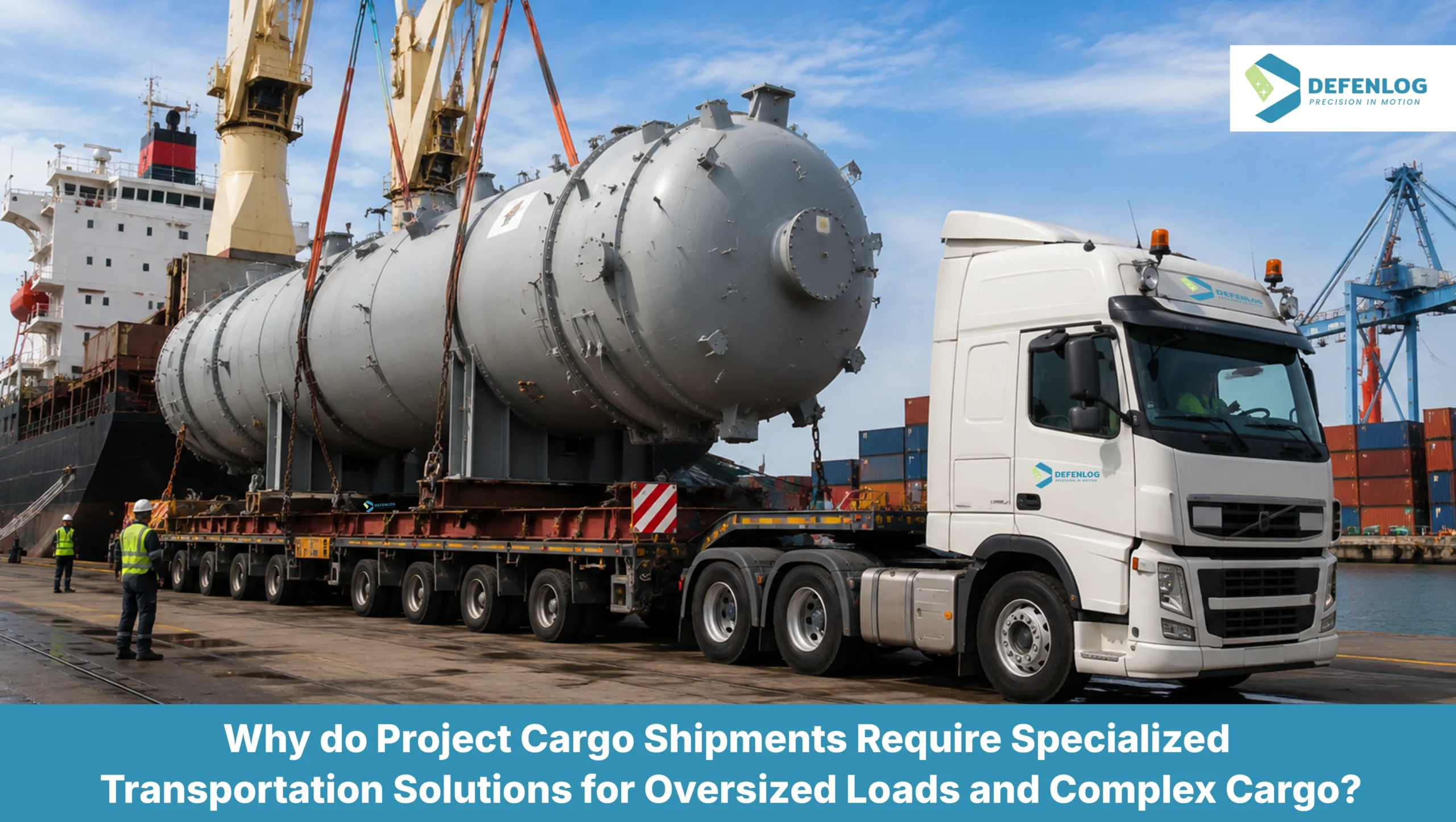
Not all cargo can be transported using standard freight methods. Mining crushers, 80-ton transformers, wind turbine blades exceeding 60 meters, and prefabricated refinery modules are simply too large, too heavy, or too complex for conventional transport.
This is where project cargo transportation becomes essential. In South Africa, moving this class of cargo is not just a logistics exercise it is a regulated activity governed by the National Road Traffic Act (Act 93 of 1996) and the TRH11 guidelines for abnormal load vehicles. Without the right transportation strategy, permits, and equipment, these shipments face delays, safety risks, penalties, and serious project cost overruns.
What are Project Cargo Shipments?
Project cargo shipments involve the transportation of oversized, heavy, high-value, or complex equipment that cannot be moved through conventional freight methods and, critically, cannot be dismantled into smaller units that would fall within legal transport limits. In South African terms, most project cargo qualifies as an abnormal load and may travel on public roads only with an exemption permit issued under Section 81 of the National Road Traffic Act.
Typical project cargo includes mining machinery, generators and transformers, refinery modules, pressure vessels, wind turbine components, bridge sections, and large manufacturing plants.
When does Cargo Become an “Abnormal Load” in South Africa?
Standard freight vehicles must comply with the dimensional and mass limits set out in the National Road Traffic Regulations. As a general guide, a load requires abnormal load classification and a permit once the vehicle combination exceeds any of the following:
| Parameter | Legal Limit (General Guide) | Beyond This |
| Width | 2.6 m | Abnormal load permit required |
| Height | 4.3 m from the ground | Abnormal load permit required |
| Combination length | 22 m for articulated combinations | Abnormal load permit required |
| Gross combination mass | 56 tonnes | Abnormal load permit required |
Exact thresholds depend on the vehicle configuration, axle loading, and route, which is why every project cargo movement begins with a technical cargo assessment.
A single mining excavator can exceed all four limits at once. That is why project cargo cannot simply be booked onto standard freight: it requires a purpose-planned, permitted, and escorted movement.
Which Industries Depend on Project Cargo Transportation in South Africa?
Mining: Crushers, mills, draglines, haul truck bodies, and processing plants are moving to operations in the Northern Cape, North West, Limpopo, and Mpumalanga, often over long distances and into areas with limited road infrastructure.
Energy and power generation: Transformers, generators, and turbine components destined for power stations and substations. Large power transformers routinely weigh 80–200 tonnes and require multi-axle hydraulic modular trailers and bridge-by-bridge structural assessment.
Renewable energy: South Africa’s REIPPP wind and solar build-out depends on abnormal load logistics, turbine blades over 60 m long, tower sections exceeding 4.5 m in diameter, and site transformers frequently delivered through the ports of Coega, Gqeberha, and Saldanha to project sites in the Eastern, Western, and Northern Capes.
Oil, gas, and petrochemicals: Pressure vessels, columns, and refinery modules for facilities in Durban, Sasolburg, and Secunda.
Construction and infrastructure: Cranes, girders, bridge beams, tunnel boring components, and precast structures.
Manufacturing: Presses, production lines, and plant equipment that cannot be broken down for standard transport.
Why are Standard Transportation Methods Unsuitable?
Standard freight is built around legal-limit vehicles running on unrestricted routes at any time of day. Abnormal loads break every one of those assumptions:
Regulatory restrictions. Abnormal loads require exemption permits from the relevant provincial permit authority for every province the route crosses. A Durban-to-Gauteng movement, for example, requires permits from both KwaZulu-Natal and Gauteng (and from Free State or Mpumalanga, depending on the route). Permits are route-specific, time-bound, and conditional.
Travel-time restrictions. Abnormal loads are generally restricted to daylight travel (sunrise to sunset), and wide or heavy loads may be prohibited from moving during peak traffic periods, weekends, public holidays, and holiday seasons on major corridors. This alone can add days to a delivery schedule if not planned for.
Infrastructure constraints. Bridge load capacities, overhead power lines, toll plaza widths, tunnel clearances, and tight urban turns all limit routing. On key corridors such as the N3 between Durban and Gauteng, bridge structures and steep gradients (e.g., Van Reenen’s Pass) dictate what can move and how. Very heavy loads may require SANRAL or provincial structural approval for specific bridges.
Escort requirements. Depending on the load’s dimensions under TRH11, movements require private escort vehicles in front and rear, and in the most extreme cases, traffic police escorts and temporary road closures.
Handling limitations. Standard trailers and cranage cannot lift, support, or secure loads of this mass and geometry.
What Specialized Equipment does Project Cargo Require?
Matching the trailer to the load is a core part of the engineering assessment:
- Lowbed trailers: heavy tracked and wheeled machinery; low deck height preserves the 4.3 m envelope for tall cargo
- Extendable (telescopic) trailers: turbine blades, girders, and other extra-long indivisible loads
- Step-deck trailers: tall cargo that must stay within height restrictions
- Multi-axle hydraulic modular trailers: ultra-heavy loads such as transformers and refinery vessels, where the load must be spread across many axle lines to protect road pavements and bridges
TRH11 also imposes technical requirements on the vehicles themselves for example, loads longer than 25 m generally require fully steerable rear axles or a steerable dolly, and front load projection beyond the drawing vehicle is limited to 1 m.
What does a Compliant Project Cargo Movement Involve?
A structured planning process is what separates a safe, on-time delivery from a stranded load:
- Cargo analysis and technical assessment: verified dimensions, mass, centre of gravity, lifting points
- Route survey and feasibility study: physical survey of bridges, clearances, gradients, turns, and obstructions; identification of structures requiring engineering approval
- Equipment selection: trailer configuration and axle-line calculation to meet TRH11 mass limitations
- Permit acquisition: applications to each provincial permit authority, with route drawings and vehicle specifications; lead times must be built into the project schedule
- Escort and traffic management planning: escort vehicles, abnormal load signage and markings, and coordination with traffic authorities where closures are needed
- Risk assessment and cargo securing: engineered lashing and securing plans, weather contingency planning
- Stakeholder coordination: OEMs, ports, project managers, authorities, and receiving sites
- Execution with real-time tracking: live visibility for the client from loading to final positioning
Why Choose Defenlog?
Project cargo transportation requires more than moving freight from one location to another. It requires regulatory expertise, engineering-led planning, and disciplined execution.
Defenlog is a specialized road transport partner in South Africa, providing project cargo transportation solutions for oversized loads and complex cargo across the mining, energy, construction, and industrial sectors. Key advantages include:
- Specialized abnormal load and project cargo expertise
- Permit management and TRH11 / NRTA compliance across all provinces
- Modern fleet with the right trailer configurations for each load
- Route surveys, escort coordination, and risk management as standard
- Real-time shipment visibility
- Nationwide transportation capability
Conclusion
Project cargo shipments require specialized transportation solutions because oversized loads and complex cargo present regulatory, engineering, and operational challenges that conventional freight services cannot manage. In South Africa, every abnormal load movement is shaped by the National Road Traffic Act, TRH11 requirements, provincial permits, and route-specific constraints, and getting any one of them wrong can stall an entire project.
With the right planning and transportation partner, businesses can reduce risk, avoid costly delays, and ensure the safe delivery of critical project cargo. Contact us at Defenlog today to discuss your project cargo requirements and move your oversized loads safely, compliantly, and on time.