
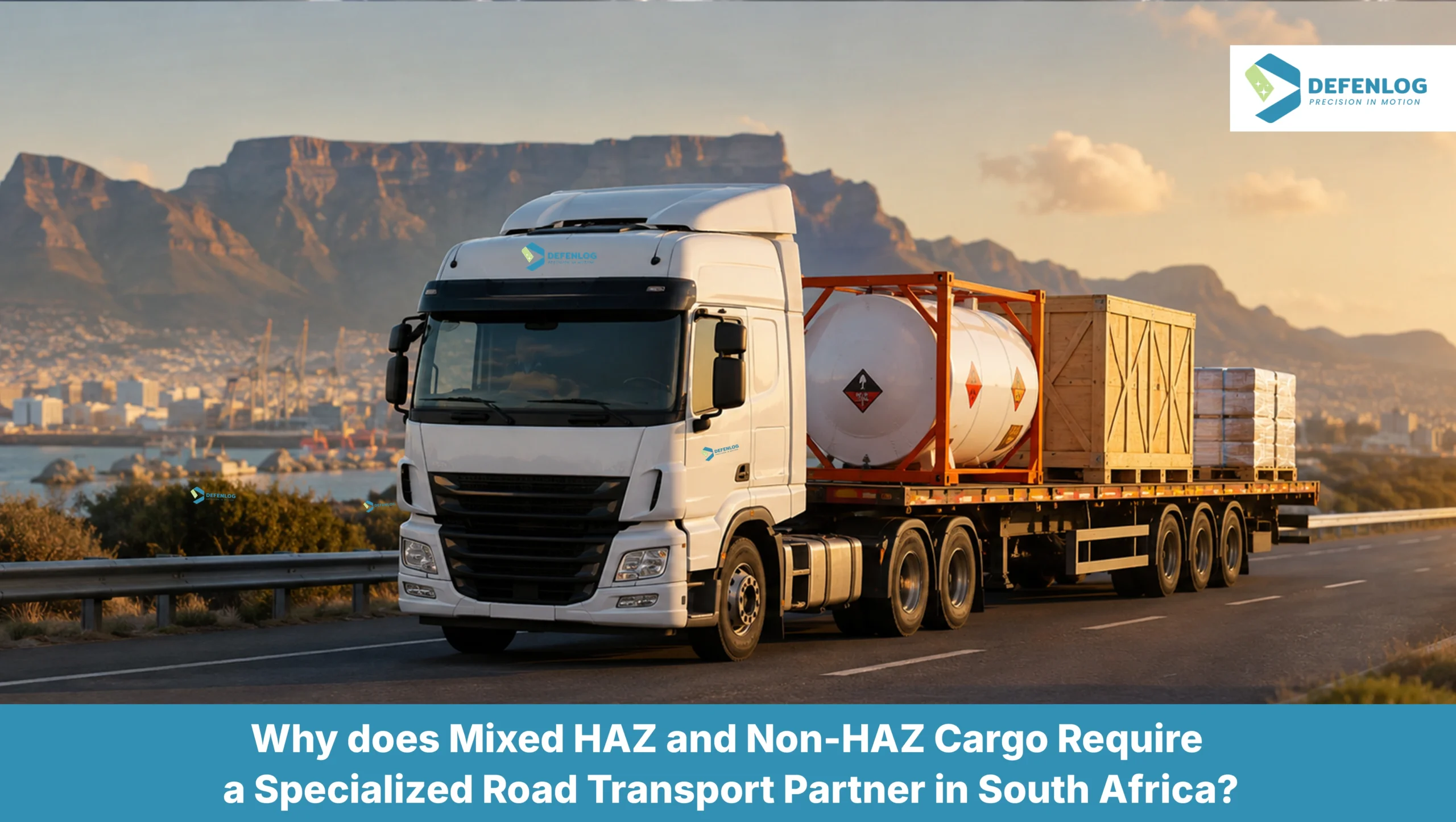
Moving HAZ and non-HAZ cargo under one transport requirement may sound simple at first. One cargo is hazardous, another is non-hazardous, and both need to move from the collection point to the delivery point.
But in road transport, mixed cargo cannot move on assumptions.
When hazardous and non-hazardous cargo are part of the same logistics movement, the planning becomes more sensitive. The cargo may include containerized loads, breakbulk cargo, industrial materials, chemicals, mining-related supplies, or regulated goods moving across South Africa.
The challenge is not only moving the cargo. The real challenge is understanding what can move together, what must be separated, what documentation is required, which vehicle is suitable, and what compliance checks must be completed before the load reaches the road.
This is where a specialized road transport partner becomes important.
For HAZ and non-HAZ cargo, the wrong transport decision can lead to:
- Collection delays
- Compliance issues
- Cargo rejection
- Site disruptions
- Insurance complications
- Safety risks
- Route or delivery problems
Defenlog supports this type of movement with controlled planning, compliant execution, and experience in regulated and high-risk road transport.
The Current Reality: Mixed Cargo is not Standard Freight?
Many logistics teams handle non-hazardous cargo every day. Standard cargo can often be planned around weight, volume, collection point, delivery point, vehicle type, and delivery deadline.
Hazardous cargo is different.
Once HAZ cargo is involved, the transport plan must consider:
- Cargo classification
- Safety documentation
- Packaging requirements
- Placarding requirements
- Driver suitability
- Emergency information
- Vehicle compliance
- Route planning
- Safe handling procedures
When HAZ cargo is combined with non-HAZ cargo in the same project or transport schedule, the movement cannot follow a normal freight approach.
Before the cargo moves, the transport partner must understand:
- Can the cargo types move together?
- Is the hazardous cargo correctly classified?
- Is the non-hazardous cargo compatible with the HAZ cargo?
- Is the cargo containerized, breakbulk, palletized, or loose?
- Does the movement require special documentation?
- Is the selected vehicle suitable for the cargo type and handling method?
These questions must be answered before dispatch, not after the truck arrives.
Why does Mixed HAZ and Non-HAZ Cargo Needs Careful Planning?
The biggest risk with mixed cargo is assuming that the non-HAZ portion makes the movement simple.
In reality, once hazardous materials are part of the shipment, the entire transport plan must be reviewed through a compliance and safety lens. Even if part of the cargo is non-hazardous, the hazardous portion can influence the full movement.
This may affect:
- Vehicle selection
- Load compatibility
- Cargo segregation
- Packaging checks
- Transport documentation
- Route planning
- Emergency response readiness
- Driver requirements
- Site access and delivery coordination
A small missing detail can delay the entire shipment. For example, if the hazardous cargo classification is unclear, the transport partner cannot properly confirm vehicle requirements, placarding, documentation, or handling controls.
For freight forwarders, manufacturers, mining suppliers, and industrial cargo owners, this can create avoidable operational delays.
Containerized and Breakbulk Cargo Require Different Handling Controls
Mixed HAZ and non-HAZ movements become more complex when both containerized cargo and breakbulk cargo are involved.
Containerized cargo may appear easier because the cargo is already packed inside a container. But this does not remove the need for:
- Dangerous goods declarations
- Correct cargo documents
- Container condition checks
- Placarding requirements
- Safe inland movement planning
- Collection and delivery coordination
Breakbulk cargo creates another layer of complexity.
Breakbulk loads may include:
- Drums
- Crates
- Bags
- Machinery components
- Industrial materials
- Loose cargo units
- Irregular-shaped cargo
- Oversized or heavy items
This requires careful attention to loading method, securing, weight distribution, lifting points, and site handling requirements.
When HAZ cargo is part of a breakbulk movement, the transport partner must understand both sides of the job:
- The hazardous goods compliance requirements
- The physical handling and load control requirements
This is why mixed cargo cannot be treated as a standard collection-and-delivery job. It needs planning from both a safety and operational perspective.
The Risk of Treating Mixed Cargo Like General Freight
The danger with mixed cargo is that it can look routine on paper.
A logistics inquiry may only mention:
- HAZ and non-HAZ cargo
- Containerized and breakbulk cargo
- Collection from Gauteng or North West Province
- Delivery to Durban or another destination
But behind that short description are several operational risks.
If the transport provider does not ask the right questions, the shipment can face:
- Incorrect vehicle allocation
- Missing dangerous goods documentation
- Wrong placarding
- Loading delays
- Rejected cargo at the collection or delivery point
- Route or site access issues
- Insurance gaps
- Safety and compliance exposure
For standard freight, a delay may be inconvenient. For dangerous goods transport, a delay can become a compliance and risk problem.
That is why mixed HAZ and non-HAZ cargo needs a road transport partner who understands regulated cargo movement before the vehicle is assigned.
Documentation must be Clear Before the Cargo Moves
For HAZ cargo, documentation is not just an administrative requirement. It guides the transport plan.
Before arranging movement, the transport partner may need key information such as:
- Cargo description
- UN number, where applicable
- Dangerous goods class
- Packing group, where applicable
- Safety Data Sheet
- Quantity and weight
- Packaging type
- Container or breakbulk details
- Collection and delivery addresses
- Special handling instructions
- Site access requirements
- Emergency contact information
For non-HAZ cargo, the details still matter. The transport team needs to understand whether the non-hazardous cargo can move with the hazardous cargo, whether it affects load securing, and whether it changes the vehicle or routing requirements.
When this information is incomplete, planning becomes guesswork. In regulated transport, guesswork is a risk.
Why do Route and Site Coordination Matter in South Africa?
South Africa’s logistics routes often connect ports, inland depots, mines, industrial zones, manufacturing facilities, and project sites.
A movement from Gauteng or North West Province to Durban, for example, is not only a distance-based transport job. It may involve:
- Port or depot collection timing
- Industrial site delivery windows
- Weighbridge or road restrictions
- Driver hours and rest planning
- High-value cargo security
- Route risk assessment
- Loading and offloading coordination
For HAZ cargo, route planning becomes even more important. The transport partner must consider safety, compliance, accessibility, and delivery reliability.
This is especially important when cargo is moving to time-sensitive operations such as mining projects, construction sites, industrial plants, or port-linked supply chains.
Why a Specialized Road Transport Partner Makes the Difference?
A general transporter may be able to move non-hazardous cargo. But mixed HAZ and non-HAZ cargo requires more than vehicle availability.
It requires a partner who can understand the cargo risk, ask the right questions, check the documentation, allocate the correct equipment, and plan the movement with compliance in mind.
A specialized road transport partner helps reduce risk through:
- Correct cargo understanding
- Compliant planning
- Suitable vehicle selection
- Driver awareness
- Documentation checks
- Safe loading and securing
- Route and delivery coordination
- Clear communication from dispatch to delivery
This is where Defenlog’s role becomes important.
Defenlog supports regulated and specialist road transport movements across South Africa with a focus on dangerous goods, hazardous cargo, project cargo, military logistics, explosives, and high-risk freight.
The company understands that cargo movement is not only about transport capacity. It is about control, compliance, and execution.
Mixed Cargo Needs Control from the First Conversation
For mixed HAZ and non-HAZ cargo, the quality of the first conversation matters.
A strong transport partner should not only ask, “Where is the cargo going?”
They should ask:
- What is the hazardous cargo classification?
- What is the non-hazardous cargo?
- Is the cargo containerized, breakbulk, or both?
- What packaging is used?
- What are the weights and dimensions?
- Are there any special handling requirements?
- Are documents ready?
- What are the loading and delivery site conditions?
These questions help prevent problems before they happen.
When a shipment involves hazardous and non-hazardous cargo, early planning is the difference between controlled movement and unnecessary disruption.
Why this Matters for Freight Forwarders, Cargo Owners, and Industrial Operators?
Mixed HAZ and non-HAZ cargo is common in real logistics operations.
Freight forwarders may manage multiple cargo types for one client. Mining suppliers may move regulated and non-regulated materials together. Industrial operators may need containerized and breakbulk cargo to be moved within the same project timeline.
For these stakeholders, the transport partner affects more than delivery.
The right partner protects:
- Compliance
- Cargo safety
- Project timelines
- Customer commitments
- Insurance confidence
- Operational continuity
The wrong partner can create delays, uncertainty, and risk exposure.
In today’s transport environment, regulated cargo movement cannot be handled with a basic trucking mindset. It requires planning, discipline, and industry understanding.
Conclusion: Mixed HAZ and Non-HAZ Cargo Needs More than a Truck
Mixed HAZ and non-HAZ cargo may move on the same route, but it cannot be planned like standard freight.
When hazardous cargo is involved, every detail matters. Classification, documentation, packaging, compatibility, vehicle suitability, loading, route planning, and delivery coordination all ensure safe and compliant movement.
This is why mixed cargo requires more than basic transport. It needs a specialized road transport partner in South Africa with expertise in regulated cargo, breakbulk, containerized movements, and dangerous goods requirements.
Defenlog supports dangerous goods, hazardous cargo, breakbulk, containerized, project cargo, and specialist road freight with controlled, compliant execution.
If you are moving mixed HAZ and non-HAZ cargo across South Africa, Defenlog can help plan and manage the movement from start to finish.
Contact us today to discuss your dangerous goods requirements and explore how we can support your next project.