
Across South Africa, hazardous and explosive cargo is moving faster than ever to support mining, infrastructure, energy, and defence projects. But the main challenge isn’t just carrying cargo; it’s doing so safely over great distances, changing rules, and complex project contexts. Many logistics teams struggle to identify transport partners who fully understand high-risk cargo, and this gap frequently results in delays, compliance pressure, and operational risk.
As freight volumes increase across the continent, businesses recognize that hazardous logistics cannot rely on ordinary transportation options. Choosing the proper road transport partner has become critical to safety, dependability, and long-term operational success.
The Growing Safety Challenge in Hazardous and Explosive Logistics in South Africa
Africa’s logistics network connects major ports, inland industrial zones, mining areas, and cross-border commerce routes. While growth brings opportunity, it also raises safety concerns, particularly when dangerous and explosive cargo is involved.
Road transport remains the backbone of inland logistics across the continent. Cargo frequently travels great distances from ports to mines, construction sites, or industrial facilities, where dangers can swiftly escalate if activities are not adequately managed. Logistics teams must cope with a variety of rules, a limited number of specialty carriers, and the need to keep freight moving while maintaining safety.
For multinational partners transporting risky goods into Africa, the most pressing issue is finding a transport partner that can maintain compliance and safety standards from start to finish.
Why Moving High-Risk Cargo Across Africa is More Complex than It Seems?
On paper, road transport may look straightforward, load the cargo and deliver it. But hazardous and explosive logistics introduce layers of complexity that require specialist expertise.
Road transport operations across Africa involve:
- Long inland routes connecting ports to remote sites
- Cross-border movement with different compliance rules
- Security considerations for high-value cargo
- Strict handling procedures for dangerous goods
Shipping lines moving cargo into African ports need reliable inland partners who can safely manage dangerous goods from the moment they leave the terminal. Freight forwarders coordinating project logistics need road transport partners who understand timing, compliance, and risk management. Without specialist experience, small mistakes can quickly create operational setbacks.
The Hidden Problems Logistics Teams Face With Hazardous Cargo
Many logistics teams discover challenges only after operations begin. Hazardous cargo demands more than transportation, it requires planning, communication, and strict execution.
Common problems include:
- Limited availability of fully licensed hazardous transport providers
- Inconsistent compliance checks during transport
- Lack of dangerous goods expertise among drivers
- Delays caused by poor coordination between stakeholders
These issues affect everyone involved, shipping lines, freight forwarders, mining companies, and industrial suppliers. When cargo is high-risk, even minor gaps in planning can create serious consequences. That’s why companies across Africa are increasingly turning to specialist road transport partners instead of general carriers.
How Defenlog Sets the Standard as the Right Road Transport Partner for Safer Hazardous Logistics?
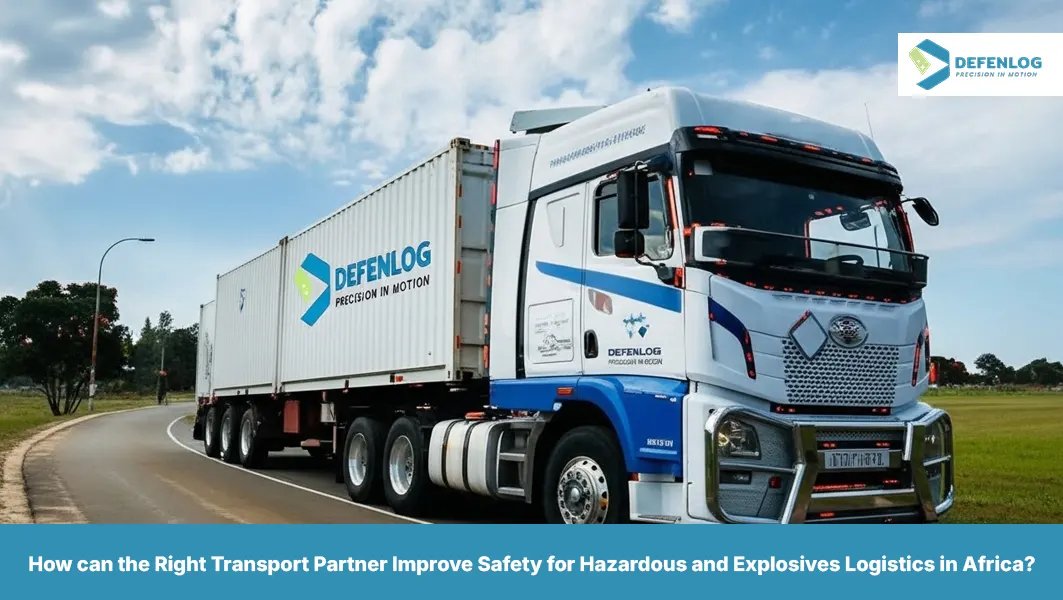
Defenlog is positioned as a specialized road transport partner in South Africa focused on high-risk, regulated, and project-based cargo across Africa. Rather than offering general freight services, the company concentrates on hazardous and explosives logistics, where safety and compliance are critical.
Defenlog operates as:
- A preferred transport partner for shipping lines, freight forwarders, mining houses, and defence contractors
- A specialist in regulated and high-risk cargo movement
- A trusted last-mile and inland carrier for international logistics partners
One of Defenlog’s strongest advantages is that the entire fleet is licensed for explosives and Class 1 cargo. All vehicles are approved to transport explosives, ensuring full compliance with hazardous goods legislation and supporting safe operations across African routes.
Defenlog also provides comprehensive goods-in-transit insurance, covering hazardous goods, explosives, high-risk cargo, and all commodities. This significantly reduces risk exposure concerns for shipping lines, freight forwarders, mining houses, and defence contractors, giving partners added peace of mind.
Operations run 24/7/365, enabling round-the-clock dispatch, emergency movement capability, and time-critical cargo handling with no downtime. This ensures that high-priority or urgent cargo can move safely whenever required.
In addition, Defenlog supports project cargo and heavy transport, including abnormal loads, heavy mining equipment, breakbulk cargo, containerized dangerous goods, and industrial components, making it a strong choice for complex logistics operations.
Safety remains central to the company’s approach through a safety- and compliance-driven culture, supported by compliance-focused management, experienced hazardous goods drivers, risk-controlled operations, and strong asset protection practices.
Defenlog also offers national and cross-border coverage across Africa, handling port collections, inland mine deliveries, SADC cross-border transport, and industrial site deliveries, ensuring reliable road transport from port to project location.
From Ports to Project Sites: What Safe Execution Looks Like in Real Operations?
Safe hazardous logistics isn’t just about planning, it’s about execution on the road. Across Africa, cargo often moves from busy port environments to remote inland locations, including mining sites, industrial zones, and government-linked projects.
Safe execution involves:
- Careful route planning based on risk and compliance requirements
- Strong communication between ports, logistics teams, and transport operators
- Continuous monitoring throughout the journey
- Experienced handling of dangerous goods
When road transport is managed correctly, shipping lines gain confidence that cargo will reach inland destinations safely. Freight forwarders experience smoother project coordination, and industrial clients receive reliable deliveries without unexpected disruptions.
This level of operational control is what separates specialist transport partners from general providers.
Conclusion
Hazardous and explosive logistics across Africa are growing, and road transport remains essential in connecting ports, projects, and industries. But safe operations require more than movement, they require a partner built for high-risk cargo.
Defenlog sets the standard with licensed expertise, compliance-focused operations, and specialized Class 1 transport capabilities. As a trusted road transport partner for shipping lines, freight forwarders, mining houses, and defence contractors, Defenlog helps move hazardous cargo safely and reliably across Africa.
Ready to move hazardous and explosive cargo across Africa with confidence? Contact Defenlog today and partner with a licensed road transport specialist built for safety, compliance, and high-risk logistics.