
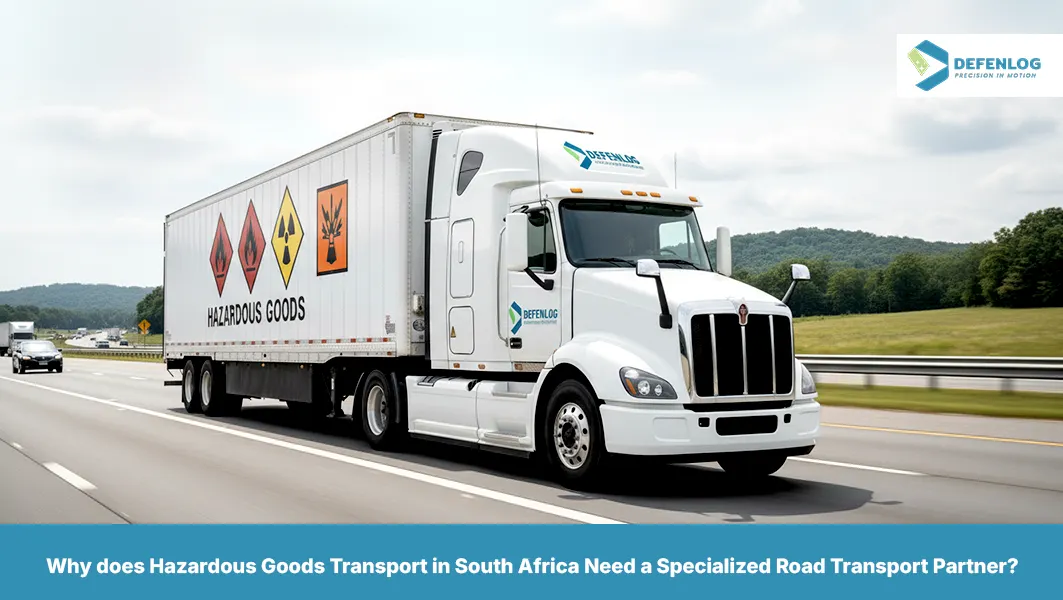
Hazardous goods transport in South Africa operates within one of the most tightly regulated segments of the logistics industry. From explosives and industrial chemicals to high-risk defense materials, the movement of dangerous cargo requires far more than standard trucking capability. It demands licensing, compliance oversight, risk management, and specialist operational control.
In a country where mining, industrial production, and cross-border trade form the backbone of economic activity, hazardous cargo movement is routine but never simple. The legal exposure, insurance implications, and operational risks attached to dangerous goods transport mean that businesses cannot rely on general freight operators.
This is why hazardous goods transport in South Africa requires a specialized road transport partner in South Africa.
Hazardous Goods Transport in South Africa
Hazardous goods are commodities that pose a risk to health, safety, property, or the environment while in transit. These materials are divided into internationally recognized UN hazard classes, which include explosives (Class 1), flammable liquids, corrosives, gases, and toxic substances.
In South Africa, the transportation of hazardous cargo is governed by strict legislation and national standards. Compliance includes:
- Proper vehicle licensing for hazardous goods
- Dangerous goods driver certification
- Approved packaging and labeling
- Hazard placarding and documentation
- Route risk assessments
- Emergency response procedures
For Class 1 explosives, the compliance threshold is even higher. Not all transport operators are legally permitted to move explosives. In fact, most road transport companies in South Africa are not licensed for Class 1 cargo.
This regulatory complexity means that hazardous goods transport is not an extension of general freight; it is a specialized discipline within the road transport sector.
The Risks and Costs of Using Non-Specialized Transporters
Choosing a non-specialized transport operator for hazardous cargo may appear cost-effective at first glance. However, the hidden risks are significant.
Compliance Failures
Operators without proper licensing expose cargo owners and freight partners to:
- Regulatory fines
- Roadside detention
- Cargo seizure
- Legal penalties
In high-risk industries like mining and defense, these failures can completely disrupt operations.
Insurance Gaps
One of the most overlooked exposures lies in insurance coverage. Many transporters have basic goods-in-transit insurance, which excludes:
- Explosives
- Hazardous materials
- High-risk cargo
If an incident occurs and the cargo is not properly insured, the financial loss may fall directly on the shipper or freight forwarder.
Operational Disruption
Hazardous cargo necessitates precise planning. Without proper route management, security protocols, and compliance systems:
- Deliveries may be delayed
- Port collections may face complications
- Mining site access may be denied
- Cross-border shipments may be rejected
For shipping companies, freight forwarders, and industrial operators, operational insecurity means lost confidence and lower competitiveness.
Reputational Exposure
Failure to comply can harm the reputation of international logistics companies operating across the world. Incidents involving hazardous cargo attract national attention and regulatory examination. Long-term collaborations may be harmed by reputational damage that extends beyond a single shipment.
The true cost of using a non-specialized transporter is measured in terms of risk exposure rather than freight costs.
Importance of a Specialized Road Transport Partner
A specialized hazardous road transport partner ensures compliance, licensing, and risk control in its operational structure.
Licensed for Explosives and Class 1 Cargo
In South Africa, licensing is a key differentiator. All vehicles must be legally permitted to transport explosives. This isn’t optional.
In an industry where the majority of operators do not hold explosives licenses, specialization provides a clear compliance advantage. Proper licenses ensure that:
- Legal compliance
- Regulatory approval
- Reduced liability exposure
- Operational credibility
Comprehensive Goods-in-Transit Insurance
Hazardous cargo requires insurance that explicitly covers:
- Explosives
- Dangerous goods
- High-risk materials
- All regulated commodities
Proper coverage protects:
- Shipping lines
- Freight forwarders
- Mining houses
- Defence contractors
This level of coverage protects shipping companies, freight forwarders, mining companies, and defense contractors from financial risk.
24/7/365 Operational Capability
Hazardous logistics does not operate on business 9-5 hours. Specialized partners provide:
- Round-the-clock dispatch
- Emergency movement capability
- Time-critical cargo handling
- No operational downtime
This is especially critical for port-to-mine or port-to-site movements.
Project Cargo and Heavy Transport Capability
High-risk cargo frequently intersects with project logistics. A specialist operator must be equipped to manage:
- Abnormal loads
- Heavy mining equipment
- Breakbulk cargo
- Containerized dangerous goods
- Industrial components
Integrated capability reduces coordination risk across complex logistics projects.
Safety and Compliance-Driven Culture
True specialization is reflected in operational culture. A structured hazardous transport partner demonstrates:
- Compliance-focused management
- Experienced hazardous goods drivers
- Risk-controlled procedures
- Ethical transport standards
- Asset protection protocols
This culture differentiates specialists from general trucking companies.
National and Cross-Border Coverage
South Africa’s hazardous supply chains go beyond a single route. A specialized partner should manage:
- Consignment collections from various ports
- Deliveries from inland mines
- Industrial Site Movements
- SADC Cross-border Transport
National reach, combined with regulatory oversight, ensures consistency.
Why Defenlog?
We are a South African specialist road transport partner who specializes in regulated, high-risk, and mission-critical cargo.
Our primary areas include:
- Explosives transport
- Class 1 hazardous cargo
- Military and defence logistics
- Industrial explosives
- Project cargo
- Containerized cargo
- General cargo
Unlike general transporters, our fleet is fully licensed for explosives and Class 1 hazardous cargo, ensuring complete regulatory compliance and lowering liability risk.
We maintain comprehensive goods-in-transit insurance that covers hazardous materials, explosives, and high-risk cargo. This structured coverage reduces financial exposure for shipping lines, freight forwarders, mining houses, and defense contractors.
We operate 24/7/365 and support time-sensitive cargo movements by providing emergency response and continuous dispatch oversight.
South Africa’s Specialist in Explosives & High-Risk Road Transport
We are;
- Licensed
- Compliant
- Insured
- Operational 24/7
- Specialist-focused
- Safety-driven
We are a reliable inland and last-mile partner for shipping lines calling on South African ports, freight forwarders handling hazardous materials, mining companies transporting explosives, and defense contractors managing regulated cargo.
Conclusion
Hazardous goods transport in South Africa demands more than vehicle capacity. It requires verified licensing, disciplined compliance management, comprehensive insurance coverage, and precise operational control. Engaging non-specialized transporters increases legal exposure, financial vulnerability, and supply chain uncertainty. In contrast, specialized road transport partners deliver structured compliance, certified expertise, and controlled risk management.
If your organization requires licensed explosives transport, regulated hazardous cargo movement, or secure inland distribution across South Africa and the SADC region, DefenLog provides the specialist capability required for high-risk, mission-critical operations.
Contact us today to partner with us in South Africa.