
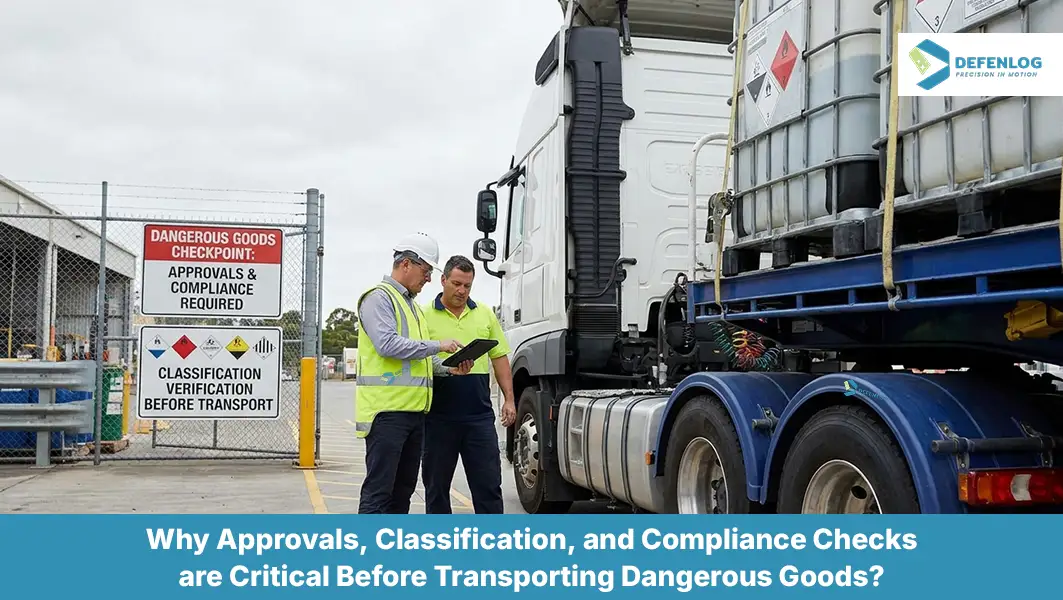
A dangerous goods shipment doesn’t fail on the road, it fails long before that, during planning. A missing UN number, an incorrect label, or an unapproved route can stop cargo instantly, no matter how well the transport is executed.
That’s the reality of hazardous logistics today.
Across South Africa and global supply chains, regulations around dangerous goods have become stricter, more structured, and closely monitored. Freight forwarders, shippers, and logistics teams are expected to manage not just movement, but compliance at every step. Transporting dangerous goods is no longer just an operational task, it is a regulated process that begins with approvals, classification, and validation.
Why Can’t Move Dangerous Goods Without Pre-Transport Checks?
Dangerous goods are regulated because of the risks they carry. These risks can vary depending on the nature of the substance, from flammability and toxicity to chemical reactivity or environmental impact.
Before any movement begins, the cargo must go through a series of checks to ensure that it can be transported safely and legally. These checks are not optional. They are mandatory under regulatory frameworks governing road, sea, air, and rail transport.
Pre-transport validation typically includes:
- Confirming whether the substance is classified as dangerous goods
- Assigning the correct hazard classification
- Verifying packaging and labelling requirements
- Ensuring documentation is complete and accurate
- Assessing whether the transport route is compliant
If any of these elements are missing or incorrect, the shipment may be delayed, rejected, or penalized.
Classification: The Foundation of Safe Transport
Everything in dangerous goods logistics begins with classification. Without proper classification, nothing else can be done correctly.
Each substance must be identified using:
- A UN number, which is a globally recognized four-digit code
- A hazard class, which defines the type of risk
- A packing group, which indicates the severity of danger
For example, substances can fall under categories such as explosives, flammable liquids, toxic materials, or corrosives. Some materials may even belong to multiple classes depending on their properties.
Packing groups further refine the level of risk:
- Group I: High danger
- Group II: Medium danger
- Group III: Lower danger
This classification determines how the cargo must be handled, stored, packaged, and transported.
An error at this stage can affect the entire logistics process.
Documentation: The Backbone of Approval
Once classification is complete, documentation becomes the next critical step. Dangerous goods transport relies heavily on accurate and complete documentation.
This includes:
- Transport documents detailing the nature of the goods
- Safety Data Sheets (SDS) provide technical and safety information
- Hazard declarations and compliance confirmations
Authorities, carriers, and regulators depend on these documents to verify that the shipment meets all requirements. Without proper documentation, the cargo cannot legally move.
Incomplete or incorrect paperwork is one of the most common reasons for delays in dangerous goods transport.
Route Validation and Risk Assessment
Unlike general freight, dangerous goods cannot be transported on any available route. The route itself must be evaluated for safety and compliance.
This involves considering factors such as:
- Population density along the route
- Road infrastructure and conditions
- Accessibility for emergency response teams
- Legal restrictions on hazardous cargo movement
Certain routes may be restricted for dangerous goods, especially in urban areas or near sensitive locations. In some cases, alternative routes must be planned to minimize risk.
Route validation ensures that the movement is safe not only for the cargo but also for the public and the environment.
Packaging and Labelling: More than Just Compliance
Dangerous goods packaging is not just about containment, it is about protection. The packaging must be strong enough to withstand transport conditions while preventing leaks, spills, or reactions.
Labelling is equally important. It communicates the nature of the cargo to everyone involved in the transport chain.
Proper packaging and labelling include:
- Approved containers and materials
- Hazard labels indicating the type of risk
- UN markings for identification
- Clear visibility for emergency responders
If packaging fails or labels are missing, the consequences can be severe.
Training and the Role of Safety Oversight
Handling dangerous goods requires trained personnel at every stage. This includes warehouse staff, logistics coordinators, drivers, and compliance teams.
Training ensures that everyone understands:
- How to handle hazardous materials safely
- What procedures to follow in case of an incident
- How to comply with regulatory requirements
In addition, companies involved in dangerous goods transport must appoint a Dangerous Goods Safety Adviser (DGSA). The DGSA plays a key role in:
- Monitoring compliance
- Developing safety procedures
- Investigating incidents
- Ensuring continuous improvement in operations
While the DGSA provides guidance, the ultimate responsibility still lies with the company.
The Real Consequences of Non-Compliance
Ignoring dangerous goods regulations is not just risky, it can be costly and dangerous.
Consequences of non-compliance include:
- Shipment delays or rejections at checkpoints
- Financial penalties and fines
- Legal action against the company
- Environmental damage
- Risk to human life and safety
In severe cases, non-compliance can lead to operational shutdowns or criminal charges.
These risks highlight why approvals and compliance checks are essential before transport begins.
Where Most Businesses Go Wrong?
Many companies have procedures in place, but the challenge lies in execution. Common issues include:
- Staff not fully understanding procedures
- Lack of proper training
- Incomplete or outdated documentation
- Misuse of regulatory exemptions
- Poor communication between teams
These gaps create vulnerabilities in the process, increasing the likelihood of errors.
Building a Compliance-Driven Transport Process
To manage dangerous goods effectively, businesses must adopt a structured approach. This involves:
- Developing clear and documented procedures
- Ensuring all staff are properly trained
- Conducting regular compliance audits
- Maintaining accurate and up-to-date documentation
- Working with experienced and compliant transport partners
A compliance-driven process not only reduces risk but also improves operational efficiency and reliability.
Why does the Right Transport Partner Make a Difference?
Even with internal processes in place, the transport partner plays a critical role in ensuring compliance. A specialized partner understands regulatory requirements, manages documentation accurately, and executes transport with discipline.
This reduces the burden on shippers and ensures that cargo moves without unnecessary delays or risks.
Conclusion
Dangerous goods transport is not defined by the journey, it is defined by the preparation. Approvals, classification, documentation, and route validation are the foundation of safe and compliant movement.
In today’s logistics environment, where regulations are strict and risks are high, skipping these steps is not an option.
If you are looking for a Specialized Road Transport Partner in South Africa who understands compliance from the ground up, Defenlog is ready to support your operations.
Contact us today to ensure your dangerous goods move with full regulatory compliance, operational control, and complete peace of mind.