

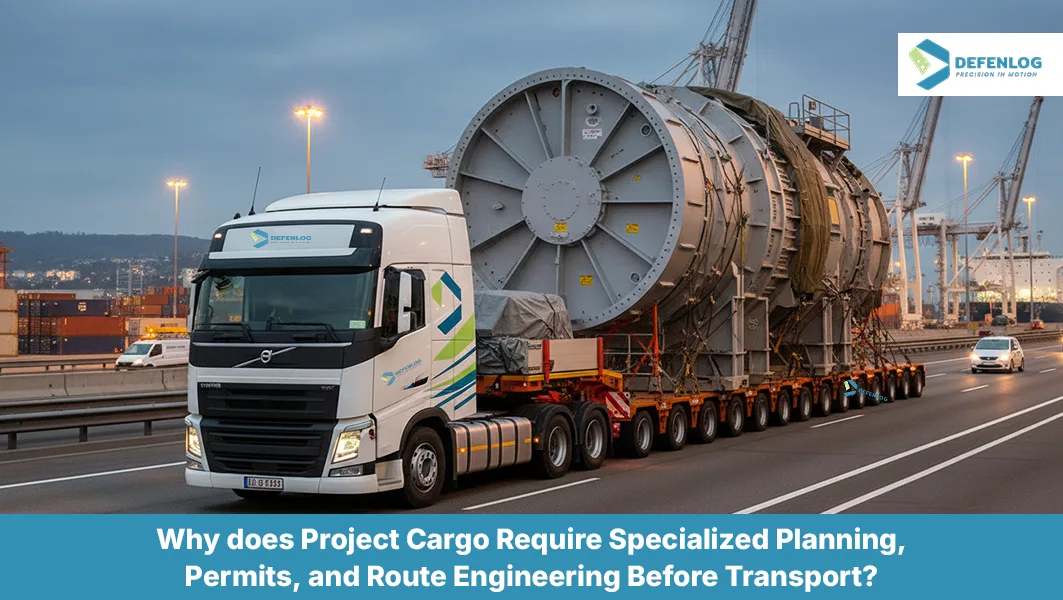
Moving a container is a routine task. Moving a ton of transformers, large mining equipment, or an industrial plant module is not. When cargo exceeds standard dimensions or weight limits, transportation becomes a controlled engineering operation rather than a straightforward logistics move. Every bridge, intersection, permit authority, and site interface is suddenly integrated into the transportation plan.
Project cargo movements adhere to strict timelines based on construction schedules, shutdown windows, and infrastructure readiness. Delays don’t just affect delivery; they can halt entire industrial projects, idle cranes, disrupt contractors, and cause costly downtime. As a result, before project cargo can be transported, specialized planning, permit coordination, and route engineering are required.
How does Project Cargo Differ From Standard Freight?
Project cargo is the transportation of oversized, heavy, high-value, or complex equipment that cannot be moved using standard freight methods. These movements typically support large-scale projects in mining, energy, construction, and industrial development.
Unlike standard freight, project cargo involves:
- Oversized dimensions
- Extreme weight distribution
- Limited route accessibility
- Permit-controlled movement
- Escort vehicle requirements
- Engineering-based transport planning
- Site delivery coordination
These factors transform transport into a multi-stage logistics operation that must be planned carefully before dispatch.
The Real Risks of Moving Project Cargo Without Proper Planning
Project cargo cannot be improvised. Without specialized planning, the risks increase dramatically.
Some of the most common issues include:
- Bridge weight restrictions exceeded
- Height clearance failures under power lines or structures
- Permit delays stopping cargo mid-route
- Traffic authority restrictions not considered
- Site not ready for offloading
- Incorrect trailer configuration
- Improper load securing
- Escort vehicles not arranged
- Municipal approvals missing
Any one of these can halt movement immediately, causing significant delays and financial consequences.
Because project cargo movements are subject to fixed engineering schedules and infrastructure constraints, minor delays can have a significant impact on the overall project timeline.
Route Engineering Important for Project Cargo
Route engineering is one of the most important aspects of project cargo transport. It entails analyzing the entire journey before moving forward.
This includes:
- Bridge capacity assessment
- Road width analysis
- Turning radius evaluation
- Height clearance verification
- Corridor suitability checks
- Traffic impact analysis
- Municipal road restrictions
- Temporary infrastructure planning
This process eliminates transit uncertainty and ensures the cargo can physically move across the planned route without disruption.
Without route engineering, transport becomes guesswork, and guesswork is unacceptable for oversized cargo.
Permits Required Before Moving Project Cargo
Transportation authorities regulate oversized and abnormal loads. Before any movement can be dispatched, it must be legally authorized.
Permits typically cover:
- Cargo dimensions
- Axle weight distribution
- Approved route corridors
- Movement timing restrictions
- Escort requirements
- Municipal notifications
- Traffic control approvals
These approvals must be secured in advance. They cannot be arranged during transit.
Abnormal load approvals, escort requirements, and municipal notifications must be integrated into the movement plan before dispatch to avoid disruption.
Without permits, transport may be stopped immediately by authorities, causing delays and compliance risks.
The Role of Escort Vehicles in Project Cargo
Escort vehicles are often required for oversized cargo to maintain safety and manage traffic conditions. These vehicles help coordinate movement across restricted corridors and sensitive infrastructure areas.
Escort coordination typically includes:
- Pilot vehicles front and rear
- Traffic management support
- Hazard notification
- Route monitoring
- Clearance confirmation
- Communication with authorities
Escort planning is not optional; it is part of regulatory compliance for many abnormal load movements.
Site Delivery Planning Matters More Than Most Expect
Project cargo transport doesn’t end at arrival. The final delivery stage is often the most complex part of the movement.
Key considerations include:
- Crane availability
- Offloading sequence
- Site access roads
- Ground load capacity
- Safety zone clearance
- Delivery timing windows
- Contractor coordination
If the site is not ready, cargo may need to be staged or delayed, creating additional costs.
Offloading windows, crane interface, and site readiness must be aligned before arrival to avoid disruption during final placement.
Industries That Depend on Project Cargo Transport
Project cargo supports large-scale industrial operations across multiple sectors:
- Mining equipment transport
- Energy infrastructure projects
- Power plant components
- Oil and gas modules
- Construction machinery
- Industrial plant relocation
- Heavy manufacturing equipment
- Infrastructure development
These industries operate on strict timelines where transport delays are not acceptable.
The Cost of Using a Standard Transportation Partner for Project Cargo
Choosing a standard transportation partner for project cargo may appear less expensive at first, but the true cost is often revealed during execution. Project cargo requires oversized dimensions, permits, route restrictions, and site delivery coordination. Without specialized planning, movements may experience delays, compliance issues, and operational disruptions, increasing overall project costs.
The hidden costs of using a standard transport partner include:
- Project delays due to route restrictions
- Crane standby and contractor idle charges
- Permit violations and compliance penalties
- Re-routing costs and additional fuel
- Escort rescheduling expenses
- Incorrect trailer configuration and reloading
- Site delivery delays and rebooking fees
- Temporary storage and staging costs
- Increased risk of cargo damage
These risks often make standard transport more expensive than using a specialist project cargo partner.
How do Specialized Transport Partners Reduce Risk?
Defenlog is different from other partners than a standard transportation partner. Oversized and abnormal loads require route validation, permit coordination, specialized equipment, and controlled site delivery. We reduce operational risk at every stage of the movement by managing these components through compliance-driven execution and systematic planning.
Our project cargo management typically includes:
- Route surveys and feasibility checks
- Permit coordination
- Escort planning
- Trailer configuration engineering
- Load securing methodology
- Site delivery sequencing
- Risk mitigation planning
- Movement monitoring
This level of preparation ensures that your cargo moves safely, legally, and on time.
Conclusion: Risk Reduction Starts With Specialist Planning
Project cargo transport involves complexity, compliance, and coordination. Without specialized planning, risks increase across every stage of the movement, from dispatch to final delivery.
Specialist transport services partners reduce risk through route engineering, permit management, equipment alignment, escort coordination, and controlled site delivery planning. This ensures oversized and heavy cargo moves safely, legally, and on schedule.
When project timelines cannot slip, and cargo is critical, working with a specialist transport provider becomes essential.Looking for a specialized road transport partner in South Africa and Africa?
Contact us today to plan your project cargo movement safely and efficiently.