
One missing product detail can delay the entire chemical load.
Bulk chemical transport problems often begin before the truck reaches the pickup site. The Safety Data Sheet may be missing, the product information may be incomplete, or the delivery site may not have the right pump, hose, or equipment ready for unloading.
These gaps can affect the truck selection, loading process, delivery schedule, and safety of the load. That is why the transporter must first understand the chemical, how it is packed, how it will be loaded and unloaded, and what conditions are present at both sites.
When the correct information is shared early, the transporter can arrange the right vehicle, equipment, documentation, and road transport plan. This helps reduce delays and keeps the load under better control from pickup to delivery.
What is Bulk Chemical Transportation and Why is it Different From Other Transport?
Bulk chemical transportation is the road movement of large quantities of liquid, powder, granular, hazardous, or non-hazardous chemical products. These products may be moved in tankers, ISO tanks, IBCs, drums, bags, or other suitable containers.
Unlike general freight, the transport plan cannot be based only on weight, distance, and delivery time. The transporter may also need to check the chemical’s density, viscosity, pH, temperature requirements, hazard classification, and compatibility with the selected truck and equipment.
For example, thick liquids may need a pump, corrosive chemicals may require a suitable tanker lining, and temperature-sensitive products may need insulation. Dangerous goods may also require trained drivers, correct documentation, vehicle markings, and extra safety controls to meet the required dangerous goods transport compliance standards.
Simply put, the transport solution must be selected based on the chemical’s actual handling and road transport requirements.
How are Bulk Chemical Products Shipped by Road?
Bulk chemical transport usually follows a series of connected steps. Each step gives the information needed for the next, helping the transporter build a clear road transport plan before the truck is sent on the road.
1. Gathering Basic Information About the Product
The process begins by confirming exactly what will be transported. This includes the product name, product form, total weight, volume, how often it will be transported, and whether it is hazardous or non-hazardous.
The transporter may also need information about density, viscosity, pH, and temperature sensitivity. These details affect load weight calculations, equipment selection, loading time, and the way the product can be unloaded at the delivery site.
Clear product information also helps avoid confusion between the transport request, Safety Data Sheet, pickup instructions, and delivery documents.
2. Reviewing the Product’s Safety Data Sheet
The Safety Data Sheet, commonly called the SDS, provides important information about the chemical’s details and hazards. It can also explain safe handling, required personal protective equipment, spill response, firefighting steps, storage conditions, and transport classification.
South Africa’s Hazardous Chemical Agents Regulations include requirements for safety data sheets for hazardous chemicals.
Sharing the SDS early gives the transporter time to review the product and plan the road movement correctly. It should not be sent only when the truck arrives to load.
3. Confirming Dangerous Goods Requirements
When the chemical is classified as dangerous goods, the transporter must confirm its UN number, hazard class, packing group, and any extra handling requirements.
The classification may affect the vehicle, packaging, markings, documents, driver requirements, and emergency information needed for the road movement.
Not every bulk chemical is dangerous goods. However, the classification should always be confirmed from correct product documents rather than guessed from the product name.
4. Choosing a Suitable Tanker, Truck, or Trailer
Once the product requirements are understood, the transporter can choose the right truck or trailer.
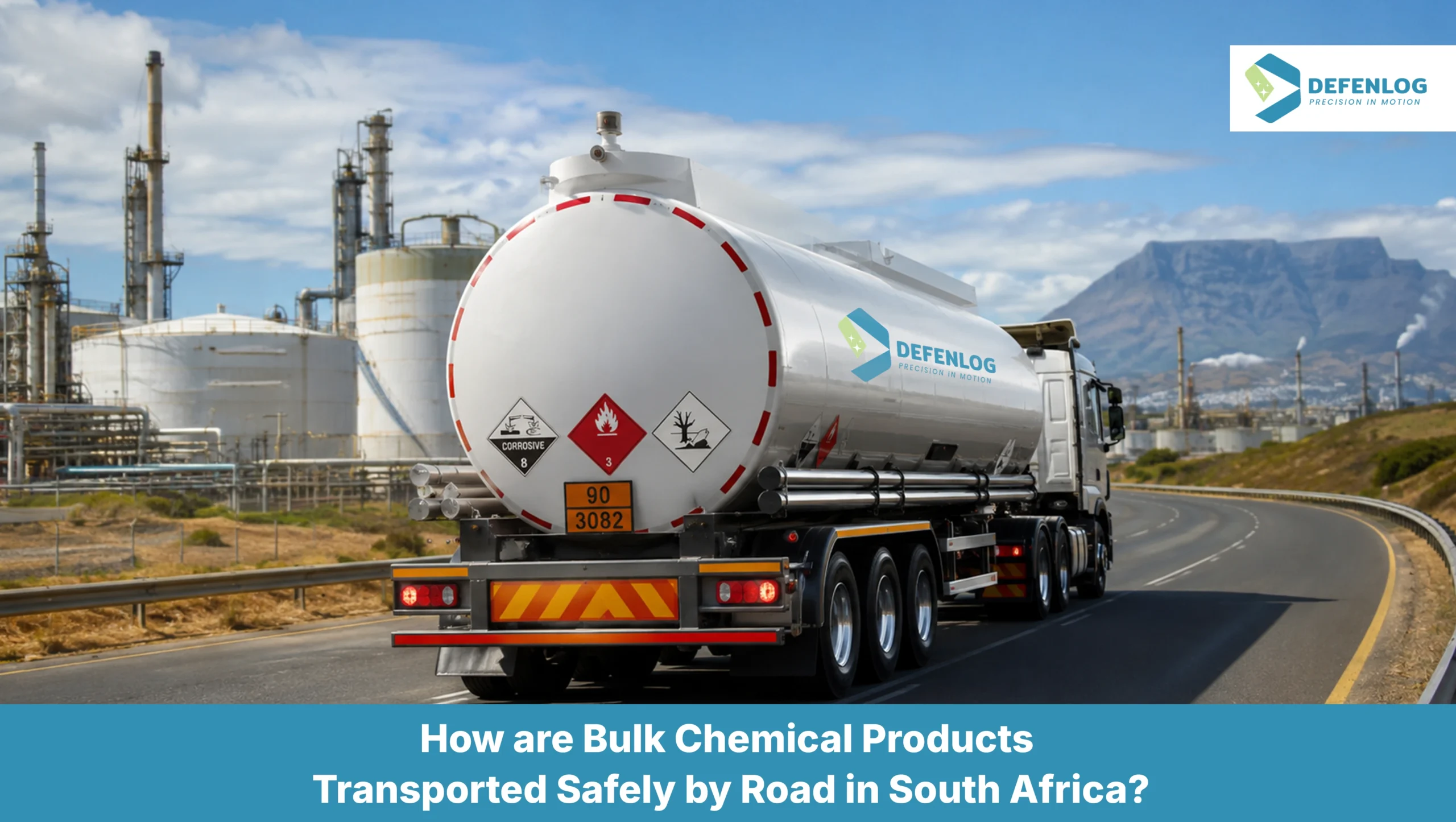
Bulk liquids may require a suitable tanker or ISO tank. Chemicals packed in drums or IBCs may move on a flatbed, tautliner, or enclosed vehicle. Dry chemical products may require another suitable vehicle for packaged chemicals.
Capacity matters, but it is not the only issue. Tanker material, lining, previous cargo, whether the tanker has been cleaned, number of compartments, and unloading method can also affect whether the equipment is suitable.
Defenlog supports bulk chemical road movements using transport solutions selected according to the chemical type, packaging, volume, and road transport requirements. This is also why choosing a bulk chemical transport partner with the right equipment and operating experience is important.
5. Confirming Additional Equipment Requirements
The next step is to confirm how the chemical will be loaded and unloaded.
The road movement may require pumps, hoses, compressors, couplings, forklifts, cranes, or other extra equipment. Both sites should confirm hose and fitting sizes, available equipment, and who is responsible for each task.
A truck can arrive on time and still remain idle because a hose does not fit, a pump is unavailable, or the receiving tank is not ready. Confirming these details in advance helps prevent unnecessary waiting time.
6. Weighing and Sending the Vehicle on the Road
Where required, the vehicle may be weighed before loading to confirm the truck’s empty weight. It can then be weighed again after loading to confirm the amount loaded and support legal load limit checks.
The shipper should confirm whether a weighbridge is available at the site or whether the driver must visit an external facility.
Once loading, weight, documents, equipment, and site requirements are confirmed, the vehicle can be sent on the road under the confirmed road transport plan.
What Details should be Prepared Before Transporting a Bulk Chemical Product?
Businesses should prepare the main load details before asking a transporter to confirm the right truck, availability, or pricing.
The ten most important details are:
- Exact product name and product form
- Safety Data Sheet
- UN number and dangerous goods class, where applicable
- Total weight, volume, and number of loads
- Tanker, drum, IBC, bag, or other packaging or tank type
- Temperature, viscosity, pH, or equipment suitability requirements
- Complete pickup and delivery addresses
- Loading, unloading, and who provides the equipment
- Site access conditions, operating hours, and weighbridge availability
- Required dates, how often the product will be transported, and border and customs details
These details allow the transporter to review the full road transport job rather than simply calculate the distance between two points.
They also reduce the chance of changed quotes, the wrong truck or equipment, missed delivery appointments, and last-minute changes at the pickup or delivery site.
How does Defenlog Support Smooth Bulk Chemical Transport?
Defenlog begins by reviewing the chemical, documentation, quantity, containment, collection point, destination, and required delivery schedule.
The planning process may include checking the SDS and cargo classification, selecting a suitable transport solution, confirming loading and offloading arrangements, assessing site access, and coordinating the route and schedule. Careful route planning for hazardous cargo also helps identify road restrictions, safe stopping points, site access concerns, and possible delivery risks before dispatch.
For hazardous chemicals, the operation may also require licensed dangerous goods capability, qualified personnel, correct documentation, emergency information, and controlled handling procedures. Defenlog provides specialized road transport for dangerous goods and other regulated cargo across South Africa.
As a trusted road transport partner in South Africa, Defenlog focuses on building the movement around the actual cargo requirements. This structured approach helps create clearer responsibilities, better site coordination, and a controlled handover at the destination.
Conclusion
Bulk chemical transport involves much more than assigning a truck and confirming a delivery date. The chemical’s properties, classification, volume, containment, equipment needs, site conditions, and documents all influence how the load should move.
When these details are shared early, the transporter can prepare the right vehicle and operating plan while reducing preventable delays and changes.
Planning a bulk chemical movement in South Africa? Contact us at Defenlog to discuss your product, safety data sheet, collection point, delivery requirements, and schedule. Our team will review the movement and help coordinate a suitable road transport solution.