
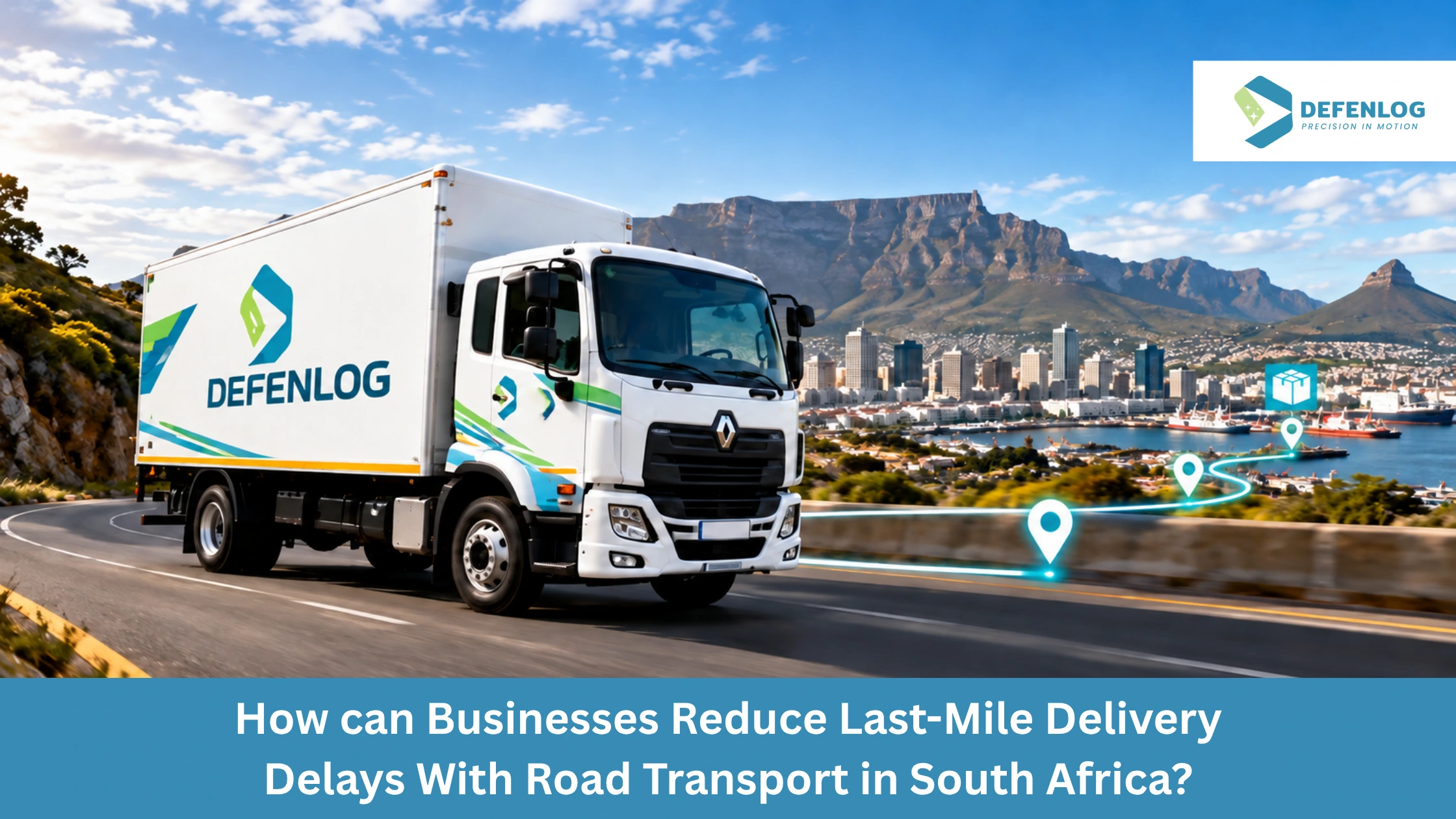
Delivery volumes are growing. Delivery windows are getting shorter. Can your transport operation keep up?
For businesses across South Africa, getting cargo out of the warehouse is only the first step. The final delivery can still be affected by traffic, difficult site access, vehicle limitations, missed receiving windows, or poor coordination between the transport team and the customer.
These last-mile delivery delays can quickly lead to customer complaints, extra waiting time, rescheduling, and pressure on daily operations. That is why reliable delivery needs more than a truck and a delivery address.
This blog looks at practical road transport strategies businesses can use to reduce avoidable delays and make last-mile deliveries more reliable across South Africa.
What Makes Last-Mile Delivery Challenging in South Africa?
Last-mile delivery in South Africa can be difficult because of urban sprawl, uneven road conditions, traffic congestion, and security concerns that can make the final part of a delivery harder to manage.
A delivery to a busy city area can be very different from one to a retail store, warehouse, manufacturing facility, construction site, or remote location. Each destination may have different road conditions, access limits, traffic, security, and receiving procedures.
Businesses may also face:
- Traffic congestion
- Limited site access
- Not enough space for unloading
- Fixed delivery times
- Unexpected road conditions
- Incorrect delivery details
- Vehicle access problems
- Waiting time at the destination
The challenge is not simply getting the cargo to the right address. It is getting it there with the right vehicle, within the agreed delivery time, and when the receiving team is ready.
That is why effective last-mile delivery planning needs to consider the cargo, vehicle, route, timing, access, and destination together.
Why do Last-Mile Deliveries Get Delayed?
Last-mile delivery delays are often caused by problems that could have been identified before the vehicle starts the journey.
Common causes include:
- Transport arranged at the last minute
- Poor route planning
- Wrong vehicle for the delivery location
- Incorrect or incomplete delivery details
- Limited access or unloading space
- Receiving team not ready
- Poor communication between the customer and transport team
- Unexpected traffic or road conditions
For example, a vehicle may arrive at the correct location but still lose time because the entrance is restricted or the receiving team is not available.
These issues may seem small, but they can lead to missed delivery windows, extra waiting time, rescheduling, and higher transport costs.
Good planning helps businesses identify these problems early and reduce avoidable delays.
How can Businesses Improve Last-Mile Delivery Reliability?
Businesses can improve last-mile delivery reliability by planning the road movement properly, choosing suitable vehicles, setting realistic delivery times, and keeping the transport and receiving teams coordinated.
The final leg is where small planning gaps can quickly affect the delivery schedule. Addressing these points early gives businesses better control over the movement.
Here are seven practical ways businesses can improve last-mile delivery reliability.
1. Plan Routes Before Dispatch
A well-planned route helps reduce avoidable delays during the journey. Consider traffic, road conditions, vehicle size, access restrictions, delivery location, and timing when planning the movement.
For multiple deliveries, planning the stop sequence can also reduce unnecessary travel and waiting time.
For businesses managing regular movements, structured general road freight transport can help improve consistency across recurring collections and deliveries.
2. Choose a Reliable Road Transport Partner
A reliable road transport partner should provide more than an available vehicle. Look for suitable vehicles, experienced drivers, clear communication, and proper delivery coordination.
For regular deliveries, a partner familiar with your routes, delivery locations, and operating requirements can also make future movements easier to plan.
3. Set Realistic Delivery Windows
A realistic delivery window should reflect actual road and operating conditions.
Traffic, loading and unloading time, receiving hours, distance, and road conditions can all affect arrival times. Setting practical delivery windows helps avoid unrealistic promises and unnecessary pressure on the transport operation.
This is especially important when a delivery is linked to a production schedule, customer appointment, store opening, or site activity.
4. Match the Vehicle to the Delivery
The right vehicle should match both the cargo and the delivery location.
Before assigning a vehicle, consider the cargo size and weight, vehicle dimensions, road conditions, site access, loading requirements, and available unloading space.
Choosing the right vehicle can help prevent access problems, waiting time, vehicle changes, and failed delivery attempts.
5. Confirm Site Access and Unloading Requirements
Site access and unloading requirements should be confirmed as part of the delivery plan.
The transport team should know the correct entrance, unloading area, receiving contact, and any site-specific instructions.
This is particularly important for warehouses, manufacturing facilities, construction sites, workshops, mines, and industrial locations.
Knowing these details in advance helps the driver arrive prepared and reduces unnecessary waiting at the destination.
6. Keep Drivers and Receiving Teams Connected
Clear communication between the driver, transport team, and receiving location helps keep the delivery on track.
Everyone should have the correct delivery details and contact information. If traffic, weather, a vehicle issue, or another problem affects the expected arrival time, the receiving team should be informed early.
This gives the customer time to adjust and allows the transport team to manage the situation rather than simply report a missed delivery afterward.
7. Prepare Backup Plans for Delivery Delays
Not every delivery delay can be prevented. Traffic incidents, breakdowns, road restrictions, weather, or access problems can still affect the movement.
A practical backup plan may include an alternative route, a revised delivery window, or another suitable delivery arrangement.
The goal is not to promise that every delivery will be problem-free. It is to make sure an unexpected issue does not become a complete delivery failure.
What should Businesses Look for in a Reliable Road Transport Partner in South Africa?
Choosing a road transport partner should be about more than finding the lowest quote. A provider that cannot meet the delivery requirements can lead to waiting time, rescheduling, missed delivery windows, and extra costs.
Before choosing a transport partner, businesses should check:
- Vehicle capability
- Driver experience
- Route and delivery planning
- Clear communication
- Support when delivery problems occur
- Site access and unloading coordination
- Delivery and handover confirmation
The right road transport partner should understand the delivery requirements before the vehicle leaves and manage the movement through to final handover.
For businesses making regular deliveries, this level of planning and coordination can help reduce avoidable delays and make transport easier to manage.
Why Choose Defenlog for Last-Mile Road Transport in South Africa?
Last-mile delivery can become difficult when the cargo, vehicle, route, and delivery location all have different requirements. This is where the right transport partner can make a difference.
Defenlog provides specialist road transport solutions across South Africa for commercial and industrial cargo, along with hazardous, high-value, project, and other sensitive movements. Its current road freight operations focus on structured planning, fleet suitability, route alignment, controlled dispatch, communication, and delivery confirmation.
For last-mile movements, Defenlog looks at the actual delivery requirements rather than simply assigning a truck. The cargo, vehicle, route, access conditions, delivery timing, and receiving arrangements all form part of the transport plan.
Whether the delivery is going to a warehouse, branch, workshop, manufacturing facility, mine, or industrial site, Defenlog supports the movement from collection through final handover.
For businesses that need consistent road transport across South Africa, this structured approach can help reduce avoidable delivery issues and give the operations team better control over the final leg.
Conclusion
Last-mile delivery delays can start with poor route planning, the wrong vehicle, unclear delivery details, or an unprepared receiving location.
Businesses can reduce these problems by planning routes properly, selecting suitable vehicles, setting realistic delivery windows, confirming site access, and keeping the transport and receiving teams connected.
Choosing the right road transport partner can make the entire movement easier to manage from collection to final handover.
Need reliable last-mile road transport across South Africa? Contact us at Defenlog to discuss your cargo, delivery locations, and transport requirements.