
Some cargo can be delayed without creating immediate danger. Class 1 explosives cannot.
A missing permit, unsuitable vehicle, unsecured load, unapproved route change, or weak emergency plan can create serious safety, compliance, and delivery risks. That is why explosives transport requires more than a truck and a dangerous goods license.
Across South Africa, Class 1 materials support mining, infrastructure, defense, manufacturing, and energy operations. These shipments are essential, but they must move through a controlled process from collection to final delivery.
Understanding the capabilities behind Class 1 explosives transport helps businesses choose a provider that can manage the movement safely, legally, and with clear responsibility.
What Defines Class 1 Explosives Transport Capability?
Class 1 explosives transport capability is the ability to plan, control, monitor, and complete the movement of explosive materials under strict safety and compliance requirements.
It is not defined by one vehicle, certificate, or trained driver. True capability comes from several operational areas working together, including:
- Correct cargo classification
- Required permits and documentation
- Suitable vehicles and safety equipment
- Trained drivers and operational personnel
- Approved route planning
- Security and monitoring controls
- Emergency preparedness
- Controlled delivery and handover
Each movement may differ according to the explosive division, quantity, packaging, collection point, route, and destination. A capable provider should assess the entire movement before dispatch, rather than applying the same process to every shipment.
Why do Class 1 Explosives Require Specialized Transport Capabilities?
Class 1 explosives present risks that differ from standard freight and many other dangerous goods.
These materials may react to heat, impact, friction, contamination, or incorrect handling. Their movement may also involve public safety, security concerns, restricted routes, and specific legal approvals.
The transport process must therefore control more than the cargo. It must also consider the vehicle, driver, operational team, route, stopping points, surrounding environment, and emergency access.
Unlike ordinary freight, a vehicle carrying Class 1 cargo cannot simply take another road because of traffic or stop at an unplanned location without reviewing the risks.
Before the journey begins, the provider must understand what is being transported, how it is classified, which permits are required, which vehicle is suitable, which route may be used, where the vehicle may stop, and who is authorized to receive the cargo.
One overlooked detail can affect the entire movement.
What Compliance, Vehicle, and Personnel Capabilities Support Safe Class 1 Transport?
Safe explosives transport begins before the vehicle reaches the collection point.
The provider should first confirm the cargo information, including its UN number, hazard division, quantity, packaging, and supporting documents. This information determines the legal and operational requirements for the journey.
Required records may include transport permits, dangerous goods declarations, emergency information, driver credentials, vehicle records, and delivery-site approvals.
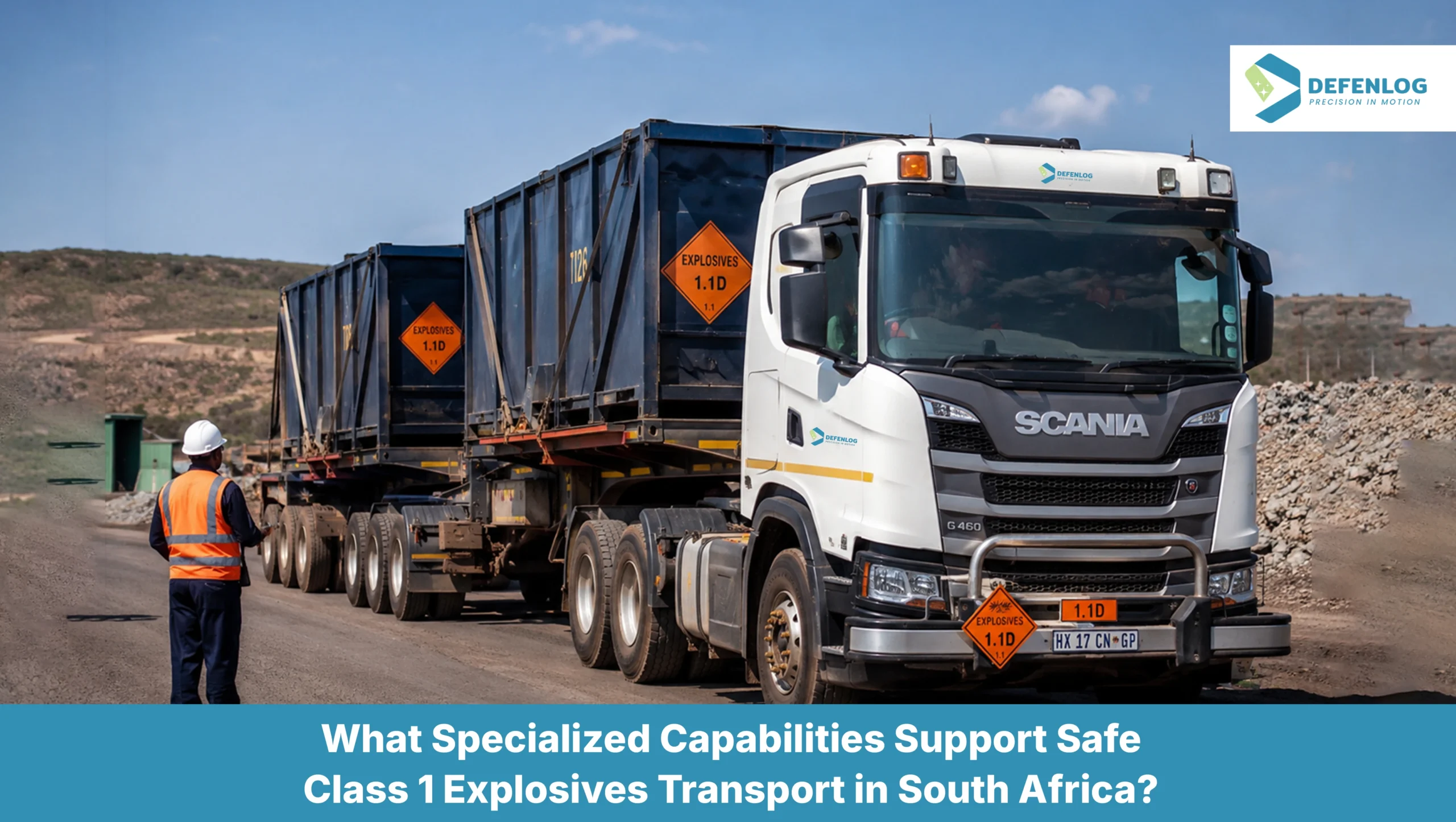
Vehicle selection is equally important. The vehicle must be suitable for the cargo, properly maintained, correctly marked, and equipped with the required safety and emergency equipment.
Pre-dispatch checks may cover:
- Vehicle roadworthiness
- Tyres, brakes, lights, and safety systems
- Required placards and warning signs
- Fire and emergency equipment
- Load-space condition
- Cargo restraint and weight distribution
- Driver and transport documentation
Personnel capability is also critical.
Drivers need the correct qualifications, dangerous goods training, and knowledge of Class 1 transport procedures. They should understand vehicle inspections, approved routes, planned stops, reporting requirements, and emergency actions.
However, the driver should not manage the journey alone. A trained operations team should provide compliance checks, route coordination, shipment monitoring, communication, and emergency support throughout the movement.
How do Route Planning, Security, and Shipment Monitoring Control Explosives Movements?
Route planning for Class 1 explosives involves more than selecting the shortest road.
The route should be reviewed for road restrictions, traffic conditions, infrastructure limitations, public exposure, safe stopping areas, emergency access, and delivery-site entry requirements.
The provider may need to consider restricted urban areas, roadworks, unsuitable bridges, safe refuelling arrangements, secure overnight locations, border procedures, and approved alternative routes.
Security should also form part of the transport plan.
Depending on the cargo and risk level, controls may include planned departure times, driver check-ins, secure stopping points, restricted access, vehicle tracking, route-deviation alerts, and escort coordination where required.
Shipment monitoring provides the provider and the customer with visibility throughout the movement. Dispatch confirmations, milestone updates, delay notifications, live tracking, arrival confirmation, and proof of delivery help maintain accountability from collection to handover.
Why are Emergency Preparedness and Delivery Coordination Essential?
Even with detailed planning, transport conditions can change. Breakdowns, road closures, severe weather, accidents, or security concerns may affect the movement.
Emergency preparedness ensures that the driver and operations team know what to do when something goes wrong.
A strong emergency process should include:
- Written emergency procedures
- Cargo-specific emergency information
- Accessible emergency contacts
- Clear incident escalation steps
- Communication with emergency services
- Vehicle recovery planning
- Customer notification procedures
Emergency planning must happen before dispatch, not after an incident occurs.
Delivery coordination is equally important because the movement is not complete when the vehicle reaches the destination gate.
The provider should confirm the delivery window, access permissions, unloading arrangements, authorised receiving personnel, and final handover process. Poor coordination may leave the vehicle waiting in an unsuitable area or create unnecessary risks during unloading.
What Capability Gaps can Create Safety, Compliance, and Delivery Risks?
Many transport problems begin with small capability gaps.
Common issues include incorrect cargo classification, missing permits, unsuitable vehicles, limited Class 1 driver experience, weak route assessment, unplanned stops, poor load securing, limited monitoring, unclear emergency procedures, and inadequate delivery coordination.
Another risk is assuming that general dangerous goods experience automatically means a provider can transport Class 1 explosives.
Explosive movements require specific knowledge, equipment, security controls, route planning, and emergency readiness. Businesses should review the provider’s complete operating process before confirming the shipment.
Why Choose Defenlog for Class 1 Explosives Transport in South Africa?
As a Trusted Road Transport Partner in South Africa, Defenlog supports controlled road transport for Class 1 explosives and other high-risk cargo across South Africa and selected cross-border routes.
Each movement begins with an assessment of the cargo, documentation, vehicle requirements, route conditions, security needs, and delivery arrangements.
Defenlog’s transport planning may include:
- Cargo and compliance review
- Suitable vehicle deployment
- Qualified driver coordination
- Route assessment and validation
- Security and escort coordination where required
- Shipment tracking and operational communication
- Emergency preparedness
- Controlled delivery and documented handover
This structured approach gives businesses one transport partner with clear responsibility from planning through to delivery.
Conclusion
Safe Class 1 explosives transport depends on several specialized capabilities working together.
Compliance, vehicle suitability, trained personnel, route planning, security controls, shipment monitoring, emergency readiness, and delivery coordination all contribute to a controlled movement.
Businesses should not evaluate a provider only on price, vehicle availability, or a general dangerous goods license. They should confirm whether the transporter has the complete operational capability to manage Class 1 cargo safely from collection to final handover.
Contact Defenlog to discuss your Class 1 explosives transport requirements and request a secure road transport solution across South Africa.