
Military cargo cannot be assigned to the first available truck.
Defence cargo may include military vehicles, communication equipment, machinery, spare parts, ammunition, explosives, fuel, and other regulated materials. Each load has different road transport requirements.
A truck may have enough capacity but still be unsuitable for the cargo height, loading method, route, security needs, or delivery site. Incorrect measurements or the wrong trailer can lead to failed loading, permit delays, route changes, cargo damage, and extra costs.
The right military transport truck must therefore be selected around the cargo, route, site access, legal requirements, and delivery conditions.
Why does Defence Cargo Need a Cargo-Specific Truck?
Military cargo may be heavy, oversized, sensitive, hazardous, or difficult to handle.
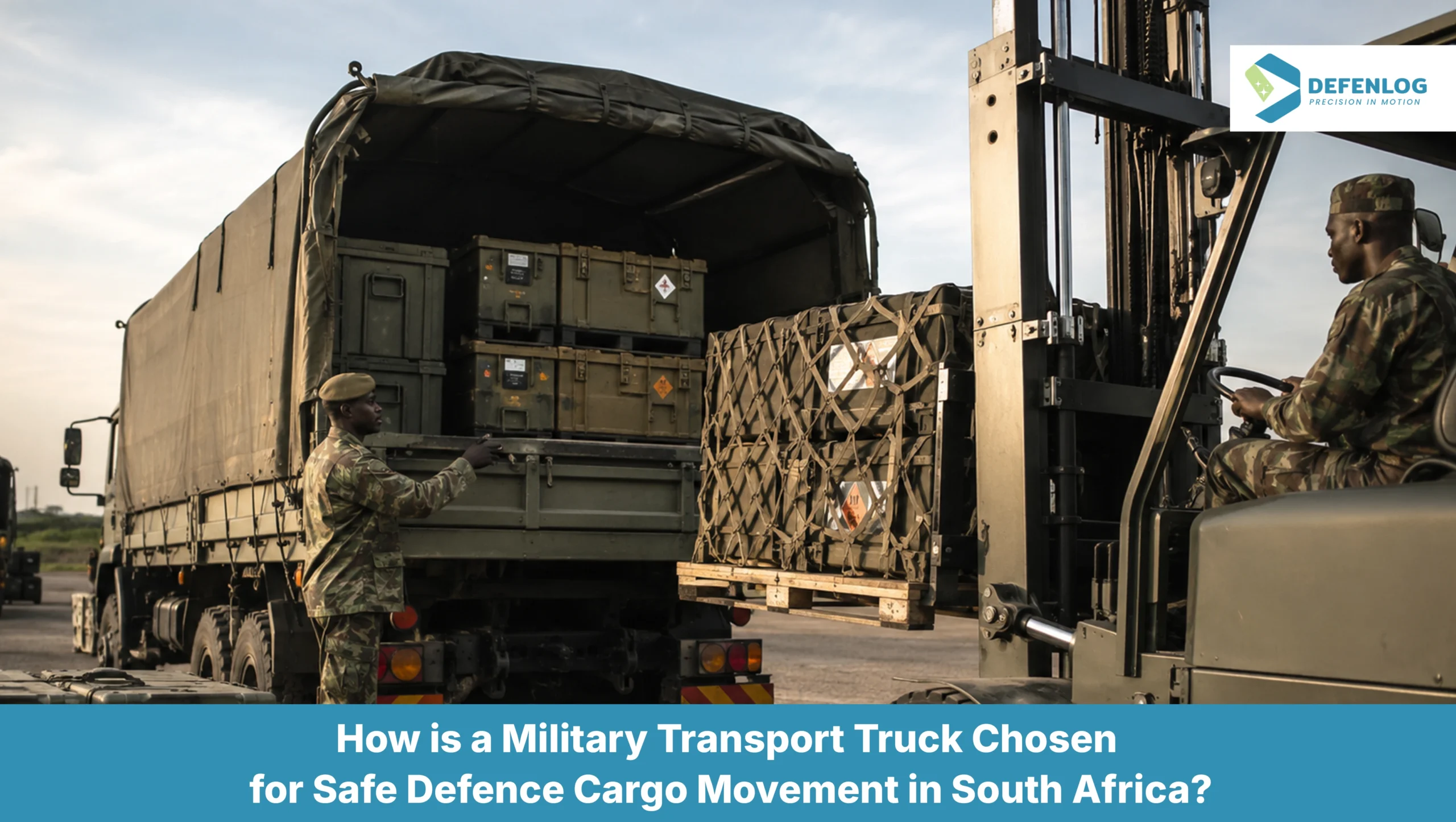
A boxed communication unit may move in an enclosed truck. A military vehicle may need a lowbed trailer. Long equipment may require an extendable trailer, while ammunition or explosives may need a dangerous goods-approved vehicle.
The loading method also affects the truck choice. Wheeled equipment may be driven onto a trailer using ramps. Heavy machinery may need a crane or winch. Sensitive cargo may require protection from weather, dust, and public view.
The vehicle should only be selected after the full cargo requirements are understood.
Which Cargo Details Determine the Right Military Transport Truck?
Truck selection begins with accurate cargo information.
The transporter should confirm:
- Exact cargo description
- Total weight
- Length, width, and height
- Cargo shape and center of gravity
- Whether it is wheeled, tracked, crated, or containerized
- Whether it is general, hazardous, explosive, or sensitive cargo
- Whether tools, attachments, or spare parts are included
These details affect the truck type, trailer length, deck height, axle setup, and securing method.
For example, a military vehicle may appear suitable for a standard flatbed, but its loaded height could exceed normal road limits. A lowbed may then be required.
Missing or estimated information can result in the wrong truck arriving at the pickup site.
What Type of Truck or Trailer may be Required?
There is no single military transport truck for every defence load.
Flatbed Trucks and Trailers
Flatbeds may suit crated machinery, support equipment, and cargo that needs side or top loading. They allow easy access for cranes and forklifts but leave the cargo exposed.
Tautliners and Enclosed Vehicles
These vehicles may suit packaged or sensitive cargo that requires protection from rain, dust, or public view. They can also provide better access control during transport.
Lowbed Trailers
Lowbeds are often used for military vehicles, heavy machinery, and tall equipment. Their lower deck helps reduce the total loaded height and can improve stability.
Extendable and Multi-Axle Trailers
Long defence equipment may require an extendable trailer. Heavy cargo may need a multi-axle setup to spread the load weight safely.
Dangerous Goods-Approved Vehicles
Ammunition, explosives, fuel, and other classified materials may require dangerous goods-approved vehicles.
The truck, driver, markings, documentation, and emergency information must match the cargo classification. Proper dangerous goods transport compliance must be confirmed before dispatch.
How do Loading and Cargo Securing Affect Truck Selection?
The loading method can change the vehicle choice.
Military vehicles may need ramps and a low loading angle. Heavy equipment may require a crane, forklift, or winch. The trailer must provide enough space and the correct deck height for loading.
The unloading method at the destination must also be checked. A load may leave the pickup site without difficulty but face delays if the delivery site does not have the right crane, ramp, forklift, or unloading area.
Once loaded, the cargo must be secured based on its weight, shape, and center of gravity. The securing method may include:
- Chains and straps
- Wheel chocks
- Blocking and bracing
- Approved anchor points
The truck and trailer must provide suitable tie-down points to prevent cargo movement during braking, turning, or travel over uneven roads.
How do Route and Site Conditions Influence the Vehicle?
The right truck must suit the full journey, not only the cargo.
The route may need to be checked for bridge limits, road width, height restrictions, weight limits, steep gradients, turning areas, road conditions, and safe stopping points.
Military facilities, depots, ports, mines, and remote sites may also have narrow gates, limited turning space, security checks, induction rules, or restricted delivery hours.
A large trailer may suit the main road but still be unable to enter the final delivery site. Pickup and delivery access should therefore be checked before vehicle allocation.
For hazardous or controlled cargo, careful route planning for hazardous cargo can help identify restrictions, security concerns, difficult access points, and possible delays before dispatch.
When are Permits and Additional Security Required?
If the loaded vehicle exceeds normal road limits for width, height, length, mass, or axle load, exemption permits may be required.
Permit requirements can depend on:
- Cargo and vehicle dimensions
- Total mass
- Axle loads
- Planned route
- Province of travel
Some movements may also require escort vehicles or additional traffic coordination.
Sensitive defence cargo may need tracking, controlled communication, approved drivers, secure stopping points, escort support, or a recorded delivery handover.
These requirements can affect the truck, route, schedule, and overall transport plan.
Why Choose Defenlog for Military and Defence Cargo Transport?
Defenlog reviews each military and defence cargo movement before assigning a truck or trailer.
The review may cover:
- Cargo type and classification
- Weight and dimensions
- Loading and securing requirements
- Route and site access
- Permit and documentation needs
- Security requirements
- Delivery timing
Based on this information, Defenlog coordinates a suitable transport solution using the right vehicle, trained personnel, correct documentation, and a clear road transport plan.
Defenlog supports military and defence logistics, Class 1 explosives, dangerous goods, heavy equipment, abnormal loads, and other regulated cargo movements across South Africa.
As a trusted road transport partner in South Africa, Defenlog selects the vehicle around the actual cargo and delivery conditions rather than truck availability alone.
Conclusion
The right military transport truck is selected by reviewing more than just cargo weight.
Dimensions, classification, loading method, trailer type, route, permits, security, and site access all affect the final choice. Confirming these details early helps reduce loading problems, route changes, transport delays, and avoidable risks.
Planning a military or defence cargo movement in South Africa? Contact us at Defenlog with the cargo description, weight, dimensions, pickup point, delivery site, loading method, and security requirements. Our team will assess the movement and coordinate a suitable military transport truck and road transport plan.