
The equipment is ready for collection, and the customer is already expecting it at the site. The difficult part is finding a road transport partner that can move the machine without creating problems along the way.
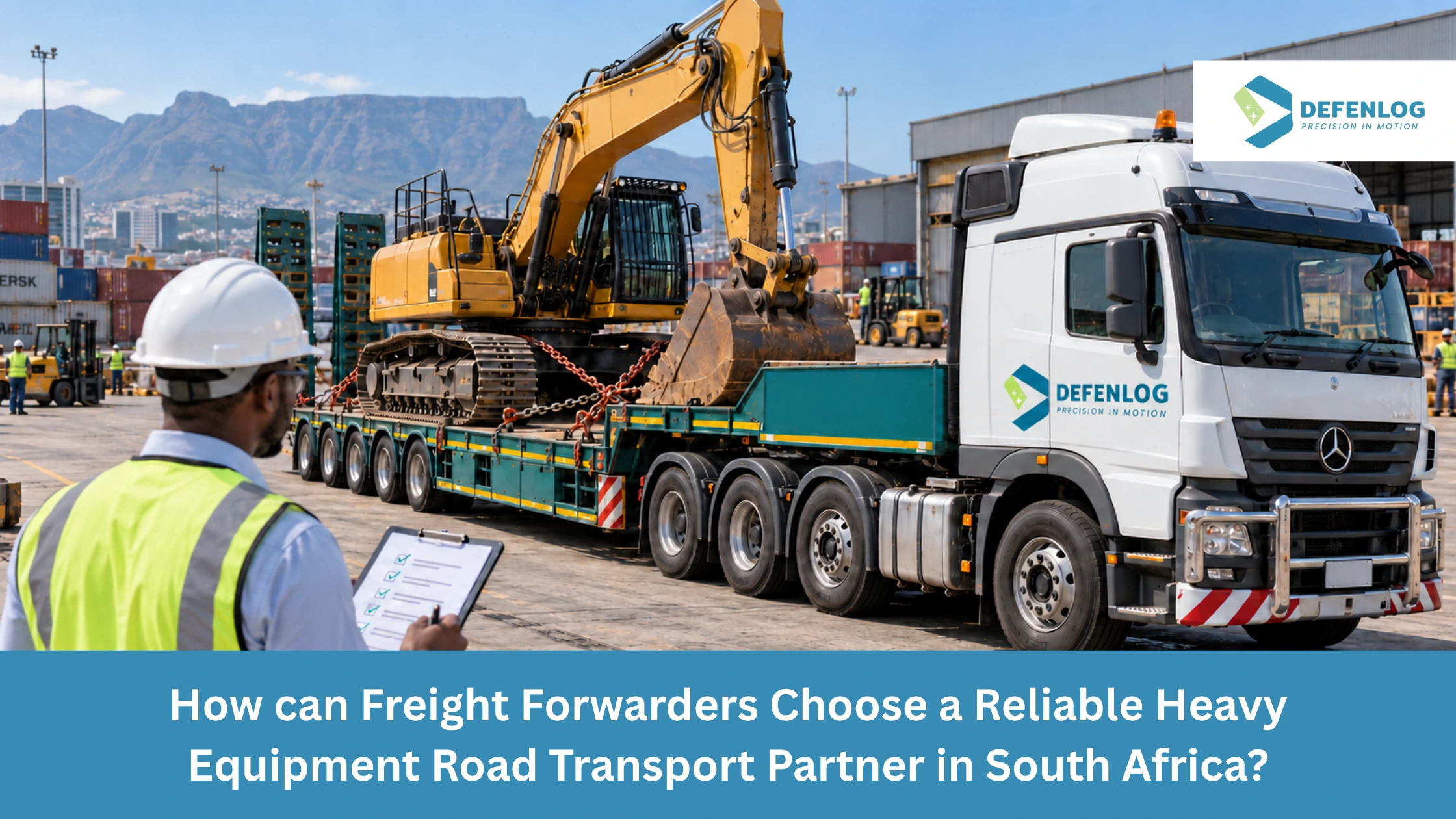
For freight forwarders, heavy equipment road transport involves much more than finding a vehicle with enough capacity. The carrier needs to understand the machine’s dimensions and weight, select the right trailer, plan the route, check any abnormal-load requirements, and make sure the equipment can be loaded, secured, and delivered properly.
A carrier may have a truck available, but that does not mean it is the right vehicle for the job. The wrong trailer, poor weight distribution, an unsuitable route, or limited access at the delivery site can turn a planned movement into a costly delay.
In this blog, we’ll look at what freight forwarders should check before choosing a heavy equipment road transport partner in South Africa, from trailer selection and route planning to loading, compliance, and delivery requirements.
Why is Moving Heavy Equipment by Road More Challenging?
Moving heavy equipment by road is more challenging because the equipment needs to be matched with the right vehicle, route, and handling plan. A machine may be within the vehicle’s carrying capacity but still create problems because of its height, width, weight distribution, or loading points.
The route also needs careful attention. Bridges, road width, height clearances, turning areas, road conditions, and access to the final site can all affect whether the planned vehicle can complete the movement. If the equipment exceeds normal legal dimensions or mass, additional abnormal-load requirements may also apply.
Loading and securing are equally important. Heavy machinery needs to be positioned correctly on the trailer and secured to remain stable during braking, turning, and changing road conditions. At the delivery point, limited access or unloading space can create another problem even when the vehicle reaches the correct location.
For freight forwarders, this is where general and specialist road transport for heavy equipment can make a difference. Equipment may need a different transport setup based on its size, weight, loading requirements, and route.
The key is to plan these requirements before the equipment moves, from collection through final delivery.
How can Freight Forwarders Choose the Right Road Transport Partner?
The right road transport partner should be able to explain how the equipment will be moved, not simply confirm that a vehicle is available.
Check the Carrier’s Heavy Equipment Experience
Look for experience with equipment similar to the shipment you are arranging. Mining machinery, construction equipment, industrial machinery, generators, transformers, and other heavy loads can have very different transport requirements.
A carrier with relevant experience is more likely to understand the practical issues involved in loading, positioning, securing, route planning, and delivery.
Check the Available Vehicles and Trailers
Ask whether the carrier has suitable vehicles and trailers for the equipment.
The recommendation should be based on the machine’s weight, dimensions, height, weight distribution, and loading requirements. Depending on the movement, this could involve a lowbed, flatbed, multi-axle trailer, or another suitable configuration.
The question is not simply whether the carrier has a truck. It is whether they have the right transport setup for the equipment.
Check their Route Planning Approach
Ask how the carrier assesses the road movement before dispatch.
The carrier should consider road conditions, bridge restrictions, clearances, turning points, weight limits, and access to the final delivery site.
This is especially important for heavy or oversized equipment because a route that works for normal freight may not be suitable for the loaded vehicle.
Check their Compliance and Certifications
Freight forwarders should check whether the carrier can provide relevant licenses, certifications, insurance details, and transport documentation.
For movements that require abnormal load permits or other approvals, the carrier should also understand what needs to be arranged before dispatch.
The exact requirements will depend on the equipment and movement, but the carrier should be able to explain them clearly.
Check Shipment Tracking and Communication
Ask how you will receive updates once the equipment is on the road.
A suitable transport partner should have a clear process for dispatch updates, estimated arrival times, delays, and delivery confirmation.
Good communication allows the freight forwarder to keep the customer informed instead of waiting until a delivery problem has already occurred.
Check Pricing Transparency
Compare what each quotation actually includes rather than looking only at the final amount.
Ask whether the quoted price covers the required vehicle, permits, escorts where applicable, loading or unloading support, waiting time, and other movement-related costs.
Clear pricing makes it easier to compare carriers on the actual transport requirement.
Check Customer Reviews and References
Previous customer experience can provide useful insight into how a carrier operates.
Look for feedback about delivery reliability, communication, equipment handling, and the way the company responds when an unexpected transport problem occurs.
Where possible, ask for examples of similar heavy equipment movements rather than relying only on general customer reviews.
What should Freight Forwarders Check Before Confirming the Carrier?
Once a carrier has been selected, the final step is to make sure the agreed transport plan is clear to everyone involved.
Before confirming the booking, make sure the carrier has the correct equipment details, collection and delivery addresses, required delivery date, loading arrangements, and site access information.
The freight forwarder should also confirm:
- The agreed vehicle and trailer
- Final transport cost and included services
- Applicable permit or abnormal-load arrangements
- Loading and securing responsibilities
- Unloading arrangements at destination
- Insurance responsibilities
- Main operational contact
- Tracking and update process
- Expected delivery timing
Getting these details confirmed before dispatch reduces the chance of a different assumption being made by the carrier, freight forwarder, or customer.
For heavy equipment, a clear transport plan is much easier to manage than trying to solve missing details after the vehicle has already been arranged.
What Happens When You Choose the Wrong Carrier?
A poor carrier choice can create problems that go beyond the transport rate.
The wrong trailer can make loading difficult. A route that has not been properly assessed can create clearance or access problems. Missing permit requirements can affect the delivery schedule, while poor securing or handling can put valuable equipment at risk.
For the freight forwarder, this can mean:
- Missed customer delivery dates
- Vehicle waiting time
- Additional transport or handling costs
- Rescheduling
- Difficult customer communication
- More work for the operations team
This is why the cheapest quotation should not automatically be treated as the best option. A carrier that understands the equipment and plans the movement properly can help avoid costs that may not appear in the original quote.
Looking for a Heavy Equipment Road Transport Partner Across South Africa?
If you are arranging heavy equipment road transport across South Africa, the carrier you choose needs to be capable of handling the actual requirements of the movement.
That means having suitable transport equipment, relevant heavy-load experience, a practical approach to route planning, clear compliance processes, reliable communication, and the ability to coordinate loading and delivery.
For freight forwarders, the value of the right road transport partner is not just getting the equipment from one location to another. It is having someone who can manage the road movement properly and keep the shipment under control from collection to final handover.
Why Choose Defenlog for Heavy Equipment Road Transport in South Africa?
Defenlog provides specialist heavy equipment road transport across South Africa for mining, construction, industrial, and infrastructure movements.
The transport plan is built around the actual equipment rather than simply assigning an available vehicle. Defenlog considers the machine’s dimensions and weight, suitable trailer requirements, weight distribution, route conditions, clearance, loading, securing, and delivery access when planning the movement.
For heavy or oversized equipment, Defenlog can also support applicable abnormal-load requirements through route assessment, permit coordination, suitable vehicle deployment, cargo securing, and delivery coordination.
The focus is on managing the road transport movement from collection through final delivery, with the equipment, vehicle, route, and delivery conditions considered together.
For freight forwarders, this provides a practical road transport partner when heavy equipment requires more planning than a standard freight movement.
Conclusion
Choosing a heavy equipment road transport partner is about more than finding a truck at the right price.
Freight forwarders need to consider the carrier’s relevant experience, vehicle capability, route planning, compliance, communication, pricing, customer track record, and ability to manage the complete movement.
The final decision should be based on whether the carrier can understand the equipment and provide a practical plan from collection to delivery.
Defenlog supports heavy equipment road transport across South Africa with transport solutions built around the equipment, route, vehicle, and delivery requirements.
Need a reliable heavy equipment road transport partner across South Africa? Contact us at Defenlog to discuss your equipment and road transport requirements.