
Can the same transport approach really work for every type of heavy equipment?
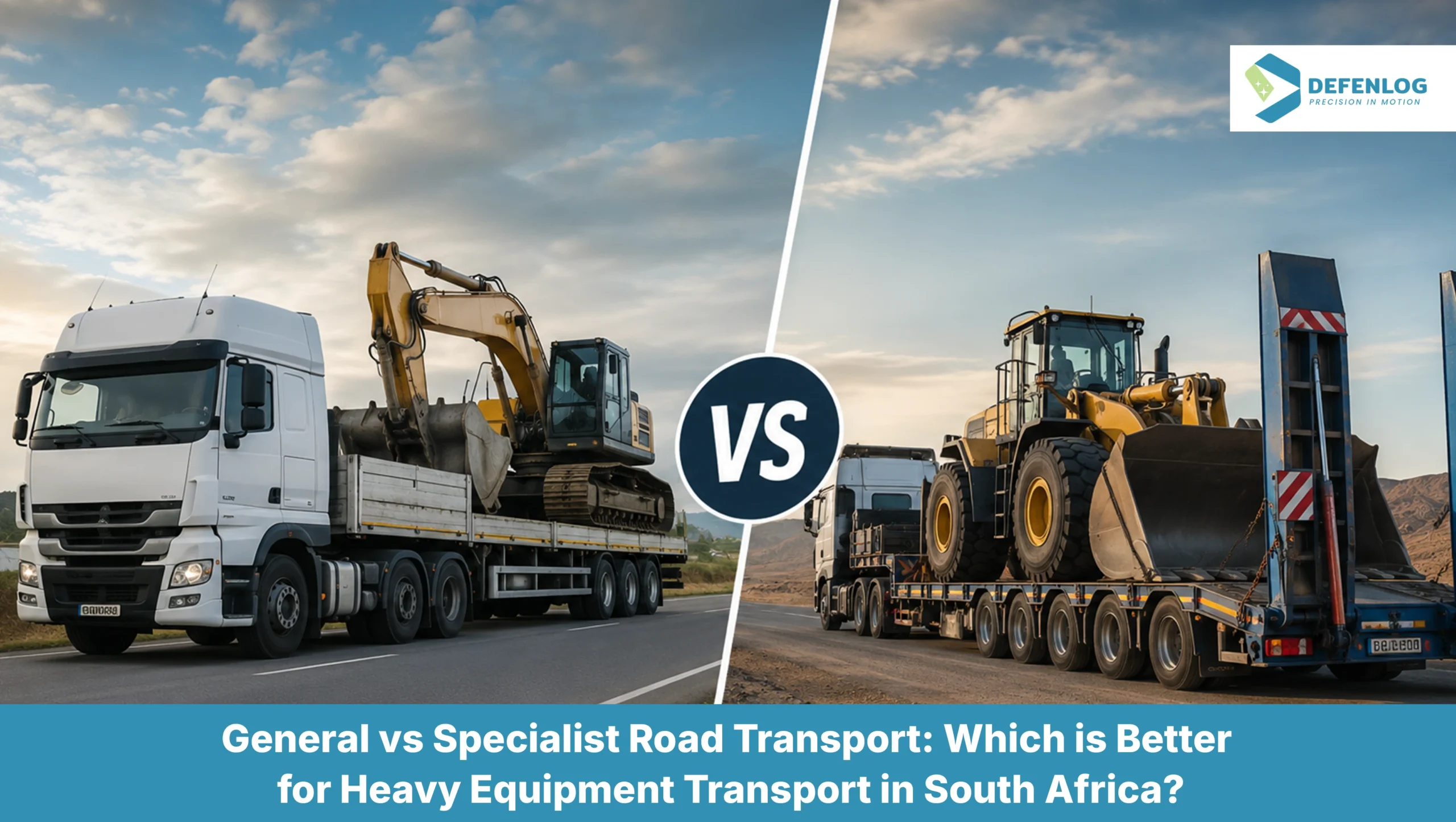
Not always. A smaller machine may move on a standard trailer, while a larger or heavier unit may need a lowbed, route checks, permits, and more controlled loading.
The difference comes down to the equipment’s weight, dimensions, loading method, route access, and delivery conditions. Understanding these factors helps you decide whether general or specialist road transport is the right choice before the movement begins.
Key Differences Between General and Specialist Road Transport
Both options move equipment by road, but the planning and transport requirements can be very different.
| Factor | General Road Transport | Specialist Road Transport |
| Equipment Type | Standard-sized machinery and equipment | Heavy, oversized, unusually shaped, or complex equipment |
| Vehicle & Trailer | Standard trucks and trailers | Lowbeds, flatbeds, extendable or other specialist trailers |
| Route Planning | Normal road planning | Route, clearance, bridge, and access checks |
| Loading & Securing | Standard handling methods | Equipment-specific loading and securing |
| Permits | Normal transport requirements | Abnormal load permits may apply |
| Site Access | Standard collection and delivery points | Mine, construction, industrial, or restricted sites |
| Planning Level | Relatively straightforward | Detailed coordination before dispatch |
The right option depends on the actual equipment rather than simply whether it is described as heavy.
Can General Road Transport Handle Heavy Equipment?
Yes, in some situations.
If the equipment fits normal transport limits, can be safely loaded onto a suitable standard trailer, and can travel along the planned route without additional restrictions, general transport may be suitable.
The transporter should still confirm the equipment’s weight, length, width, height, loading method, and collection and delivery conditions.
When these requirements fall outside normal transport conditions, specialist transport may be required.
When does Heavy Equipment Need a Specialist Transport Solution?
Specialist transport becomes more important when equipment is:
- Oversized, unusually shaped, or very heavy
- Difficult to load or unload
- Unsuitable for a standard trailer
- Restricted by bridges, roads, entrances, or overhead clearances
- Moving to mines, construction sites, factories, or remote locations
- Subject to abnormal load requirements
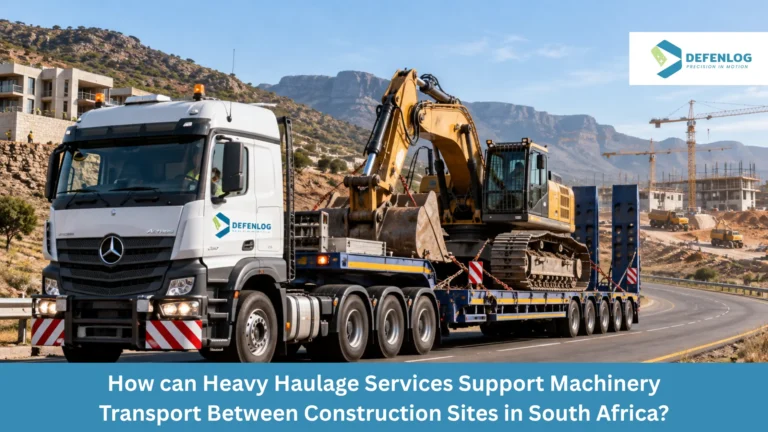
A smaller industrial machine may fit on a standard flatbed, while an excavator, crusher, drill rig, or large mining unit may require a lowbed or specialist trailer. This is especially common with heavy mining equipment transport across South Africa, where equipment size, weight, route access, and loading conditions can all affect the transport solution.
What Changes When Heavy Equipment Requires Specialist Road Transport?
Once specialist transport is required, several parts of the movement need closer planning.
The Vehicle and Trailer Need to Match the Equipment
Trailer selection depends on the equipment’s weight, dimensions, ground clearance, loading method, center of gravity, and site conditions.
A lowbed, flatbed, step-deck, extendable, or other specialist trailer may be required.
Weight, Dimensions, and Load Distribution Become More Important
Accurate measurements influence vehicle selection, route planning, and permit requirements.
The transporter also needs to understand how the equipment’s weight will be distributed across the trailer and vehicle combination.
Loading and Securing Need Greater Control
Heavy equipment must remain stable throughout the journey.
Loading may involve ramps, cranes, forklifts, or driving the machine onto the trailer. The loading, positioning, securing, and unloading method should therefore be confirmed before dispatch.
Route Access and Clearance can Affect the Entire Movement
The shortest route may not always be suitable.
Road width, bridge conditions, overhead clearance, turning space, roadworks, steep sections, and site entrances can affect whether the loaded vehicle can complete the journey.
Abnormal Load Requirements May Apply
When the loaded vehicle exceeds normal road transport limits, abnormal load requirements may apply.
This can affect permits, approved routes, movement conditions, warning equipment, and escorts. Defenlog’s guide to abnormal load permits in South Africa explains when permit planning may be necessary.
What are the Risks of Using General Transport for Specialist Heavy Equipment?
Using general transport when specialist handling is required can create avoidable problems.
The wrong trailer may prevent loading. Incorrect dimensions can create route clearance issues, while unsuitable securing may increase the risk of equipment movement or damage.
Delays can also occur when permit or route requirements are only identified after the transport has already been arranged.
How do Planning and Costs Differ Between General and Specialist Road Transport?
General transport usually involves simpler vehicle selection, normal route planning, and fewer specialist arrangements.
Specialist transport may require additional steps such as:
- Specialist trailer selection
- Detailed route assessment
- Loading and unloading coordination
- Abnormal load permits
- Escorts where required
- Site-access planning
These requirements can make specialist transport more expensive than a standard movement.
However, choosing a cheaper but unsuitable transport option can lead to failed loading, route changes, delays, or additional handling costs.
The better comparison is therefore not simply price. It is whether the transport solution matches the equipment and journey requirements.
Which Option is Better for Your Heavy Equipment Movement?
General transport may be suitable when the equipment fits normal limits and can move safely using standard vehicles and routes.
Specialist road transport is usually the better choice when the equipment requires a specific trailer, controlled loading, detailed route planning, abnormal load preparation, or difficult site access.
The decision should be made after reviewing the equipment and the complete movement.
Why Specialist Transport is Often the Better Choice for Mining, Construction, and Industrial Equipment?
Mining, construction, and industrial equipment is often large, heavy, expensive, and difficult to handle.
These machines may also need to move between mines, construction projects, factories, ports, storage facilities, and remote sites.
Specialist transport allows the trailer, loading method, route, permits, and final delivery arrangements to be planned around the equipment itself.
How Defenlog Supports Heavy Equipment Transport Across South Africa?
Defenlog provides heavy equipment and specialised transport across South Africa for machinery and equipment that require more than standard freight handling.
Each movement is planned around the equipment’s weight, dimensions, loading requirements, route, and site conditions.
Depending on the load, this may include trailer selection, route assessment, loading coordination, abnormal load requirements, movement monitoring, and final delivery arrangements.
Conclusion
The choice between general and specialist road transport depends on what you are moving.
General transport can work when heavy equipment remains within normal transport requirements. When the equipment becomes oversized, unusually heavy, difficult to load, or affected by route and permit requirements, choosing a Specialized Road Transport Partner in South Africa provides the additional planning and control required.
Need the right transport solution for your heavy equipment movement?
Contact us to discuss your heavy equipment transport requirements and identify the right road transport solution.