
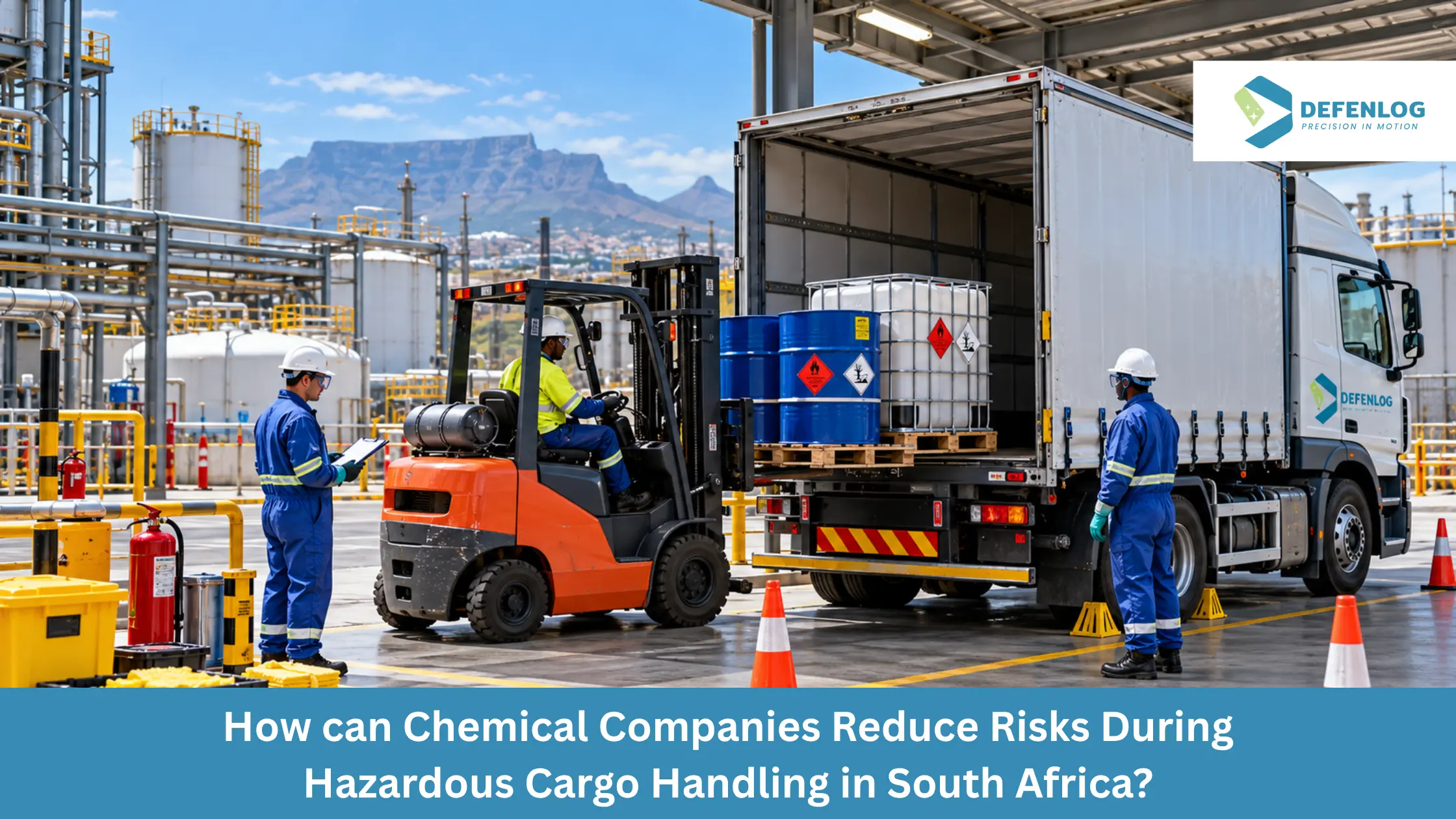
One handling mistake can put hazardous cargo safety at risk.
For chemical manufacturers and industrial companies, hazardous cargo handling is not just about moving materials. It starts before the vehicle reaches the loading point with accurate cargo details, suitable packaging, proper preparation, and coordination between all parties involved.
Unlike standard freight, hazardous materials require more control because incorrect handling can lead to safety risks, cargo damage, compliance issues, and transport disruptions.
This blog explores the key risks in hazardous cargo handling and how companies can improve control during road transport across South Africa.
Why can Hazardous Cargo Handling Create Greater Risks Than Standard Freight?
Hazardous cargo requires more control than regular freight because the materials being transported may have specific safety and handling requirements.
A standard shipment may mainly focus on loading and delivery. However, hazardous materials require additional attention before, during, and after road movement.
Common risks can include:
- Incorrect cargo identification
- Damaged or unsuitable packaging
- Poor handling during loading
- Mixing incompatible materials
- Unsafe unloading conditions
- Delays caused by preparation issues
For chemical companies, these risks can affect more than the shipment itself. A handling problem can interrupt operations, create safety concerns for workers, and delay the movement of essential materials.
Similar concerns also apply to other sensitive shipments where careful handling is required, including high-value cargo transport.
This is why hazardous cargo handling needs to be treated as an important part of the entire road transport process, not just a step before the vehicle leaves.
What Problems can Incorrect Hazardous Cargo Preparation Create Before Road Transport?
The success of hazardous cargo transport depends heavily on what happens before loading begins.
Before the vehicle arrives, chemical companies need to ensure that the cargo details and handling requirements are clearly prepared.
Important preparation areas include:
- Correct hazard classification
- Accurate cargo information
- Suitable packaging condition
- Proper labels and identification
- Required handling instructions
- Loading area readiness
For example, unclear cargo details or damaged containers can create problems during loading and may require additional checks before the shipment can move.
A well-prepared shipment helps the transport team understand the cargo requirements and arrange the right road transport approach before the journey begins.
Why are Packaging and Cargo Separation Important for Hazardous Materials?
Packaging plays a major role in protecting hazardous materials during road movement.
Unlike standard goods, hazardous materials may require specific packaging methods to reduce the risk of leaks, damage, or exposure during transport.
Chemical companies should consider:
- Container condition before loading
- Packaging suitability for the material
- Proper cargo identification
- Secure placement inside the vehicle
- Separation of incompatible materials
Different hazardous materials may react differently when placed together. Proper separation helps reduce avoidable risks and supports safer movement during transport.
During road travel, cargo experiences vibration, movement, and changing conditions. Correct preparation helps maintain cargo stability throughout the journey.
How does Hazardous Cargo Loading Affect Safe Road Transport?
A safe hazardous cargo journey starts before the vehicle leaves the loading location.
The loading stage plays an important role because incorrect positioning or handling can create problems during transport.
Before departure, the transport process should include:
- Confirming vehicle suitability
- Checking loading conditions
- Positioning cargo correctly
- Securing materials properly
- Completing final checks before movement
The vehicle, cargo, and loading process must work together to support safe road transport.
For chemical companies, loading should not be viewed as a quick transfer process. It is an important stage that helps protect the shipment throughout the journey.
Why do Chemical Companies Need Trained Transport Teams for Hazardous Cargo Movement?
Hazardous cargo handling depends not only on equipment but also on the knowledge of the people involved.
Transport teams need to understand the specific requirements of hazardous materials and follow the correct procedures during collection, loading, road movement, and delivery.
Important areas include:
- Understanding cargo requirements
- Following handling procedures
- Communicating with loading and receiving teams
- Recognizing possible risks during movement
- Responding correctly to unexpected situations
A trained transport team helps reduce handling mistakes and supports better control throughout the road transport process.
For chemical companies, working with a transport partner that understands hazardous cargo requirements provides additional confidence during movement.
How can Chemical Companies Maintain Better Control Until Final Delivery?
Hazardous cargo handling does not end when the vehicle leaves the loading location.
The delivery stage also requires proper coordination to ensure the cargo reaches the receiving facility safely and efficiently.
Companies should consider:
- Confirming delivery location readiness
- Coordinating unloading requirements
- Ensuring receiving teams are prepared
- Maintaining communication during movement
- Completing final handover checks
A successful delivery involves more than the vehicle arriving at the destination. The cargo must also be received and handled correctly after arrival.
By planning both collection and delivery activities, chemical companies can reduce avoidable issues and maintain better control over hazardous cargo movements.
What should Companies Look for in a Hazardous Cargo Road Transport Partner?
Choosing the right road transport partner is an important decision when moving hazardous materials.
Chemical and industrial companies should consider a provider with:
- Experience handling hazardous and sensitive cargo
- Specialist road transport capability
- Suitable vehicles and equipment
- Trained transport teams
- Clear safety procedures
- Proper documentation processes
- Reliable communication
Companies handling regulated materials should also understand the specific requirements involved in dangerous goods transport, as these movements require careful planning, handling, and compliance throughout the journey.
The right partner should understand that hazardous cargo movement requires attention at every stage from preparation and loading to road transport and final delivery.
A specialist approach helps companies manage risks more effectively while keeping hazardous cargo movements organized and controlled.
Why Choose Defenlog for Hazardous Cargo Road Transport in South Africa?
Defenlog provides specialist road transport solutions across South Africa for businesses that require careful movement of hazardous and sensitive cargo.
Hazardous cargo transport requires more than vehicle availability. It requires an understanding of cargo requirements, suitable transport planning, controlled handling, and coordination between collection and delivery points.
Defenlog supports chemical manufacturers, industrial businesses, and other organizations handling hazardous materials by providing a structured road transport approach focused on safety, reliability, and operational control.
With experience supporting specialised cargo movements, Defenlog helps businesses move hazardous materials with the care and attention required throughout the transport journey.
Conclusion
Hazardous cargo risks do not begin only when the vehicle starts moving. They can start during preparation, packaging, loading, and handover.
By following proper handling practices and choosing the right transport approach, chemical companies can reduce avoidable risks and improve control over hazardous cargo movements.
Working with a specialist road transport partner across South Africa helps businesses manage hazardous materials with better planning, safety, and confidence.
Need support with hazardous cargo road transport requirements?
Contact us at Defenlog to discuss your cargo requirements and plan a suitable transport solution across South Africa.