
High-value cargo may be protected inside a warehouse, military site, mine, or secure depot. Once loaded onto a truck and moved on public roads, it faces a different set of risks.
For you, the challenge is more than finding a vehicle with enough capacity. You need accurate cargo information, the right truck, secure routing, qualified personnel, active tracking, suitable insurance, controlled loading, and a ready delivery site. If one step is missed, the shipment may face theft, damage, delays, or business disruption.
What is High-Value Cargo Transport?
High-value cargo transport is the controlled road movement of goods with significant financial, operational, security, or replacement value.
The cargo does not always need a high invoice value. A single component may be difficult to replace, required for a production line, or linked to a mining, defence, industrial, or infrastructure project.
Examples include military equipment, mining machinery, communication systems, critical spare parts, precision instruments, imported equipment, regulated materials, project cargo, and high-value chemicals.
Why is High-Value Road Cargo Transport More Complex?
High-value cargo can face risks during loading, transport, route changes, and final delivery.
The shipment may be exposed to theft, unauthorized access, poor handling, unsuitable vehicles, weak restraints, or communication failures. Road conditions, weather, traffic, and delivery-site restrictions can also affect the movement.
Because the cargo may be expensive or difficult to replace, each stage must be controlled carefully. It should not be treated as a standard truck booking.
Start With Accurate Cargo Information
Safe transport begins with complete and verified information.
A transport company cannot select the right vehicle, assess the route, arrange security, or confirm insurance without knowing exactly what is being moved.
Before requesting a transport plan, confirm:
- Cargo type and declared value
- Verified dimensions and weight
- Loading and unloading method
- Lifting and securing points
- Collection and delivery locations
- Required delivery date
- Site-access conditions
- Security or regulatory requirements
Incorrect information may result in the wrong truck, poor securing, route problems, insurance gaps, or collection delays.
Select the Right Vehicle for the Cargo
Vehicle selection depends on more than available capacity.
The transport partner should consider cargo dimensions, weight, value, loading method, weather exposure, route conditions, and security risk before assigning a vehicle.
The movement may require an enclosed truck, tautliner, flatbed, lowbed, dedicated vehicle, dangerous-goods-approved vehicle, or specialist heavy-haul combination.
Businesses can also review how to choose the right truck for your load based on cargo type, dimensions, weight, and loading requirements.
The transporter should assess payload, weight distribution, restraint points, and route suitability. Choosing a truck only because it is available can create loading problems, damage, delays, or unsafe transport.
Plan a Secure Route Before Dispatch
The shortest route is not always the safest route for high-value cargo.
A route assessment should consider road conditions, security exposure, stopping locations, traffic restrictions, fuel requirements, and delivery-site access.
You can also learn more about how safe transport routes are planned for sensitive and regulated cargo across South Africa.
The plan may identify high-risk areas, secure stopping points, alternative routes, fuel stops, collection and delivery times, and emergency contacts.
Unnecessary stops should be reduced. Any planned stop should be agreed before dispatch and included in the transport plan.
Apply Core Security and Operational Controls
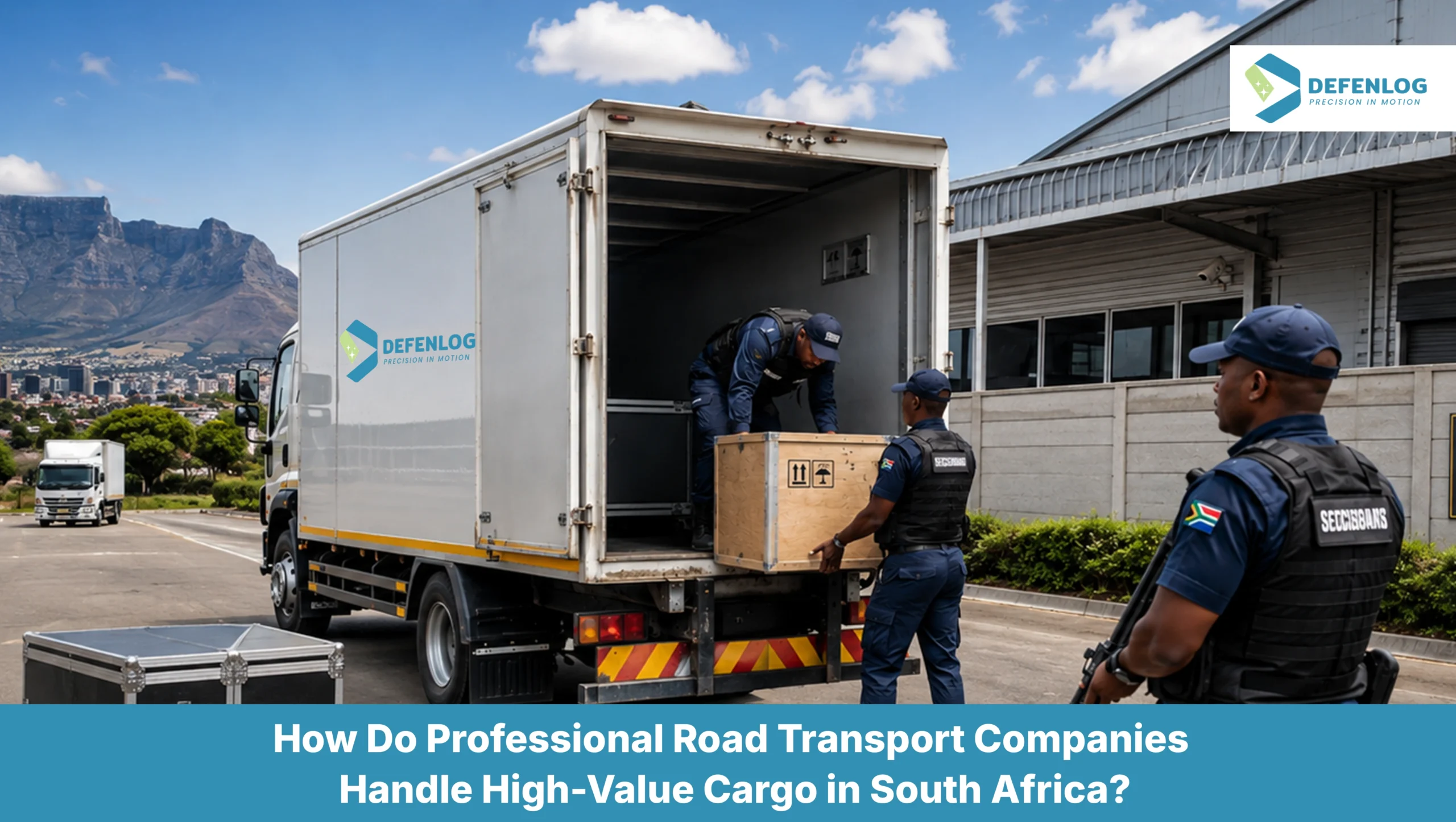
Professional road transport companies use security controls that match the cargo risk.
Dedicated Transport
A dedicated truck reduces unnecessary handling, cargo transfers, waiting time, and access by unrelated parties.
Active Shipment Tracking
Tracking allows the operations team to monitor location, route progress, delays, unexpected stops, and estimated arrival time.
Vetted Drivers and Personnel
Drivers and support personnel should be qualified, verified, and briefed before dispatch. They should understand the approved route, stop restrictions, emergency contacts, documents, and delivery instructions.
Secure Route Control
The driver should follow the approved route and report any required deviation where possible. Communication checkpoints and escalation procedures help maintain control.
Prepare the Cargo for Safe Loading
High-value cargo protection begins before the truck leaves the collection site.
Before loading, confirm who is responsible, whether suitable lifting equipment is available, how the cargo will be positioned, which securing points will be used, and who will complete the final inspection.
The loading team should check cargo condition, weight distribution, restraints, packaging, and vehicle suitability.
Weak securing may allow cargo to move during braking, turning, or travel over uneven roads. Valuable cargo can therefore be damaged even when the truck reaches the destination without an accident.
Manage Risk Throughout the Journey
A professional transport plan should prepare for breakdowns, road closures, security threats, severe weather, accidents, route deviations, delivery delays, and documentation problems.
The transporter should know who must be contacted, how the cargo will remain protected, and whether the vehicle should continue, stop safely, or use an approved alternative route.
Make Sure the Delivery Site is Ready
A successful road journey can still face delays if the delivery site is not ready.
Before dispatch, confirm the delivery window, authorized receiver, gate procedures, access-road condition, unloading equipment, site contacts, and proof-of-delivery requirements.
The cargo condition, seals, delivery time, and receiving party should be checked and recorded during handover.
Make Sure the Insurance Matches the Cargo Risk
Before transport, confirm whether the insurance covers the declared value, cargo type, loading and unloading, complete route, authorized stops, and final delivery.
Do not assume standard goods-in-transit insurance is enough. The cover should match the cargo, route, value, and transport risk.
What should Businesses Check Before Choosing a Transport Company?
The right transport partner should offer more than a truck.
Look for high-value cargo experience, suitable vehicles, secure route planning, qualified drivers, tracking, clear communication, emergency procedures, appropriate insurance, controlled delivery, and documented handover.
The transporter should explain how the cargo will be assessed, protected, monitored, and delivered before dispatch.
Why Choose Defenlog for High-Value Cargo Transport?
Defenlog is not a general trucking company. We specialize in sensitive, regulated, military, hazardous, heavy, project, and high-value cargo that requires careful planning and operational control.
Our transport planning may include cargo assessment, vehicle selection, route review, qualified driver coordination, security planning, shipment monitoring, controlled delivery, and documented handover.
As a trusted road transport partner in South Africa, Defenlog supports freight forwarders, mining companies, industrial businesses, defence operations, and project teams that need greater visibility and confidence during specialist cargo movements.
Conclusion
Professional high-value cargo transport requires accurate cargo information, the right vehicle, secure routing, vetted personnel, tracking, controlled loading, suitable insurance, and a prepared delivery site.
Every stage should be planned before dispatch because protecting high-value cargo also means protecting your project, operations, delivery schedule, and business reputation.
Contact us at Defenlog to discuss your high-value cargo and plan the movement.