

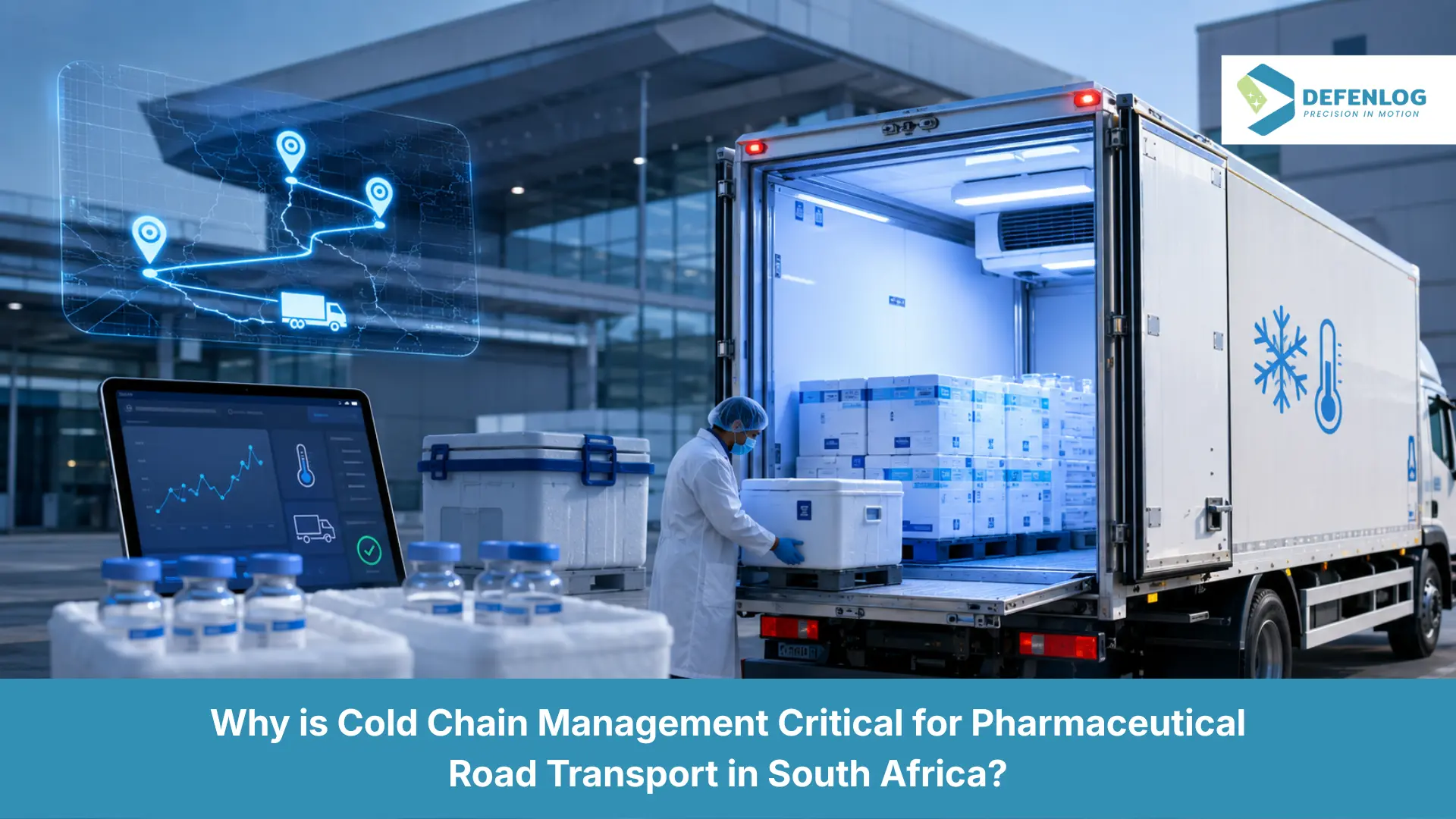
What happens if a temperature-sensitive medicine spends several hours on the road outside the conditions it needs?
The truck may still arrive on time and the packaging may look normal, but the product inside could have been affected. This is why pharmaceutical road transport requires more control than simply collecting and delivering cargo.
For vaccines, biologics, medicines, and other temperature-sensitive healthcare products, cold chain management helps maintain the required conditions from collection to final delivery.
What is Cold Chain Management in Pharmaceutical Logistics?
Cold chain management is a temperature-controlled process used to store, handle, and transport sensitive pharmaceutical products such as vaccines, biologics, insulin, and certain medicines.
It uses refrigerated vehicles, insulated packaging, and temperature monitoring to keep products within their required range throughout the journey. For example, some products may need to remain between 2°C and 8°C.
Cold chain management is one part of the wider pharmaceutical logistics process, which also covers handling, transport planning, distribution, compliance, visibility, and delivery.
The goal is to maintain the right conditions from loading to final delivery and protect product quality.
How does Cold Chain Management Work During Pharmaceutical Road Transport?
Before dispatch, the transport team first confirms the product’s required temperature and handling conditions.
The process generally follows this flow:
Product Requirements → Vehicle Preparation → Loading → Temperature-Controlled Transport → Monitoring → Delivery
Where required, a suitable refrigerated or temperature-controlled vehicle is prepared before loading. During the journey, its refrigeration system helps maintain the required cargo-area temperature, while monitoring equipment records the conditions inside.
When the vehicle reaches its destination, unloading and handover also need to be coordinated so the products are not unnecessarily exposed to unsuitable temperatures.
What are the Key Elements of Pharmaceutical Cold Chain Transport?
1. Temperature-Controlled Vehicles
Refrigerated Units: Vehicles use dedicated cooling systems to maintain the required cargo temperature during transport.
Insulated Cargo Areas: Insulated walls and doors help reduce heat transfer from outside weather conditions.
Airflow Management: Proper cargo spacing and airflow help distribute cooled air evenly throughout the load area.
Temperature Settings: The required setting depends on the pharmaceutical product, so the same temperature should not be used for every shipment.
2. Controlled Loading and Unloading
Pre-Cooling: The cargo area should be brought to the required temperature before loading temperature-sensitive products.
Proper Cargo Placement: Products should be positioned so they do not block airflow inside the vehicle.
Fast Loading and Unloading: Reducing the time cargo spends outside controlled conditions helps limit temperature exposure.
Site Coordination: Collection and receiving teams should be ready before the vehicle arrives to avoid unnecessary waiting.
3. Continuous Temperature Monitoring
Temperature Sensors: Sensors monitor conditions inside the refrigerated cargo area during the journey.
Data Loggers: These devices record temperature information throughout transport and provide a history of the shipment conditions.
Real-Time Alerts: Monitoring systems can notify transport teams when temperatures move outside the required range.
Vehicle Tracking: GPS tracking helps monitor the location and progress of pharmaceutical shipments.
4. Route and Risk Planning
Route Planning: Routes should consider journey time, traffic, road conditions, and suitable stopping points.
Delay Management: Alternative routes and delivery plans help manage unexpected road disruptions.
Vehicle Maintenance: Refrigeration systems and vehicles should be checked and maintained to reduce the risk of breakdowns.
Driver Preparedness: Drivers should understand temperature requirements, handling procedures, and what to do if a transport or refrigeration problem occurs.
Why is Cold Chain Management Critical for Pharmaceutical Road Transport in South Africa?
It Helps Protect Pharmaceutical Product Quality
Some pharmaceutical products are sensitive to temperature changes. Maintaining their specified transport conditions helps protect product quality while they move between warehouses, healthcare facilities, and other locations.
It Reduces Temperature Excursion Risks
A temperature excursion happens when a product moves outside its required temperature range.
Temperature-controlled transport and monitoring help identify these changes and reduce the chance of a problem going unnoticed until delivery.
It Supports Long-Distance Distribution
South African pharmaceutical shipments may travel long distances between manufacturers, distribution centers, hospitals, pharmacies, and healthcare facilities.
For longer journeys, vehicle preparation, refrigeration, temperature monitoring, and route planning become even more important.
It Helps Manage Road Delays
A planned journey can become longer because of traffic, road closures, weather, or other disruptions.
Cold chain planning considers these possibilities so temperature-sensitive cargo is better prepared for unexpected delays.
It Improves Shipment Visibility
Vehicle tracking shows where the shipment is, while temperature monitoring provides information about the conditions inside the cargo area.
Together, they allow transport teams to identify and respond to possible problems earlier.
It Protects the Complete Journey
Cold chain management does not begin when the truck starts moving or end when it reaches the destination.
Storage before collection, loading, road transport, unloading, and final handover all need to support the required product conditions.
What Temperature Conditions do Pharmaceutical Products Require?
Not every pharmaceutical product requires the same transport temperature. The correct range depends on the product and its approved storage instructions.
| Product Category | Typical Temperature Range | Examples |
| Controlled Room Temperature | 15°C to 25°C | Some tablets, capsules, and APIs |
| Refrigerated Products | 2°C to 8°C | Many vaccines, biologics, and unopened insulin products |
| Frozen Products | Around -20°C | Certain vaccines, biologics, and other temperature-sensitive products |
| Ultra-Low / Cryogenic Products | Product-specific | Certain cell and gene therapy products |
WHO guidance includes pharmaceutical transport conditions such as 15–25°C, 2–8°C, and around -20°C, depending on the product. Vaccines licensed for refrigerated storage commonly require 2°C to 8°C.
How can Cold Chain Integrity be Maintained During Road Transport?
Maintaining cold chain integrity starts before the vehicle leaves the collection point.
Transport teams should confirm product requirements, select suitable temperature-controlled equipment, prepare the vehicle, coordinate loading, monitor temperature, plan the route, reduce unnecessary stops, and arrange delivery with the receiving site.
There should also be a plan for unexpected situations such as traffic delays, vehicle problems, or refrigeration issues.
Choosing a Pharmaceutical Cold Chain Transport Partner in South Africa
A pharmaceutical transport provider should offer more than refrigerated vehicles. Businesses should look for suitable equipment, temperature monitoring, route planning, shipment visibility, careful handling, and reliable delivery coordination.
Choosing the right specialist road transport services in South Africa helps ensure the transport process matches the cargo requirements.
Defenlog provides specialized pharmaceutical road transport solutions planned around each shipment.
Conclusion
Cold chain management isn’t just about keeping a truck cold. It is about maintaining optimal conditions throughout the pharmaceutical product’s journey.
Vehicle preparation, refrigeration, temperature monitoring, loading, route planning, shipment visibility, and controlled delivery all work together to keep temperature-sensitive cargo safe.
Need pharmaceutical cold chain road transportation in South Africa? Contact us at Defenlog to discuss your transportation needs.