
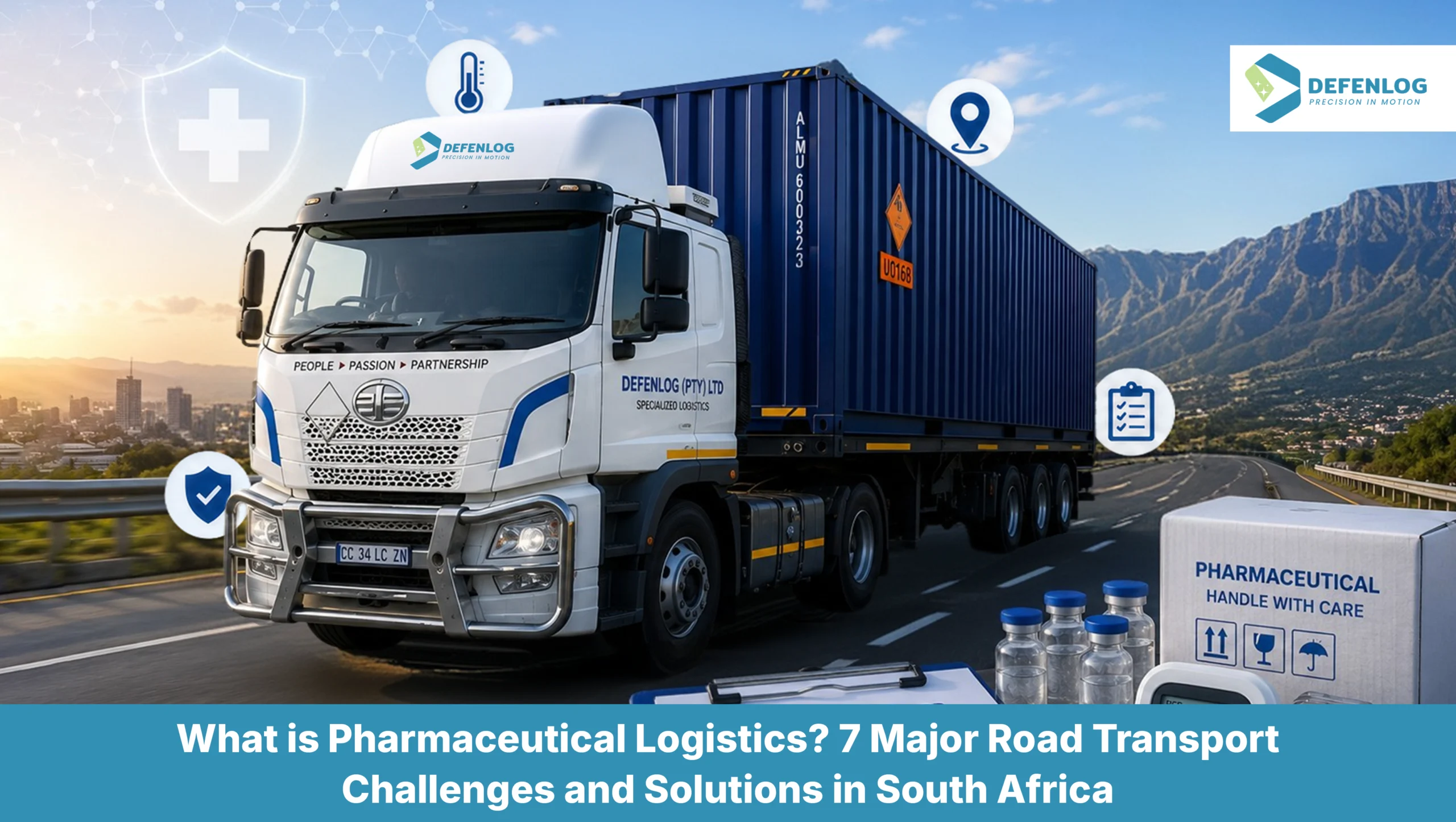
Moving pharmaceutical products by road is not the same as moving ordinary freight. A temperature change, handling mistake, transport delay, security incident, or missing record can affect the shipment before it reaches its destination.
For pharmaceutical businesses in South Africa, reliable transport therefore depends on more than finding an available vehicle. The product requirements, temperature, documentation, route, handling, security, tracking, and delivery conditions all need to work together.
What is Pharmaceutical Logistics?
Pharmaceutical logistics is the specialized management of how medicines, vaccines, medical devices, and other healthcare products are stored, handled, transported, and delivered from manufacturers to warehouses, hospitals, pharmacies, and other healthcare facilities.
It requires careful handling, accurate tracking, suitable transport conditions, and temperature control where needed to help protect product quality, safety, and effectiveness throughout the journey.
For road transport providers, these requirements need to be understood and planned before the pharmaceutical shipment leaves the collection point.
Top 7 Pharmaceutical Logistics Challenges & Solutions
1. Cold Chain Management
Challenge:
Maintaining the required temperature is one of the biggest challenges when transporting temperature-sensitive pharmaceutical products. Vaccines, biologics, and certain medicines may need to remain within a specific temperature range throughout the journey. Even a short temperature deviation during loading, road transport, stops, or unloading can affect product quality and may make the shipment unsuitable for use.
Solution:
The required temperature conditions should be confirmed before the shipment is collected. Where necessary, suitable temperature-controlled vehicles, monitoring devices, and temperature records should be used throughout the journey. Loading times, planned stops, route duration, and unloading arrangements should also be coordinated to reduce unnecessary exposure to unsuitable conditions.
2. Regulatory Compliance & Documentation
Challenge:
Pharmaceutical road transport involves strict requirements around product handling, storage conditions, traceability, and transport records. Incomplete documents, incorrect shipment information, or missing temperature records can create delays and make it difficult to confirm whether the products were transported under the required conditions.
Solution:
Shipment requirements and supporting documents should be checked before dispatch. Transport instructions, temperature requirements, collection details, delivery information, and handover records should be clearly available to the people involved in the movement. Keeping accurate records throughout the journey also improves traceability if a delivery or transport issue needs to be reviewed.
3. Inventory Management
Challenge:
Pharmaceutical inventory often includes different batches, expiry dates, quantities, and delivery priorities. Poor coordination between warehouse operations and transport planning can result in the wrong products being loaded, urgent stock being delayed, or vehicles arriving before an order is ready for collection.
Solution:
Transport planning should be connected with accurate inventory and shipment information. Before scheduling a vehicle, the product, batch where applicable, quantity, collection readiness, delivery priority, and special handling requirements should be confirmed. Better coordination between the warehouse, transporter, and receiving site helps reduce avoidable delays and shipment errors.
4. Transportation & Distribution
Challenge:
Pharmaceutical distribution across South Africa can involve long road distances, strict delivery windows, multiple destinations, traffic delays, changing road conditions, and different receiving-site requirements. These factors can make even a straightforward delivery more difficult when the cargo is time- or temperature-sensitive.
Solution:
The right vehicle should be selected according to the cargo and its transport requirements. Routes, journey times, delivery windows, suitable stopping points, alternative routes, site access, and unloading arrangements should be planned before dispatch. For multi-drop deliveries, the sequence of stops should also be planned carefully so that the remaining pharmaceutical cargo continues to travel under suitable conditions.
5. Product Handling & Quality Control
Challenge:
Pharmaceutical products can also be affected by the way they are loaded, secured, transported, and unloaded. Damaged packaging, poor stacking, excessive movement inside the vehicle, unsuitable cargo conditions, or rough handling can put the shipment at risk even when the correct temperature is maintained.
Solution:
Pharmaceutical cargo should be handled carefully from collection through final delivery. The vehicle and cargo area should be suitable and prepared before loading, while products should be positioned and secured correctly for road movement. Any special handling instructions should also be communicated clearly to drivers, loading teams, and receiving personnel.
6. Supply Chain Visibility & Risk Management
Challenge:
Once pharmaceutical products are on the road, businesses need to know where the shipment is and whether the journey is progressing as planned. Traffic, vehicle problems, route disruptions, delivery delays, or temperature concerns can become more difficult to manage when there is limited visibility during transit.
Solution:
Vehicle tracking and regular shipment updates can provide better visibility throughout the journey. Transport risks should also be reviewed before dispatch, including the route, cargo requirements, journey time, security, vehicle suitability, and receiving-site conditions. With clearer visibility and an agreed response plan, unexpected transport issues can be identified and managed earlier.
7. Security & Pharmaceutical Cargo Protection
Challenge:
Some pharmaceutical shipments contain high-value, sensitive, or controlled products that may be at greater risk of theft, tampering, or unauthorized access. Unplanned stops, weak vehicle security, or poor handover procedures can increase the risk while the cargo is moving between locations.
Solution:
Security measures should be planned according to the value and sensitivity of the shipment. This may include controlled vehicle access, GPS tracking, secure route planning, driver communication, reduced unnecessary stops, and clear collection and delivery handover procedures. Maintaining visibility until the shipment reaches the authorized receiving point helps provide better protection throughout the road journey.
Looking for Reliable Pharmaceutical Logistics in South Africa?
Choosing a pharmaceutical road transport provider should involve more than asking whether a truck is available.
Businesses should consider whether the transport provider can understand the cargo requirements and plan the movement accordingly. This may include suitable vehicle selection, temperature-controlled transportation where required, route planning, cargo security, shipment visibility, controlled handling, documentation, and delivery coordination.
Defenlog provides Specialized Road Transport Partner in South Africa, including pharmaceutical logistics. Each movement can be planned around the requirements of the cargo, route, vehicle, security, tracking, collection point, and final delivery location.
This helps ensure pharmaceutical products are handled as specialized cargo rather than treated like ordinary general freight.
Conclusion
Pharmaceutical logistics requires control throughout the road transport process. Cold-chain management, compliance and documentation, inventory coordination, transport planning, careful handling, shipment visibility, and security can all influence a successful delivery.
Because requirements vary between pharmaceutical products, identifying them before dispatch is essential. Better planning helps reduce avoidable delays, handling problems, temperature deviations, and security risks during the journey.
Need reliable pharmaceutical road transport in South Africa? Contact us at Defenlog to discuss your cargo and transport requirements.