
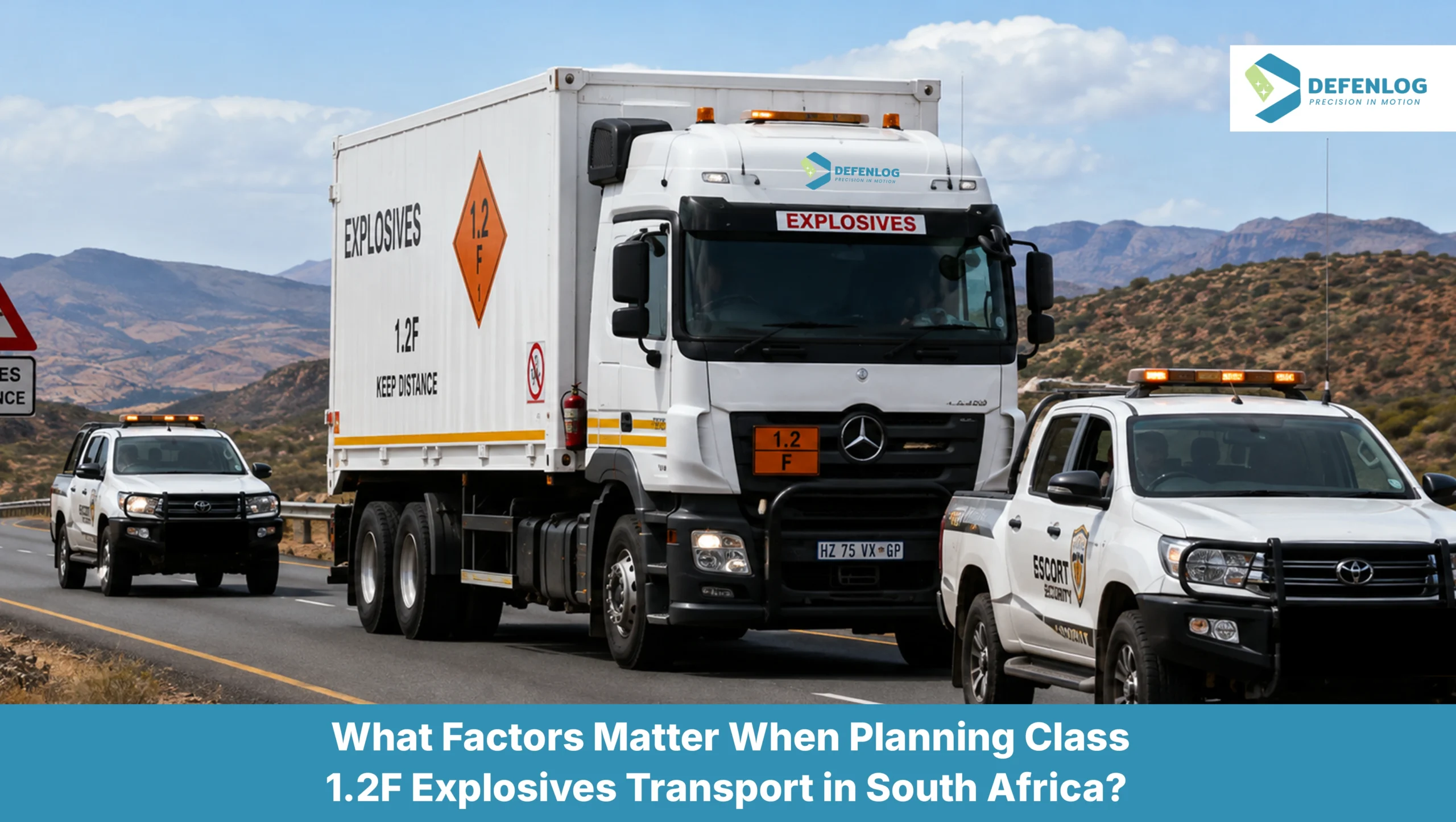
What really determines whether a Class 1.2F explosives movement is ready to go ahead?
It is not just the collection point, destination, or truck availability. The cargo classification, permits, vehicle and driver requirements, planned route, security controls, emergency arrangements, and receiving-site conditions all need to line up before dispatch.
When these factors are checked early, businesses can build a clearer transport plan, reduce avoidable delays, and keep the movement controlled from collection through to final delivery.
What Information do You Need Before the Transport Plan Starts?
Every transport plan starts with understanding exactly what needs to move.
Before choosing a truck or planning the route, the transporter needs accurate cargo information. This may include the shipping description, UN number, explosive division and compatibility group, quantity, packaging, collection point, destination, and required delivery date.
If you need a clearer understanding of how these materials are identified, Defenlog’s guide to Class 1 explosives classification explains the different hazard divisions and how classification affects transport planning.
The loading and receiving sites also matter. The transporter should know about access restrictions, security checks, loading requirements, site instructions, and space available for the selected vehicle.
If these details are incomplete at the beginning, problems may appear after the vehicle has already been booked.
Which Permits and Approvals can Affect the Transport Plan?
Once the cargo details are confirmed, the next step is checking whether the movement is legally ready to proceed.
The transporter needs to confirm which approvals and documents apply to the specific shipment. These may include:
- Cargo documentation
- Explosives-related permits
- Vehicle records
- Driver qualifications
- Dangerous goods documentation
- Emergency information
- Collection and delivery approvals
Compliance should form part of the transport plan from the beginning.
Finding out on dispatch day that a document is missing or an approval does not match the shipment can delay the collection immediately.
A capable transport provider should identify these requirements before confirming the final vehicle and departure time.
How do the Cargo Details Influence the Vehicle and Driver You Need?
The first available vehicle is not automatically the right vehicle for Class 1.2F explosives.
Vehicle selection should consider the cargo classification, quantity, packaging, load configuration, route, and delivery conditions.
Before dispatch, the transporter should confirm that the selected vehicle is suitable, roadworthy, correctly identified where required, and equipped for the movement.
The driver is equally important.
Dangerous goods movements require trained personnel who understand the cargo, approved route, planned stops, reporting process, and emergency procedures.
The driver should also have operational support behind the journey for dispatch, communication, route coordination, and escalation if conditions change.
Suitable equipment and qualified personnel need to work together.
What should be Checked Before the Road Route is Finalized?
For Class 1.2F explosives, route planning involves more than distance and estimated travel time.
The transport team may need to consider:
- Road restrictions
- Road conditions and roadworks
- Congested areas
- Suitable stopping points
- Safe refuelling arrangements
- Security exposure
- Emergency access
- Delivery-site access
- Alternative routes if disruption occurs
The goal is not simply to find the shortest road. The route needs to suit the cargo, vehicle, legal requirements, and receiving location.
Route planning should also continue during transit. If a road closure or other disruption affects the journey, any change should be managed through the transport operation rather than treated like an ordinary driver diversion.
Where can Security and Emergency Planning Reduce Transport Risk?
The journey needs to remain controlled after the truck leaves the loading point.
Depending on the movement, security planning may involve vehicle tracking, planned stops, driver check-ins, route monitoring, controlled communication, and escort coordination where required.
These controls help the operations team confirm that the shipment remains on plan.
Emergency readiness is equally important.
Before dispatch, the transport plan should establish:
- Emergency contacts
- Incident reporting steps
- Communication responsibilities
- Escalation procedures
- Driver support
- Customer notification
- Response coordination
Emergency planning is not about expecting a problem. It is about knowing what to do if a breakdown, accident, road closure, or security issue affects the movement.
How do Loading and Delivery Conditions Affect the Final Transport Plan?
The transport plan should cover what happens before departure and after arrival.
At collection, the vehicle should arrive at a site that is ready for the movement. Cargo information, documentation, loading arrangements, and responsible contacts should already be confirmed.
The destination requires the same preparation.
The transport team should know when the site can receive the vehicle, who is authorized to accept the cargo, what access requirements apply, and how final handover will be confirmed.
A well-planned journey can still face delays if the receiving site is not ready. Good planning therefore connects collection, road movement, and final delivery as one process.
How does Defenlog Plan Class 1.2F Explosives Transport in South Africa?
As a trusted road transport partner in South Africa, Defenlog supports specialized Class 1 explosives and other high-risk cargo movements.
Through its Military & Explosives Transport service, Defenlog plans movements around cargo details, documentation, vehicle requirements, route conditions, security needs, emergency readiness, and final delivery arrangements.
Depending on the shipment, this may include route validation, suitable vehicle coordination, movement monitoring, operational communication, security or escort coordination where required, and controlled final delivery.
Bringing these areas together gives customers clearer responsibility from collection through to delivery.
Conclusion
Planning Class 1.2F explosives transport starts long before the vehicle leaves the collection point.
Cargo details affect the approvals. The approvals influence the vehicle and driver requirements. These factors then shape the route, security controls, emergency planning, and delivery arrangements.
When these elements are planned together, the movement can be managed with greater control and clearer accountability.
Planning a Class 1.2F explosives movement and unsure what needs to be confirmed before dispatch?
Contact us to discuss your Class 1.2F explosives road transport requirements and plan the movement with the right controls from collection to final delivery.