
South Africa’s online retail market reached about R96 billion in 2024, growing 35%.
But what happens when online orders grow faster than your delivery capacity?
More orders mean more parcels to dispatch, more delivery stops to manage, and more pressure on vehicles, drivers, and routes. Without the right delivery plan, higher sales can quickly lead to delays, failed deliveries, and customer complaints.
For businesses managing e-commerce delivery in South Africa, the challenge is not only handling more orders. It is handling them without letting delivery performance drop.
This blog explains how businesses in South Africa can manage growing delivery volumes while keeping last-mile delivery reliable and on time.
How do Increasing Order Volumes Affect e-commerce Delivery Performance?
A delivery process that works well for 50 orders per day may not work the same way when the volume increases to 200.
More orders mean more parcels leaving the warehouse, more customer locations, more delivery stops, and greater demand for available vehicles and drivers. As the e-commerce last-mile delivery journey becomes busier, warehouse dispatch, route planning, driver capacity, and final customer handover all need to keep pace.
Delivery pressure may rise because of:
- More orders are waiting for dispatch.
- Limited vehicle or driver capacity.
- There are too many stops on one route.
- expanded customer locations
- Delivery times are limited
- High demand during peak season
- More delivery issues to address.
The problem is not business growth itself. Problems arise when delivery capacity and planning remain the same while order volumes increase.
If this continues, warehouse dispatch can slow down, routes can become overloaded, and customers may receive their orders later than expected.
How can e-commerce Businesses Plan For Increased Delivery Capacity?
E-commerce businesses should plan delivery capacity before growing order volumes begin to affect warehouse dispatch and customer delivery times.
The first step is to understand expected demand and prepare the required delivery resources in advance.
Businesses can focus on:
- Predict order volume
- Manage stock availability
- Use an Order Management System (OMS)
- Group orders by delivery area
- Plan vehicle capacity
- Assign enough drivers
- Prepare extra capacity for peak periods
For example, if a promotion is expected to increase orders, the company can plan stock, vehicles, drivers, and delivery routes before the campaign starts.
Planning ahead of time enables e-commerce businesses to handle higher delivery volumes while avoiding unnecessary delays between the warehouse and the customer.
How does Better Route and Dispatch Planning Prevent Delivery Delays?
Once delivery capacity is ready, the next step is making sure orders leave the warehouse in the right sequence and follow practical delivery routes.
Better route and dispatch planning can help by:
- Grouping nearby deliveries
- Planning realistic driver stops
- Matching routes to vehicle capacity
- Considering traffic and road access
- Prioritizing urgent deliveries
- Preparing backup routes
- Loading parcels in delivery order
- Aligning dispatch with departure times
This helps reduce unnecessary travel, waiting time, and route changes.
When warehouse dispatch and road delivery are planned together, drivers can leave on time and complete more deliveries as scheduled.
How can Businesses Maintain Stable Delivery Performance as Volumes Grow?
Stable delivery performance means handling more orders without allowing delivery times, failed deliveries, or customer service levels to get worse.
As order volumes increase, e-commerce businesses need to check whether their existing delivery setup is still working well.
A few last-mile delivery KPIs can help:
- On-time delivery rate: Are orders still arriving as promised?
- First-attempt delivery rate: Are more orders completed on the first visit?
- Failed delivery rate: Are missed deliveries starting to increase?
- Average delivery time: Is delivery taking longer as volumes grow?
- Cost per delivery: Is the cost of completing each order increasing?
These KPIs help businesses see whether delivery performance is staying stable as order volumes grow.
If delays, failed deliveries, or delivery costs begin to increase, the business may need more capacity or additional delivery support.
When should an E-commerce Company Look Into a Last-Mile Delivery Partner?
A last-mile delivery partner is a logistics company that transports orders directly from a warehouse, local hub, or distribution center to the end customer.
E-commerce companies may require this assistance when rising order volumes exceed their current vehicle, driver, or delivery capacity.
Some common signs are:
- Daily orders exceed current delivery capacity
- Delivery delays become more frequent
- More vehicles or drivers are needed
- New customer areas need to be covered
- Failed deliveries begin to increase
- Peak periods become difficult to manage
When demand rises, a last-mile delivery partner can offer more vehicles, drivers, route support, shipment tracking, and delivery coordination.
This gives e-commerce companies more flexibility to handle increasing order volumes while maintaining delivery reliability from warehouse dispatch to final customer handover.
How can Defenlog Contribute to Increased E-Commerce Delivery Volumes in South Africa?
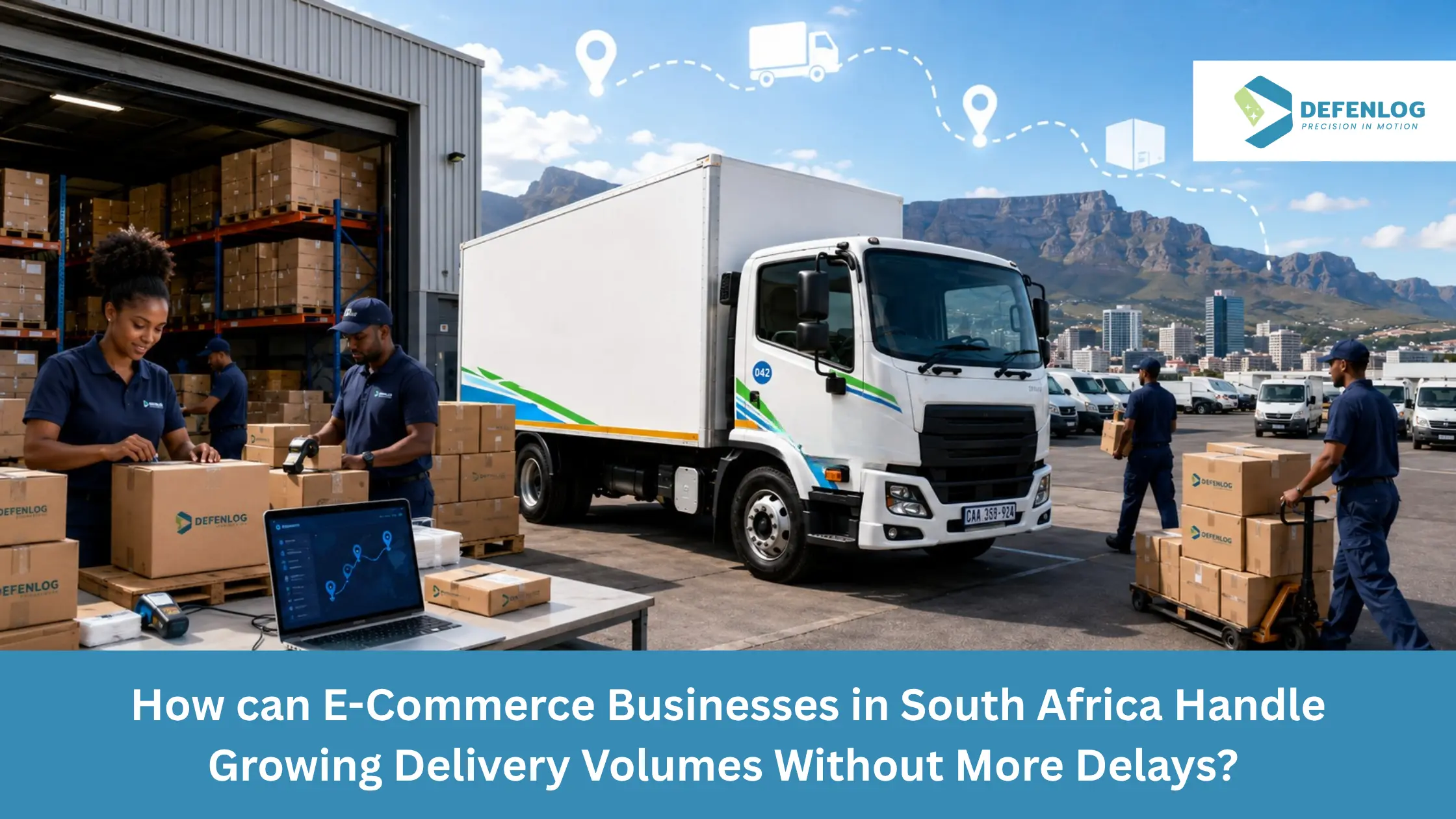
Defenlog offers e-commerce last-mile delivery in South Africa, assisting businesses with managing growing order volumes from warehouse collection to final customer delivery.
As a trusted road transport partner in South Africa, Defenlog plans deliveries around order volumes, customer locations, route requirements, vehicle capacity, delivery schedules, and final handover.
Last-mile delivery support can include:
- Warehouse collection
- Route and delivery planning
- Vehicle and driver coordination
- Shipment tracking
- Delivery communication
- Customer handover
- Proof of delivery
This gives growing e-commerce businesses the additional delivery capacity and coordination needed to manage more orders while keeping customer deliveries organized and reliable.
Conclusion
Higher order volumes should support business growth, not create more delivery delays.
As orders increase, businesses need enough delivery capacity, well-planned routes, reliable drivers, shipment visibility, and clear customer handovers to maintain consistent delivery performance.
Planning these areas early makes it easier to manage growing demand without affecting the customer experience.
Are increasing order volumes becoming harder to manage?
Contact us at Defenlog to discuss your e-commerce last-mile delivery requirements in South Africa and plan the right delivery support for your growing volumes.