
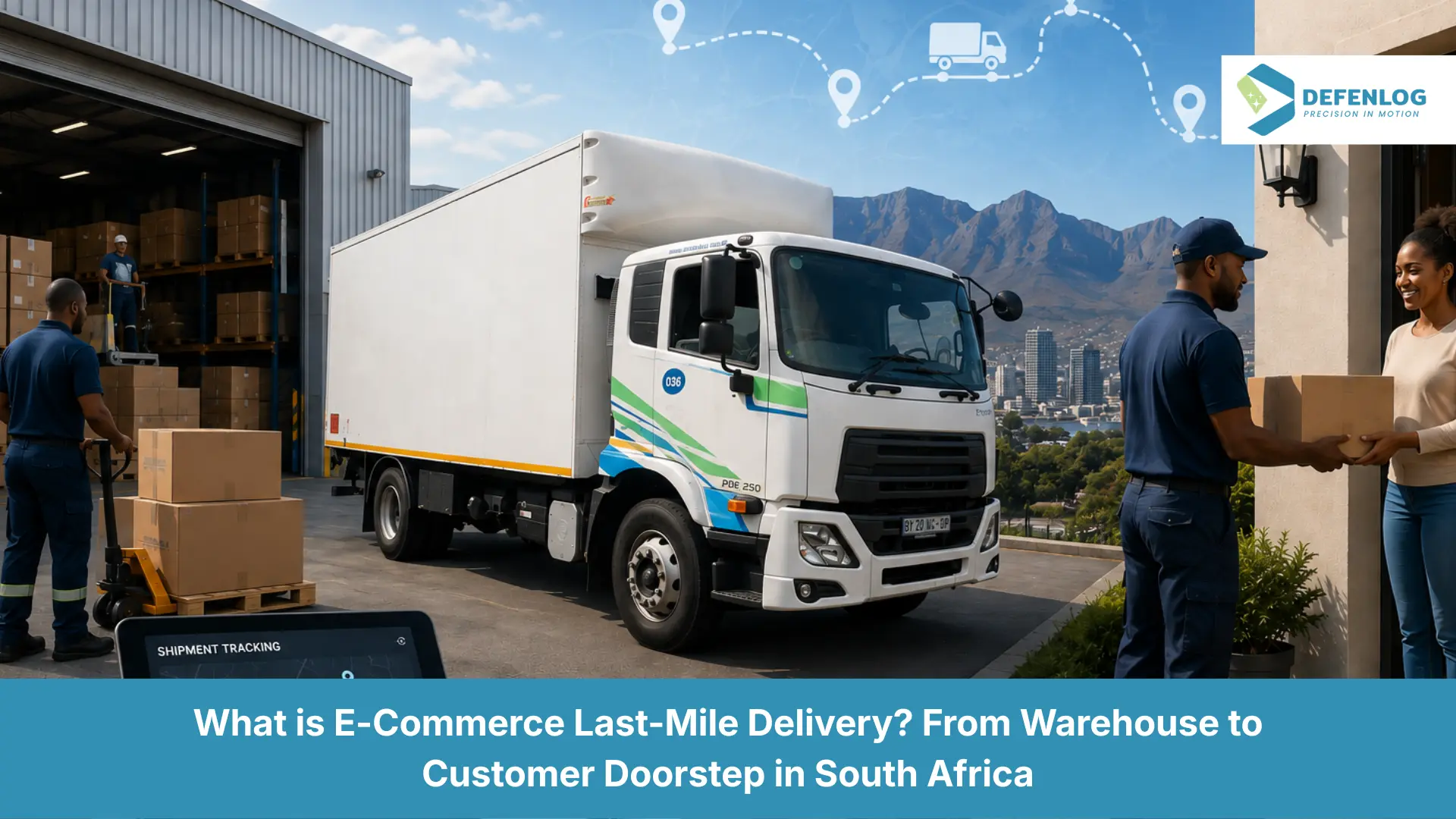
What happens after an e-commerce order leaves the warehouse?
For the customer, that final journey may look simple. A parcel is dispatched, a driver arrives, and the order reaches the doorstep. But behind that delivery are route decisions, vehicle planning, customer availability, delivery timing, tracking, and proof of handover.
This final stage is known as e-commerce last-mile delivery. In South Africa, where deliveries may involve busy cities, residential areas, business parks, gated communities, long travel distances, and changing road conditions, the last mile needs careful planning.
For e-commerce businesses, getting this stage right can improve delivery performance, reduce failed attempts, control costs, and create a better customer experience.
What is a Last-Mile Delivery in E-Commerce?
Last-mile delivery is the final stage of the e-commerce delivery process, where an order moves from a warehouse, fulfillment center, or local distribution hub directly to the customer’s doorstep or chosen pickup point.
A simple e-commerce last-mile journey may look like this:
Order Ready → Warehouse Dispatch → Route Assignment → Road Delivery → Customer Handover
Although this may be the shortest part of the delivery journey, it requires close coordination between the warehouse, driver, transport team, and customer.
Accurate address details, the right vehicle, route planning, delivery updates, customer availability, and proof of handover all influence whether the order reaches the customer as planned.
This is why last-mile logistics is more than moving a parcel from one location to another. It connects warehouse operations with the final customer experience.
How does Last-Mile Delivery Work from Warehouse to Customer Doorstep?
Last-mile delivery begins once an e-commerce order is ready to leave the warehouse or fulfillment center. From there, the parcel moves through a planned delivery process until it reaches the customer.
1. Order Preparation at the Warehouse
The warehouse confirms that the order is picked, packed, labeled, and ready for dispatch.
Before loading, key delivery information should also be checked, including:
- Customer name and contact details
- Delivery address
- Parcel size and quantity
- Delivery instructions
- Required delivery window
Accurate information at this stage helps reduce address problems and failed delivery attempts later.
2. Sorting and Delivery Grouping
Ready orders are grouped based on factors such as delivery area, route, priority, vehicle capacity, and delivery timing.
Orders going to nearby locations can be planned together so the vehicle follows a practical delivery sequence instead of making unnecessary trips.
This helps improve vehicle use and reduce avoidable travel time.
3. Route Planning and Driver Assignment
Once orders are grouped, the transport team plans the delivery route and assigns the appropriate vehicle and driver.
Route planning may consider:
- Customer locations
- Traffic conditions
- Road access
- Number of delivery stops
- Delivery windows
- Vehicle capacity
- Alternative routes
The driver then receives the planned delivery sequence and relevant customer instructions before leaving the warehouse.
4. Out for Delivery
After dispatch, the parcels begin the final road journey to customers.
During this stage, shipment tracking and driver communication can help the operations team monitor progress, identify delays, and manage unexpected changes such as traffic, access restrictions, or customer availability.
Customers may also receive delivery updates so they know when their order is expected.
5. Customer Handover and Proof of Delivery
At the final stop, the driver confirms the delivery address and hands the parcel to the customer or follows the agreed delivery instructions.
The completed delivery can then be recorded through proof of delivery (POD), such as:
- Customer signature
- Digital confirmation
- OTP verification
- Delivery image
- Electronic delivery record
Once the handover is confirmed, the order is marked as delivered.
This completes the last-mile journey from warehouse dispatch to customer doorstep.
Why is Last-Mile Delivery Critical for E-Commerce Success?
Last-mile delivery is critical for e-commerce success because it is the final touchpoint that directly shapes customer satisfaction, brand loyalty, and overall profitability.
It can also represent a significant share of shipping costs, so delays, failed attempts, and redelivery can quickly increase operating expenses.
Reliable last-mile delivery helps e-commerce businesses achieve:
- Higher customer satisfaction
- Better on-time delivery
- Fewer failed deliveries
- Lower redelivery costs
- Clearer delivery visibility
- More repeat purchases
For e-commerce businesses, the last mile delivers the service promised at checkout. Getting it right improves delivery performance and customer trust.
What Drives Last-Mile Delivery Costs for E-Commerce Businesses?
Last-mile delivery can be one of the most expensive stages of e-commerce fulfilment because every order requires vehicle time, driver time, fuel, and individual delivery coordination.
For e-commerce businesses in South Africa, the main cost drivers include:
- Driver and vehicle costs: Driver wages, vehicle use, and maintenance add to delivery costs.
- Fuel and traffic: Congestion and poor routes increase fuel use and delivery time.
- Failed deliveries: Missed deliveries create extra trips and additional costs.
- Delivery distance: Longer routes increase fuel, vehicle, and driver time.
- Peak order volumes: Busy periods may require more vehicles and drivers.
Better route planning, accurate customer information, and higher first-attempt delivery success can help e-commerce businesses control these costs.
The aim is not simply to find the shortest route but to complete more deliveries successfully with fewer unnecessary trips.
How can Better Last-Mile Delivery Improve E-Commerce Operations?
Better last-mile delivery helps e-commerce businesses manage orders more smoothly from warehouse dispatch to final handover.
Better Route and Delivery Control
- Route planning: Organizes deliveries by area and reduces unnecessary travel.
- Driver coordination: Helps match drivers, vehicles, and delivery schedules.
- Delivery tracking: Gives operations teams better visibility during transit.
Better Delivery Performance
- Fewer missed deliveries: Correct customer details and delivery instructions reduce failed handovers.
- More reliable delivery times: Better planning helps orders reach customers within expected windows.
- Faster problem handling: Delays, address issues, and delivery changes can be managed earlier.
Better Customer Experience
- Clear delivery updates: Customers know when to expect their orders.
- Confirmed handover: Proof of delivery records that the order reached the customer.
- More consistent service: Reliable delivery builds customer confidence and supports repeat purchases.
For growing e-commerce businesses, a well-organized last-mile process makes it easier to handle more orders while keeping delivery performance and customer service consistent.
What should You Look for in an E-Commerce Last-Mile Delivery Partner?
Choosing a last-mile delivery partner is not only about price. The provider should be able to deliver orders reliably and handle problems when they happen.
E-commerce businesses should check:
- Delivery coverage: Can they reach your customers?
- Vehicles and drivers: Can they handle your daily order volume?
- Route planning: Can they plan practical delivery routes?
- Tracking: Can you see where orders are during delivery?
- Customer updates: Can they communicate delays or changes clearly?
- Proof of delivery: Can they confirm when an order is delivered?
- Failed deliveries: Do they have a process for missed deliveries?
- Operational support: Can they respond quickly when an issue happens?
A good delivery partner should help you manage both normal deliveries and unexpected problems.
The goal is simple: make sure more orders reach customers on time and with fewer delivery issues.
Need a Trusted Last-Mile Delivery Partner for Your E-Commerce Business?
Defenlog provides e-commerce last-mile delivery in South Africa, helping businesses move orders from the warehouse to the final customer.
As a trusted road transport partner in South Africa, Defenlog plans each delivery around order volumes, customer locations, routes, vehicle requirements, delivery timing, and final handover.
Last-mile support can include:
- Warehouse collection
- Route and delivery planning
- Vehicle and driver coordination
- Shipment tracking
- Delivery updates
- Customer handover
- Proof of delivery
This helps e-commerce businesses manage the final delivery stage with better coordination and visibility from warehouse dispatch to customer doorstep.
Conclusion
E-commerce last-mile delivery is the final link between the warehouse and the customer.
A reliable last-mile process helps businesses manage delivery costs, improve on-time performance, reduce failed deliveries, and provide a better customer experience.
When route planning, vehicles, drivers, tracking, customer communication, and proof of delivery work together, orders can move more smoothly from warehouse to doorstep.
Looking for reliable e-commerce last-mile delivery in South Africa?
Contact us to discuss your delivery requirements and plan a last-mile transport solution for your business.