
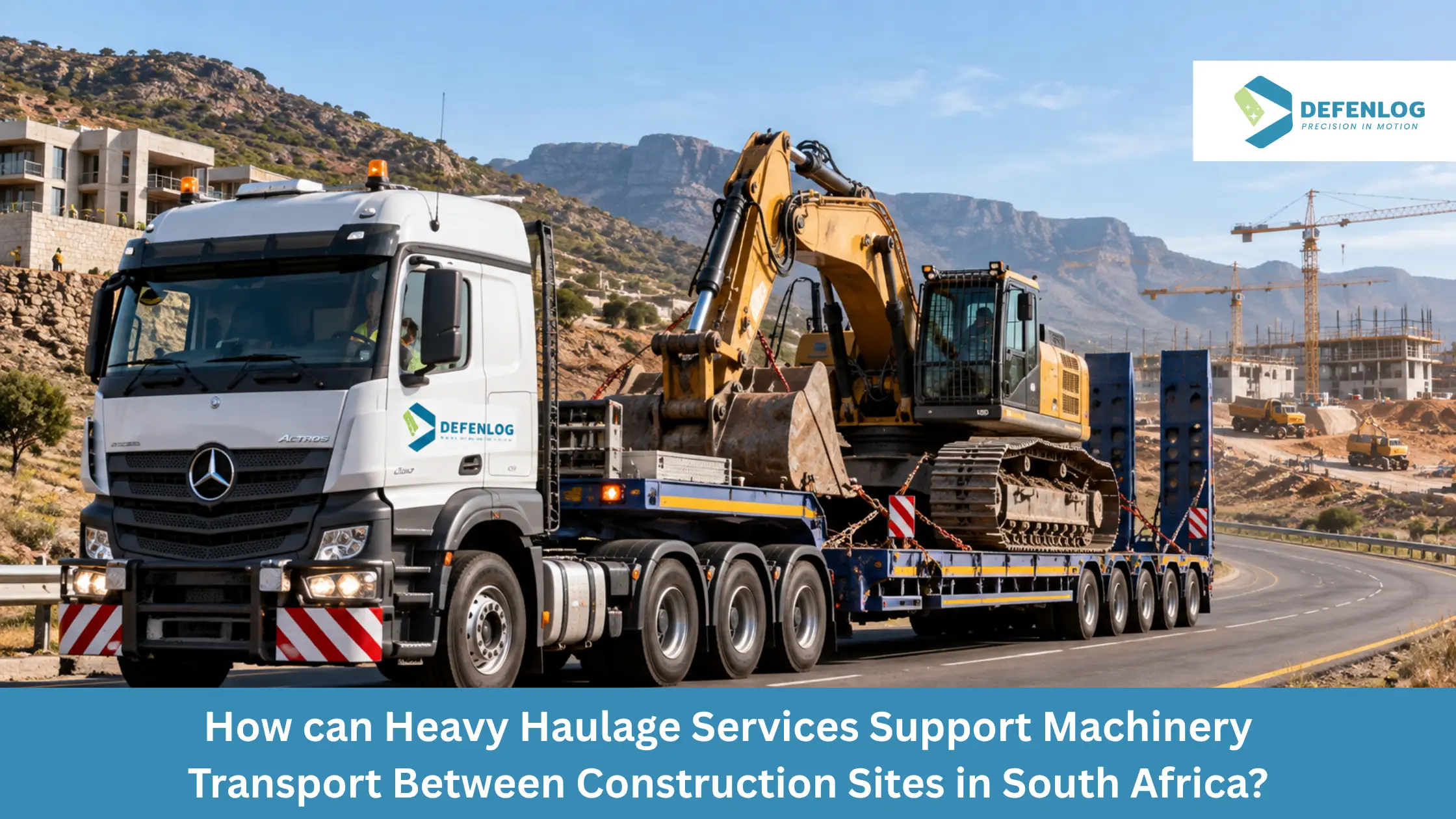
One site was done with the machine. The next site was already waiting.
Construction machinery rarely stays in one place for the entire project cycle. An excavator may finish earthworks at one location and be needed at another site next. Loaders, rollers, graders, generators, and other heavy equipment can also move as project work changes.
The challenge is not only moving the machine by road. It is making sure the equipment leaves the first site at the right time and reaches the next site when the project is ready for it.
This is where heavy haulage services can support construction businesses with planned site-to-site machinery movement across South Africa.
Why is Machinery Timing Important at Construction Sites?
Construction work is often planned around when specific equipment will be available.
If a machine stays too long at the first project, the next site may be left waiting. But moving it too early can also create problems if the receiving site is not ready.
A delayed machinery movement can lead to:
- Operators waiting for equipment
- Planned work starting late
- Contractor schedules being changed
- Machinery sitting idle between projects
- Additional hire or operating costs
- Project milestones being pushed back
The issue becomes more important when the same machine is shared across several construction projects.
For construction businesses, machinery transport therefore needs to be linked to the project schedule, not arranged only after one site has finished using the equipment.
What should be Confirmed Before a Machine Leaves the First Site?
Before transport is arranged, the first question is simple: Is the machine ready to move?
A machine may have finished its main job but still need to complete some final work, move attachments, clear the area, or wait until the next site is ready to receive it.
Before the machine leaves, the project team should confirm:
- When will the machine finish its current work?
- When can the transport vehicle enter the site?
- Are all attachments ready to move?
- Is there enough space for loading?
- Who will hand over the machine?
- When can the next site receive it?
- Who will receive it at the new site?
This helps avoid the transport vehicle arriving while the machine is still working or the equipment reaching the next site before the team is ready for it.
The goal is simple: the machine, transport team, and both construction sites should be ready at the right time.
How do Heavy Haulage Services Coordinate Machinery Movement Between Two Active Sites?
Moving machinery from one construction site to another needs good coordination at both locations.
The transport provider should know when the first site can release the machine and when the next site is ready to receive it. The road movement can then be planned between those two times.
For construction machinery, this may include:
- Machine release from Site A
- Vehicle arrival for collection
- Loading time
- Expected road travel time
- Arrival at Site B
- Unloading arrangements
- Final machine handover
This is where heavy haulage services in South Africa offer more than simply sending a truck when one becomes available.
The movement should fit the construction schedule.
For example, if an excavator finishes work on Wednesday afternoon and the next project needs it on Thursday morning, the transport should be planned before Wednesday, not after the machine is already waiting.
Defenlog’s heavy equipment service supports planned machinery movements with suitable specialist road transport resources and clear operational planning across South Africa.
How can Construction Businesses Reduce Machinery Waiting Between Projects?
Heavy equipment creates value when it is working, not when it is parked between jobs.
Long gaps between projects can happen when transport is booked too late, the next site has not confirmed access, or project teams are working from different schedules.
Construction businesses can reduce this waiting time by planning machinery transfers alongside the project programme.
That means looking ahead at:
- When each machine is expected to finish
- Which site needs the machine next
- How much time is available for movement
- Whether the receiving site will be ready
- Whether multiple machines need to move in sequence
This is especially useful when a contractor operates several projects at the same time.
Instead of treating every transfer as a separate urgent request, planned construction machinery transport can help equipment move from one job to the next with less idle time in between.
What Happens When the Next Construction Site is not Ready?
A machine can complete the road journey on time and still be delayed at the destination.
The receiving construction site may have temporary access roads, active work areas, restricted entry periods, or other equipment using the unloading space.
Common site-readiness problems include:
- The unloading area is still occupied
- Temporary access roads are not ready
- Required lifting or support equipment is unavailable
- The receiving team is not on site
- Site entry has not been arranged
- The work area for the machine is not yet prepared
These problems can leave the transport vehicle waiting and keep the machinery unavailable for the next task.
That is why the receiving site should confirm access and handover arrangements before the machine leaves the previous project.
The road journey is only one part of the movement. A successful site-to-site transfer ends when the equipment can actually be handed over and made available for the next project.
How can Heavy Haulage Support Machinery Move Across Multiple Construction Projects?
Some construction businesses do not move machinery only once.
The same excavator, loader, roller, or other machine may move between several projects during the year.
In this situation, heavy haulage can become part of wider equipment planning.
For example:
Site A → Site B → Site C
Instead of arranging each transfer only when the previous project ends, expected machinery movements can be planned around upcoming project dates.
This can help construction businesses:
- Reduce unnecessary equipment idle time
- Prepare upcoming transfers earlier
- Coordinate machinery availability across projects
- Avoid repeated last-minute transport requests
- Keep project teams informed about equipment arrival
This is different from a one-off heavy equipment move. The transport service becomes part of keeping machinery available across several active jobs.
Why Choose Defenlog for Construction Machinery Transport Across South Africa?
Defenlog provides heavy equipment and specialised road transport across South Africa, supporting construction, mining, industrial, manufacturing, and infrastructure movements.
Its heavy equipment service includes specialist trailer deployment, structured movement planning, trained heavy-vehicle operators, operational oversight, and nationwide transport support.
For construction businesses, this means machinery movements can be planned around the actual project requirement from release at one site through delivery and handover at the next.
Rather than treating machinery relocation as an isolated truck booking, Defenlog can support the road movement as part of the equipment’s next operational requirement.
Conclusion
Construction machinery should not spend unnecessary time waiting between projects because transport was arranged too late or the next site was not ready.
Well-planned heavy haulage services in South Africa help connect one construction site with the next by aligning machinery release, road movement, receiving readiness, and final handover.
For businesses managing equipment across multiple projects, that coordination can help keep valuable machinery moving where it is needed next.
Need to move construction machinery between project sites?
Contact us at Defenlog to discuss your machinery, collection site, next project location, and heavy haulage requirements across South Africa.