
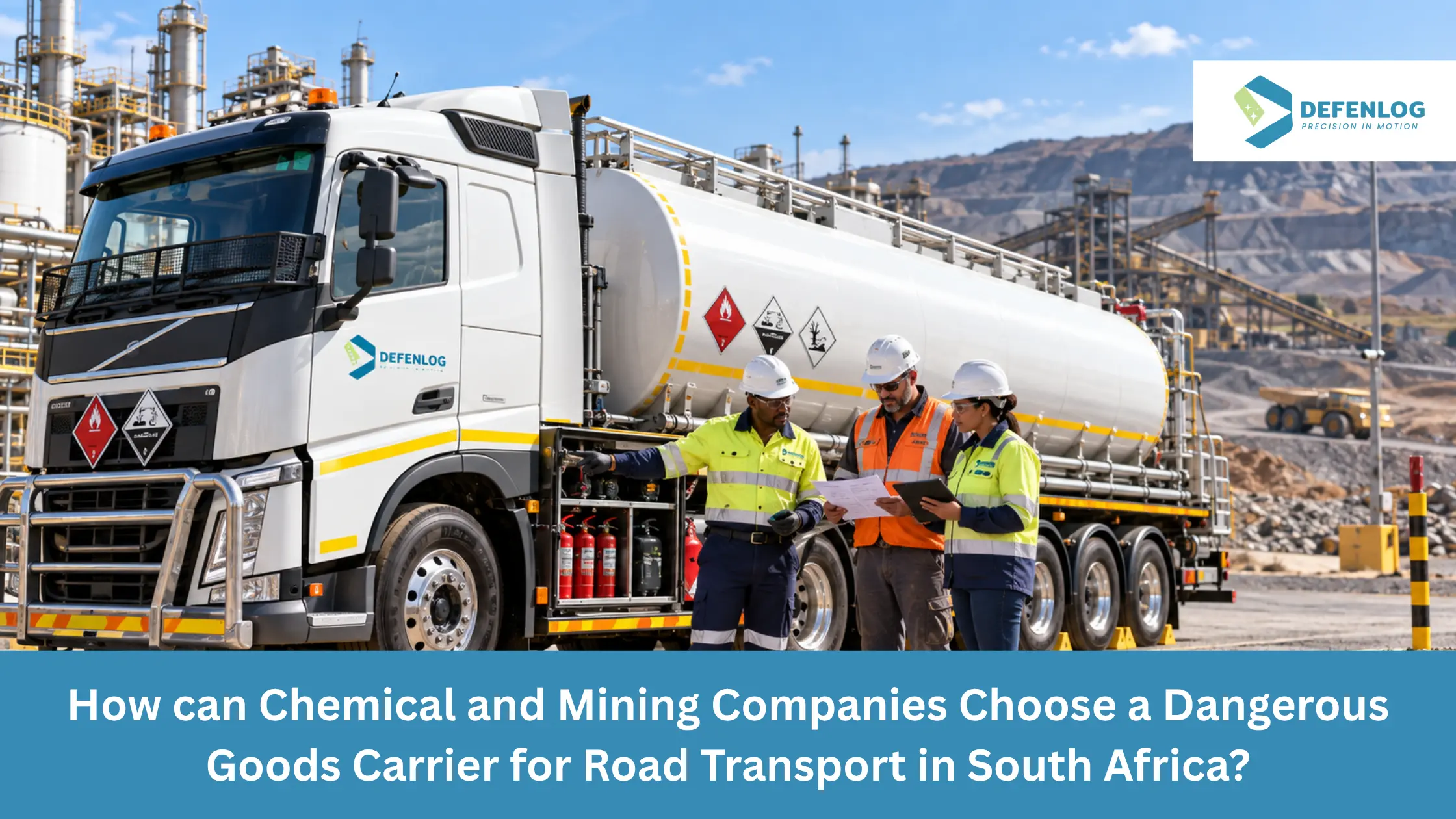
The cargo is ready. The mine or plant is waiting. But can your transport partner actually handle it?
For chemical and mining companies, moving dangerous goods is not just about finding a truck and agreeing on a rate. The carrier needs the right experience, suitable vehicles, trained teams, and a clear plan for the road movement. If the carrier is not equipped for the cargo, the wrong vehicle, poor preparation, or an unsuitable transport plan can quickly create safety and operational problems.
So, how do you choose a dangerous goods carrier that is right for your cargo and road movement?
This blog looks at the key factors chemical and mining companies should check before choosing a dangerous goods carrier in South Africa.
Why is Choosing the Right Dangerous Goods Carrier Important?
Dangerous goods require more attention than standard freight because the materials being transported can create specific risks during the journey. The cargo type, classification, packaging, vehicle requirements, and handling conditions can all affect how the movement should be managed.
For a chemical manufacturer, a transport problem could affect production or customer commitments. For a mining company, a delayed or poorly planned delivery could interrupt site operations.
That makes the carrier part of the overall transport risk-control process, not simply the company providing the truck.
South Africa has specific requirements for transporting dangerous goods by road, including provisions under the National Road Traffic Act, National Road Traffic Regulations, and applicable national standards.
That is why carrier selection should be considered before the cargo leaves the facility.
Companies should also understand the requirements involved in dangerous goods transport compliance before deciding which transport provider is suitable.
What Kind of Experience should a Dangerous Goods Carrier Have?
Not all transport experience is the same.
A company may have years of experience moving general freight, but that does not automatically mean it has the knowledge or capability needed for dangerous goods.
Chemical and mining companies should look at the types of cargo a carrier has actually handled. This may include chemical products, explosives, industrial materials, mining-related cargo, and other regulated or sensitive shipments.
A simple question can tell you a lot:
What types of dangerous goods have you transported before?
The answer matters because different cargo can have different transport requirements. A carrier familiar with the relevant cargo category is more likely to understand the practical considerations involved in collection, loading, road movement, and delivery.
Experience should also extend beyond the cargo itself. A carrier working with mining and industrial customers should understand conditions such as remote sites, restricted access, long-distance movements, and site-specific delivery requirements.
Does the Carrier Have the Right Vehicles for Your Cargo?
Having a truck available does not mean having the right truck for the job.
The vehicle needs to match the cargo and the movement. Depending on the shipment, companies may need to consider load capacity, vehicle configuration, cargo containment, loading access, and securing arrangements.
Before confirming a carrier, ask:
- Is the vehicle suitable for this type of dangerous goods?
- Can it accommodate the load correctly?
- Does the carrier have the required transport equipment?
- Is the vehicle prepared for the planned movement?
- Can the carrier support the loading and delivery conditions?
This becomes even more important when transporting bulk chemicals or large-volume chemical products. The transport method and equipment need to suit the product and load requirements. Companies can also review the factors involved in bulk chemical transport when evaluating a carrier.
The right vehicle is not simply the one available first. It is the one that fits the cargo and the movement.
What should You Know About the Drivers and Transport Team?
A dangerous goods carrier is only as strong as the people managing the movement.
Drivers need more than general road experience. They need to understand the nature of the cargo, follow the required procedures, and communicate clearly with the teams involved in loading and receiving the shipment.
Companies should consider whether the transport team has:
- Relevant dangerous goods knowledge and training
- Experience with the type of cargo being moved
- Clear handling procedures
- Good communication practices
- Awareness of how to respond to unexpected situations
This matters when a shipment involves several people and locations. The driver, loading team, transport coordinator, and receiving team should all work from the same information.
Good communication can prevent a small misunderstanding from becoming a transport problem.
How should Dangerous Goods be Planned for Road Transport?
Once the carrier understands the cargo, the next question is how the road movement will be managed.
A proper plan should consider the collection point, delivery location, cargo requirements, route conditions, access, loading arrangements, and expected delivery timing.
A mining site may have very different access conditions from a chemical manufacturing facility. A long-distance movement may also require more coordination than a local delivery.
The carrier should therefore look at the movement as a complete journey rather than simply assigning a vehicle and driver.
Route planning should also consider the cargo and the conditions along the journey. The shortest route is not automatically the most suitable if road conditions, access restrictions, or delivery requirements make it impractical.
What should be Checked Before the Cargo Leaves?
A final check before departure can identify problems while there is still time to correct them.
Chemical and mining companies should confirm that the carrier has received the information required for the movement and that the transport arrangement matches the cargo.
Before dispatch, check:
- Cargo description and classification
- Packaging and load condition
- Vehicle suitability
- Required transport documentation
- Loading and securing arrangements
- Collection and delivery details
- Receiving site requirements
The shipper and carrier should have the same understanding of the shipment before the vehicle leaves.
This is where preparation pays off. Fixing an issue at the loading point is usually much easier than discovering it after the cargo is already on the road.
What Questions should You Ask a Dangerous Goods Carrier?
Before choosing a carrier, chemical and mining companies can use a simple checklist.
Ask:
- What dangerous goods do you regularly transport?
- What vehicles do you use for these loads?
- Are your transport teams trained for dangerous goods?
- How do you manage loading and securing?
- How do you plan the road movement?
- What information do you need before dispatch?
- How do you coordinate collection and delivery?
- What operational support is available during the journey?
The answers can give you a clearer picture of the carrier’s actual capability.
Price still matters, of course. But when dangerous goods are involved, comparing quotes without comparing capability can leave out some of the most important parts of the decision.
Why Choose Defenlog for Dangerous Goods Transport in South Africa?
Defenlog provides specialist road transport solutions across South Africa for businesses moving dangerous, regulated, and high-risk cargo.
For chemical and mining companies, the focus is not simply on putting a truck on the road. The transport approach needs to consider cargo requirements, suitable vehicle deployment, trained personnel, loading conditions, road movement, and delivery coordination.
Defenlog’s published capabilities include a fleet licensed for explosives and Class 1 cargo, goods-in-transit insurance covering dangerous and high-risk cargo, 24/7/365 operations, and national and cross-border road coverage.
This gives businesses a transport partner equipped to support regulated cargo movements with a structured approach rather than treating dangerous goods as an extension of ordinary freight.
For chemical manufacturers, mining companies, and other industries handling high-risk materials, that difference can matter long before the vehicle starts moving.
Conclusion
Choosing a dangerous goods carrier should start with more than a truck and a price.
The carrier’s experience, vehicle capability, transport team, planning process, and understanding of the cargo all need to fit the movement. Checking these factors before dispatch gives chemical and mining companies a clearer way to manage the risks involved in dangerous goods road transport.
Working with a specialist road transport partner across South Africa can provide the experience and operational control needed for complex dangerous goods movements.
Need a specialist dangerous goods carrier for your next road movement?
Contact us at Defenlog to discuss your cargo, collection points, delivery requirements, and road transport needs across South Africa.