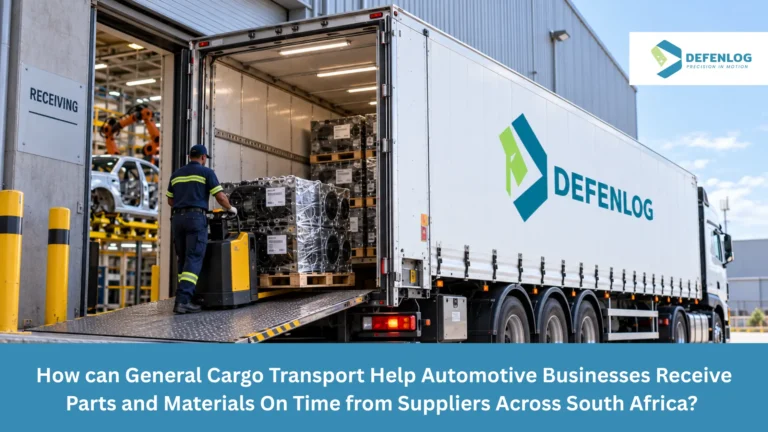

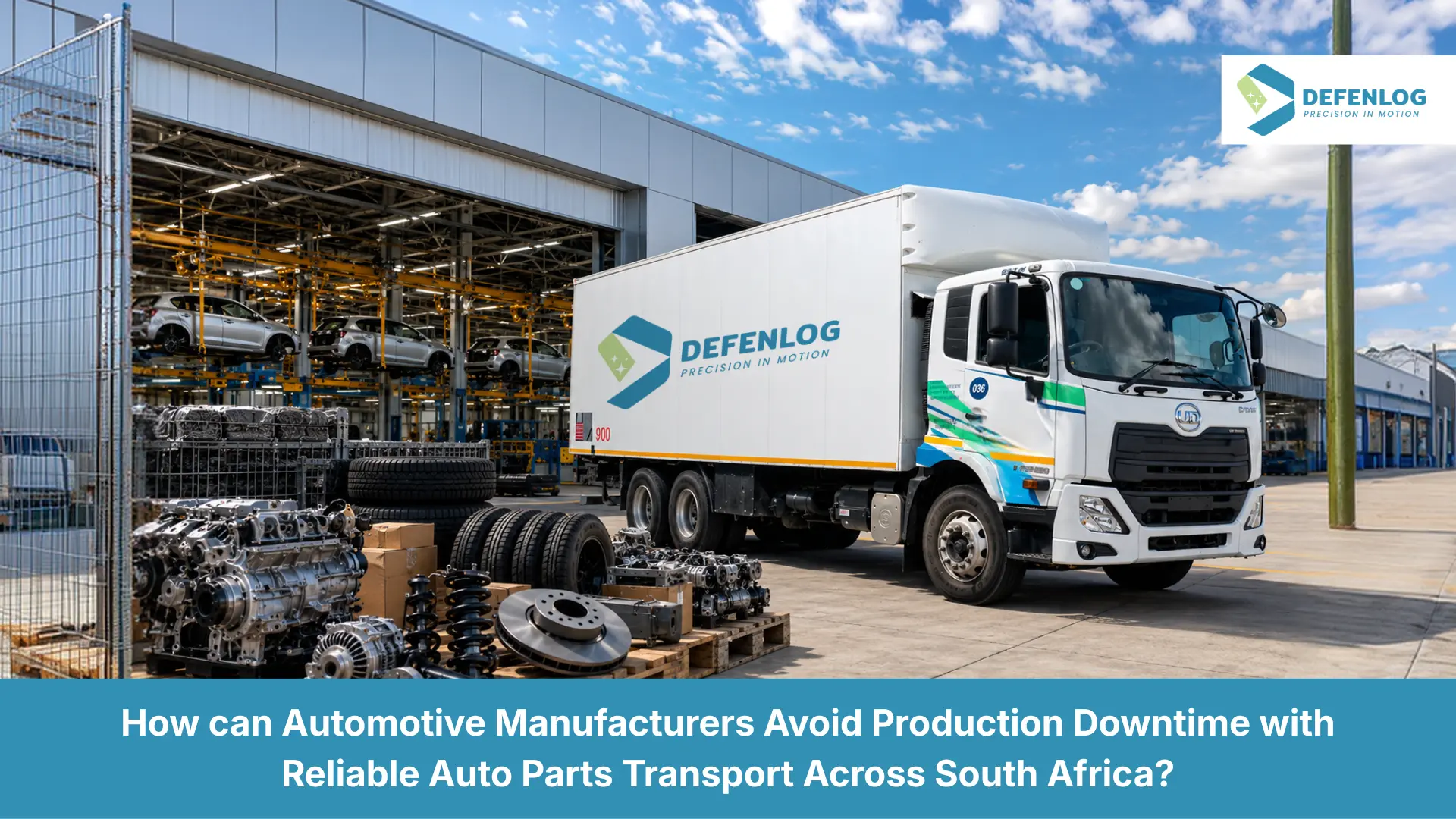
The plant was ready to build. The part was still in transit.
That single delay can affect the next stage of automotive production. Manufacturers depend on critical parts reaching the plant within planned production and receiving windows.
If an engine component, gearbox, braking part, electrical component, or replacement assembly arrives late, the production schedule may also fall behind.
This is why auto parts transport should work around the production requirement, not separately from it. Planned collection, the right vehicle, practical routing, and reliable delivery coordination can help keep critical components moving when the plant needs them.
So, how can automotive manufacturers reduce the risk of transport-related production downtime across South Africa?
Why is Manufacturing Downtime So Expensive?
When an automotive production line stops because a required component is unavailable, the cost can extend far beyond the missing part.
- Urgent Parts Cost More: Last-minute sourcing and urgent transport can increase costs.
- Workers Stay Idle: Employees may still be on shift even when production cannot continue.
- Overtime May Be Needed: Additional shifts may be required to recover lost production.
- Production Targets Are Missed: A missing component can prevent the next assembly stage from moving forward.
- Customer Deliveries Can Be Delayed: Falling behind in production can affect finished-vehicle delivery schedules.
- Business Relationships Can Be Affected: Repeated disruptions can put pressure on commitments to customers, dealers, and supply-chain partners.
The important point is that downtime is not only a factory-floor issue. When production depends on a component arriving at a particular time, its road delivery becomes part of the production plan.
How can Late Auto Parts Deliveries Lead to Production Downtime?
Late auto parts deliveries can begin before the vehicle even reaches the road.
A supplier may release the component later than expected. The collection vehicle may not match the load. Loading can take longer than planned. Traffic, road conditions, or an incorrectly timed dispatch may then push the shipment beyond the plant’s receiving window.
For a normal stock replenishment, a delay may be manageable. For a component required for the next production stage, the consequences can be very different.
The risk becomes higher when:
- A supplier collection is time-sensitive
- The required vehicle is not available when needed
- Parts need specific loading or securing arrangements
- The journey has a tight delivery deadline
- The plant operates within defined receiving windows
- A replacement component is required unexpectedly
In these situations, automotive parts transport needs to be planned around the actual requirement at the plant. Otherwise, a transport delay can quickly become an operational delay.
How can You Keep Auto Parts Deliveries On Time Without Disrupting Production?
Keeping automotive parts moving reliably requires more than booking a truck and providing a delivery address.
For time-sensitive auto parts transport in South Africa, planning should begin with one question: When does the plant actually need the component?
From that deadline, the transport movement can be planned backwards.
The transporter needs to understand when the supplier can release the cargo, the loading requirements, the suitable vehicle, expected journey time, route conditions, and the delivery commitment.
Vehicle selection also matters because automotive cargo can vary significantly. Boxed components, palletised parts, engines, gearboxes, tyres, body panels, and larger assemblies may not require the same transport arrangement.
A specialist road transport approach can bring these requirements together through:
- Planned collection scheduling
- Suitable vehicle allocation
- Cargo loading and securing requirements
- Defined route planning
- Realistic transit timelines
- Delivery-window coordination
- Clear operational communication
Defenlog’s General Transport service follows a similar operating model, with movements planned around fleet suitability, defined routes, scheduling, delivery commitments, communication, and proof-of-delivery processes.
This does not remove every possible road disruption. It creates a more controlled movement where the transport plan is built around the delivery requirement from the beginning.
Looking for a Specialist Road Transport Partner for Auto Parts in South Africa?
When a critical component is tied to a production deadline, transport price should not be the only factor used to select a provider.
The bigger question is whether the road transport partner has the operational capability to manage cargo reliably when timing matters.
Consider:
- Fleet suitability: Can appropriate transport resources be allocated to the cargo?
- Operational discipline: Are movements planned before dispatch rather than managed reactively?
- Roadworthy vehicles: Are vehicles maintained and inspected for reliable operation?
- Qualified drivers: Are movements handled by professional drivers working under defined safety standards?
- National capability: Can the provider support movements across the required South African routes?
- Delivery accountability: Is there a clear process from collection through proof of delivery?
- Operational communication: Will you receive clear movement updates when required?
These capabilities matter because automotive manufacturers are not simply buying kilometres of road transport. They are relying on the transport movement to meet an operational requirement at the destination.
Why Choose Defenlog for Your Auto Parts Road Transport?
Defenlog provides general and specialist road transport across South Africa, supporting commercial and industrial cargo through structured planning, fleet allocation, defined routing, and accountable delivery execution.
For an auto parts movement, this operating approach allows the transport requirement to be considered around the actual cargo and delivery commitment rather than treating every shipment the same way.
Defenlog’s General Transport operations include scheduled movement coordination, fleet resources aligned to cargo type and volume, planned route strategy, professional driver oversight, vehicle roadworthiness standards, defined communication, and delivery verification.
For automotive manufacturers, suppliers, and industrial businesses, that structured approach can support both planned component movements and requirements where delivery timing carries greater operational importance.
The objective is straightforward: move the required cargo with the control and accountability needed from collection through final handover.
Conclusion
In automotive manufacturing, a late part can become much more than a late shipment.
When production depends on that component, transport reliability can directly influence whether the next stage of work continues as planned.
Reliable auto parts road transport in South Africa therefore needs to be aligned with the actual delivery requirement, especially when parts are time-sensitive or operationally important.
Need to move auto parts without putting your production schedule at unnecessary risk?
Contact us at Defenlog to discuss your auto parts transport requirement across South Africa.